What Parents Look For Before Visiting a School
What Parents Look For Before Visiting a School
What Parents Look For in a School Before Visiting
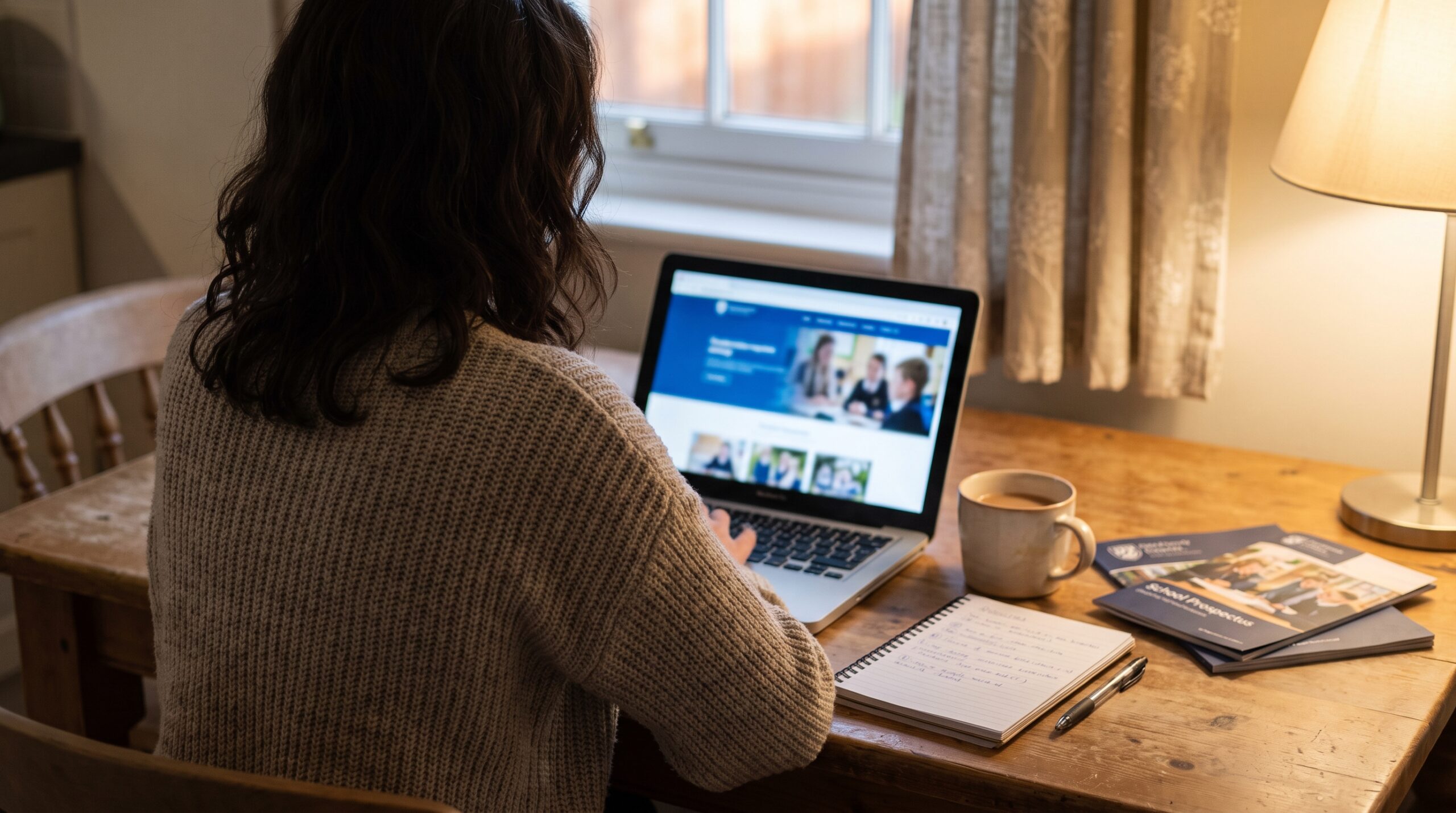
What parents look for in a school is usually quite simple: a place where their child will be happy, safe, well taught and supported, with clear practical information they can find easily, usually on the school website, before they ever walk through the door. Most parents have formed a view of your school by then. Not fully, and not for good, but enough to decide whether they will book a visit at all. That first judgement happens quietly, at a kitchen table, on a phone, usually late in the evening when the children are in bed. So it is worth knowing what they are actually looking for at that moment, and making sure they can find it.
For headteachers, business managers, and marketing leads aiming to make their school the top choice for the right families, understanding both practical checks and emotional signals parents use when comparing schools is essential. Parents want clear information about safety, pastoral care (support for students’ emotional and social wellbeing), SEND support (resources for children with additional learning needs), curriculum quality, the learning environment, school culture and ethos, admissions, and wraparound care (before and after school childcare).
Schools that communicate these strengths clearly on their websites are more likely to attract and retain families best suited to their community.
The short answer: parents decide long before the open evening
Choosing a school is one of the biggest decisions a family makes, and very few take it lightly. Research from Ofsted’s Parents Annual Survey, based on more than a thousand parents across England, shows that families draw on a mix of sources when they form a view: word of mouth, inspection reports, visits, and the school’s own website. The website is often the first of these, because it is the one thing a parent can check straight away, in their own time, without booking anything or asking anyone.
So the honest answer is this: they look for reasons to trust you, and reasons to rule you out. They are trying to picture their child in your building. Everything they read, see and feel online feeds that picture. If it is warm, clear and current, they book a visit. If it is thin, dated or confusing, they quietly move on to the next school on the list, and you never know they were there.
That is the part schools miss. You see the children who turn up. You do not see the ones who looked, hesitated and left. Getting the website right is how you win back the children you never knew you were losing.

What parents look for in a school
When you ask parents directly, the same themes come up again and again. Some are practical, some are emotional, and the good schools speak to both. Here is what sits at the top of the list for most households choosing a primary school or a secondary school:
- Safety and wellbeing (including safeguarding)
- Strong pastoral care and emotional wellbeing
- SEND support
- Curriculum and teaching quality
- The learning environment
- School culture, ethos, and values
- Practical factors (location, admissions, wraparound care)
- Reputation and communication
Safety and Wellbeing
Above almost everything else, a parent wants to know their child will be happy and safe. Not stretched, not processed, but genuinely happy. They look for warmth in the way a school describes itself, in the photographs, in the words of the headteacher. They are reading between the lines, asking a simple question: does this feel like a kind place where my child will belong?
Safeguarding sits underneath this. Safeguarding refers to the policies and practices that ensure children are protected from harm, abuse, and neglect while at school. Parents may not use the word, but they want to feel the school takes the care of children seriously. A clear, easy to find safeguarding section, with named people and plain language, tells a worried parent that you have thought about the thing they worry about most. Resources that spell out what safeguarding information should be on a school website can help you check that everything is in place. It is one of the quietest trust signals you have, and one of the most powerful.
Pastoral Care
Pastoral care is the support provided for students’ emotional and social wellbeing, helping them feel safe, valued, and able to thrive. It is often the deciding factor, especially at the move to secondary school. A mum or dad wants to know what happens when their child has a hard day, falls out with a friend, or struggles with the work. They are looking for evidence that someone will notice and someone will help. Emotional wellbeing, resilience and a real feeling of belonging now sit near the centre of the decision, not at the edge of it.
Schools that show this well do not just say they care. They explain how. They describe the pastoral team, the transition support, the way they handle bullying, the small routines that help a child feel settled. Emotional support and even emotional intelligence, taught and modelled day to day, reassure a parent that school is a place their child can grow and thrive, not just cope.
SEND Support
For a large number of families, support for SEND (Special Educational Needs and Disabilities) is not a detail, it is the whole decision. Carers of a child with additional needs read your website with a care most schools underestimate. They want to understand your approach to SEND, who leads it, what additional support looks like day to day, how the school meets individual needs, and whether their child will be understood rather than merely accommodated.
A strong SEND information report, written for parents rather than for auditors, does an enormous amount of work here. It reassures the households who need reassurance most, and it signals to every other parent that you are an inclusive school. If you want a steer, our guidance on building a SEND page that earns trust and this wider piece on how to create the best school website SEN page walk through it in detail.
Curriculum and Teaching
Every family wants to know their child will be taught well and taught widely. They look for a curriculum that reaches beyond the basics, with room for science, art, music, sport and the subjects that spark new interests, and they also weigh the quality of the educational project, which 35.5% of parents rate as important in shaping the overall course of learning. A narrow diet worries them; a broad one reassures them. Alongside the national curriculum, they are checking for the extras that make school more than a set of lessons. They are also reading for a calm, purposeful school environment, the kind of setting where every child can focus, because a good education depends as much on the environment as on the timetable.
Good teaching is part of the same picture. A parent cannot judge your staff from a distance, but they can read the signals, and 67.2% of parents place the most weight on the quality of the teaching team: a teacher described warmly, students and pupils who are clearly known as individuals, learning that builds skills like critical thinking and problem solving rather than simply covering content. Turnover rate and adult/child ratios also influence parental choice. Strong academic performance and honest exam results matter here too, but a parent reads them as one signal among many rather than the whole story. When your website shows how children learn, and the focus and resources behind it, you give real confidence that the education on offer is serious as well as kind.
Learning Environment
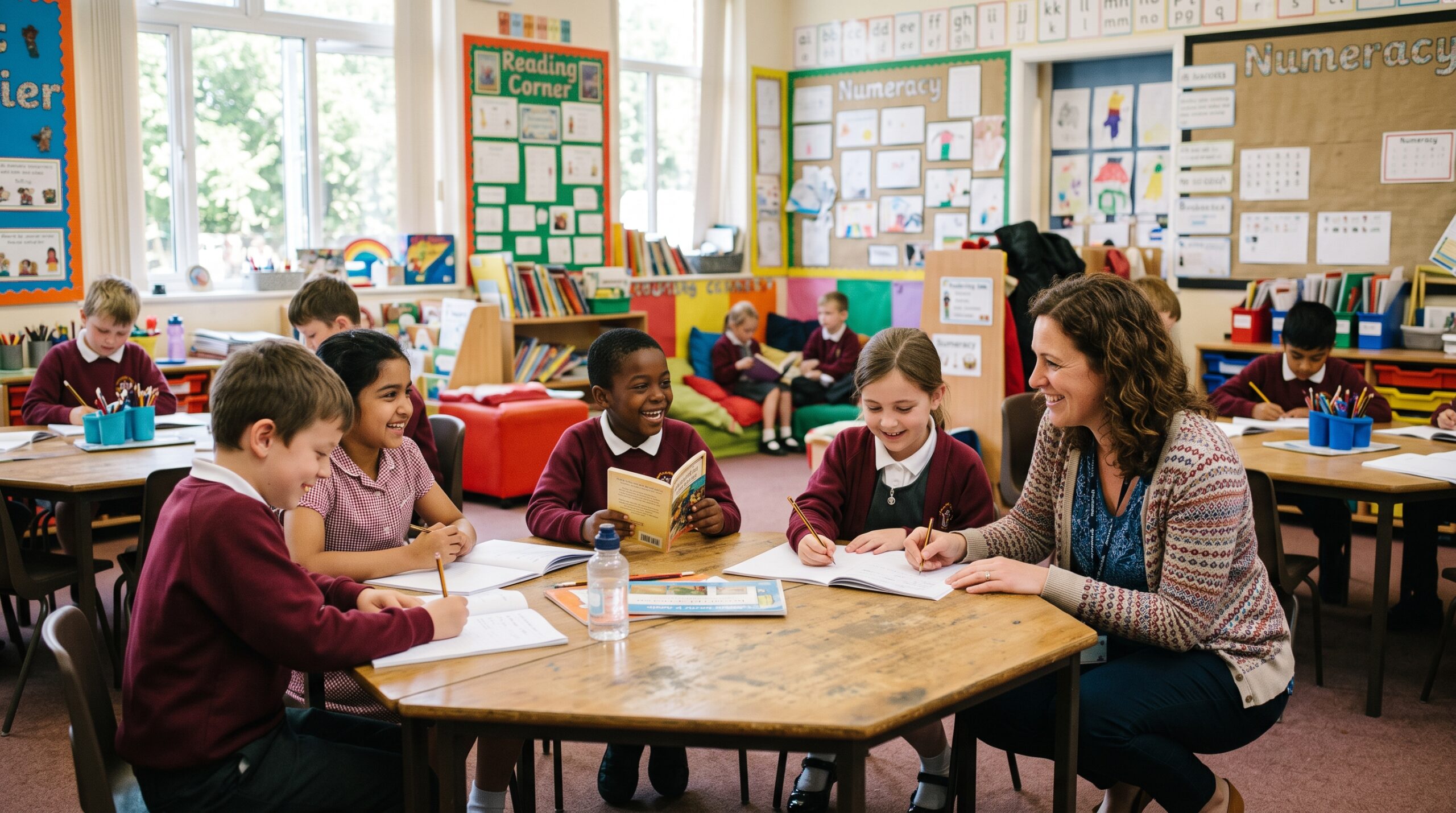
They try hard to imagine the ordinary day. What does the classroom feel like? Are children busy, calm, engaged? Is there creativity in the timetable, and are there trips and moments that make school feel alive? Many parents also picture practical day-to-day details such as meals, with 38.5% prioritising healthy eating when choosing a school. They want fresh, well-cooked food for their children and enough variety across weekly menus. Daily meal information gives parents peace of mind, and monthly menus should be easy to find on the website. The learning environment they picture online is the one they expect to see on a visit, so it pays to show the real thing. Honest, current photographs of real children doing real work build far more trust than staged stock images, and a parent can tell the difference in a second.
The factors that vary from family to family
Not every household weighs the same things. Priorities vary widely, and what makes one school the first choice can be beside the point for the family next door. It helps to remember that the perfect school does not exist; each is looking for the right fit for their particular child.
Key factors that vary include:
- Location and proximity: Many parents consider only local schools within a short distance, while others will travel for the right setting.
- State vs. private schools: Some families compare different types of schools.
- Familiarity: Weighing a new school against a familiar one.
- Practical factors: Such as admissions, wraparound care, and daily logistics.
These practical factors sit alongside the deeper questions about culture and care, and your website has to speak to both at once. Drawing on guidance about how to structure your school website effectively makes it much easier for parents to find what matters to them. Being clear about your school’s strengths, rather than trying to be everything to everyone, helps the right families recognise themselves in what you offer.
The school’s culture, ethos and values
Underneath the practical checklist, parents are trying to read your school’s culture. School culture refers to the shared values, beliefs, attitudes, and practices that shape the social and learning environment of a school. What does this school believe? How does it treat children, and how does it expect them to treat each other? Your school’s philosophy and values come through in small details: the tone of the welcome, the language you use, the stories you choose to tell. They are looking for a school whose approach aligns with their own, and for a real sense of community and belonging that reaches into the wider community around the school.
This is hard to fake and easy to show. A parent can feel warmth, or its absence, within seconds of landing on a page. The schools that win trust let their ethos show plainly rather than hiding it behind policy, and small, personalised signals about how they respond to families can make a big difference. A strong school community, visible online, tells a parent that education here is a shared endeavour rather than a service.
The practical questions parents need answered
Alongside the feel of a school comes a list of practical questions. If they cannot answer these quickly, some will give up before they call the office. Making the answers easy to find is one of the simplest wins available to any school, and a regular school website audit can highlight where parents might still be struggling to find what they need.
Admission criteria and the catchment area
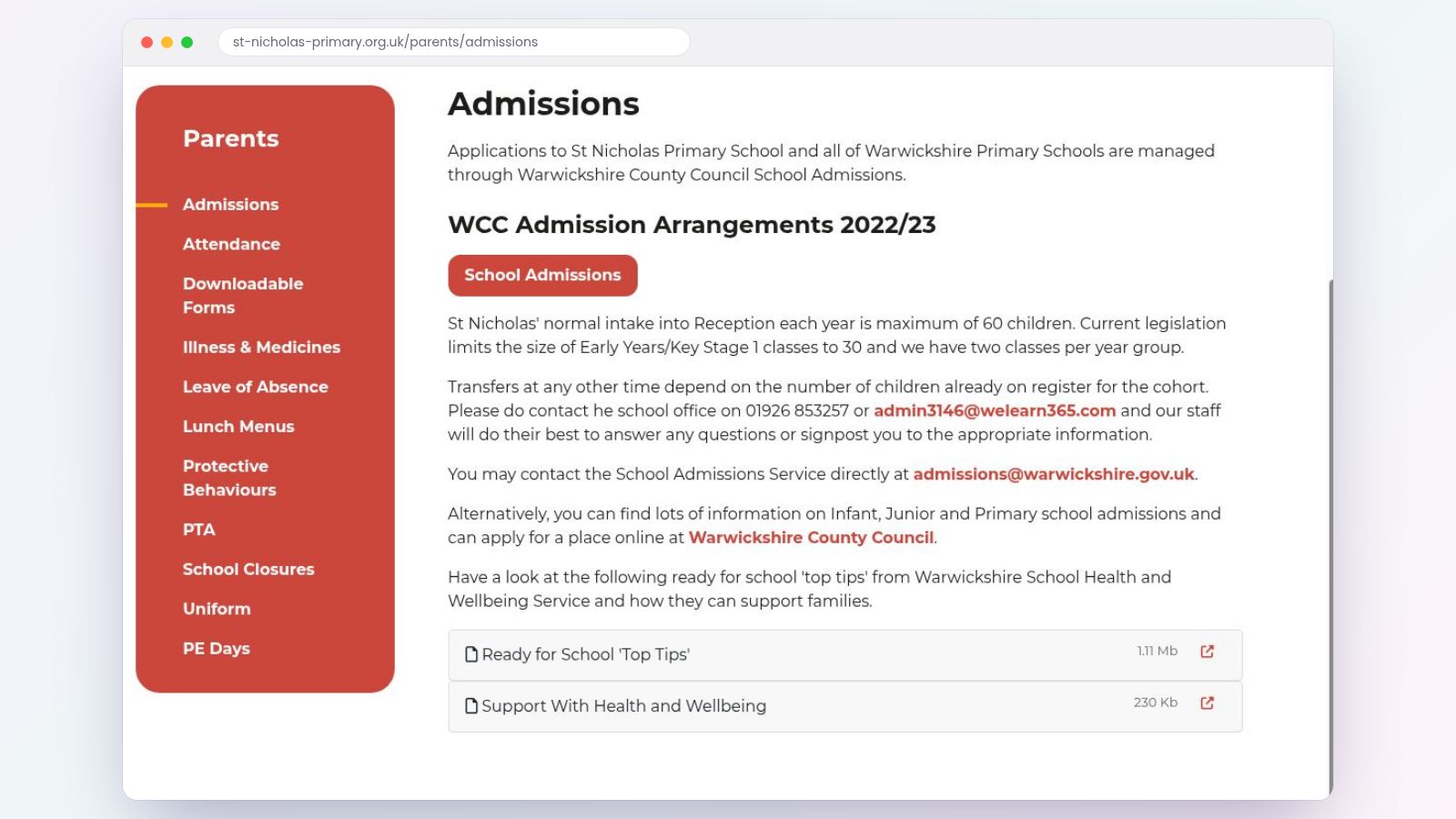
The first practical question is nearly always the same: could my child actually get a place here? They want to understand your admission criteria and where they sit relative to the catchment area. They know the local authority runs the process for most maintained schools, whether in England, Wales or Northern Ireland, but they still expect your website to explain your arrangements clearly and link to the right place to apply, with specific information, and sometimes more specific information, on deadlines, oversubscription and how to apply.
Confusion here costs you pupils. A parent who cannot tell whether they are in the catchment, or how oversubscription is handled, may assume the answer is no and stop looking. Clear admissions information keeps hopeful families in the conversation. Our guide to structuring an admissions page that works covers how to lay this out so parents act rather than drift away.
Wraparound care and the school day
For a working family, wraparound care can be the difference between a school that is possible and one that is not. Wraparound care refers to before and after school childcare services that support working families. Breakfast club, after school provision, holiday childcare, the shape of the school day: these are not small details to a parent juggling two jobs and a commute. If you offer wraparound care, say so clearly and early, with times and costs easy to find; clear, joined-up admissions information and a smooth online journey are among the most effective ways to increase school admissions through your website. You will have removed a real barrier for exactly the families who might otherwise assume your school will not fit their life.
Communication and how the school talks to families
Parents pay close attention to communication, and 38% of parents prioritize regular communication about their children’s daily life because they are trying to predict what life will be like once their child is on the roll. Will they know what is going on? A website that helps schools communicate clearly and consistently with families, with a live news feed, an up to date calendar and a warm welcome, tells families it is organised and that they will be kept in the loop. Patchy communication online makes them brace for patchy messages later. It is a small thing that carries a large signal.
Reputation and what other parents say
No parent decides in isolation. They do their research, they ask friends, they read reviews, they listen at the school gate and in local groups online. A school’s reputation, carried by word of mouth, often weighs more than anything the school says about itself, and for prospective parents comparing local schools it can be decisive, because parents are influenced as much by what they have heard from other families as by formal information. Many parents will take advice from other parents over any brochure.
You cannot control every conversation, but you can influence it. A website full of real stories, genuine voices and visible school life gives them something positive to share and something true to point to, but schools also need to keep talking about everyday successes rather than relying only on formal data. When a parent recommends your school, they usually send a link, so make sure the link they send does you justice. Small, human touches, a parent’s words, a note from a family who joined last year, travel further than any marketing line and turn a browsing parent into one who feels they already know your school.
Where parents look first, and it is usually your website
All of this only matters if you know where parents are looking, and the evidence is consistent. School websites rank highly among the tools parents use when choosing a school, sitting alongside visits and inspection reports rather than behind them. For many households the website is the very first step, used to draw up a shortlist before setting foot on site. Once a school makes that shortlist, parents still prefer schools with an open-door policy for visits.
Think about the order of events. A parent hears a school name, from a friend, a sibling’s school, a local group. What do they do next? They search for it, land on your website, and should be able to arrange a visit in advance. In those first moments online they decide whether to find out more or cross you off. Your website is not a brochure that supports the decision. For a growing number of families, it is where the decision starts. We wrote more about what parents actually look for on a school website, and why it is so often missing, if you want to go deeper.
Primary and secondary: what changes in what parents look for
What families prioritise shifts as their child grows. For a primary school, the questions are mostly about warmth, safety, early development and settling in. Will my four or five year old be looked after? Parents of the youngest children are choosing a place that feels like an extension of home, where staff know each pupil by name. Families of a primary school child want warmth above all, picturing teachers who will notice their son or daughter and students who are happy to be there.
Choosing a secondary school raises different concerns: the size of the site, pastoral support through adolescence, and how well it prepares students for key stage assessments, exams and for life beyond, with parents also looking at broader outcomes. They weigh the reputation of local schools, talk to friends, and picture their child among students who are happy and teachers who know them. For a primary school family the pull is often the community; for a secondary family it is preparation and confidence. The transition from primary to secondary is a genuine worry for many households, so a school that explains its transition support clearly speaks directly to what parents look for at that stage.
How to show parents what they are looking for
Knowing what parents look for is only half the job. The other half is making sure they can find it, quickly, on the device in their hand.
Make the important things easy to find
Parents should be able to get essential information quickly, not after several clicks. The key things they care about most, including admissions, safeguarding, SEND, wraparound care, and where relevant details on behaviour or discipline, should be a click or two from the homepage, with plain labels. Partnering with a specialist school website provider can make this kind of structure and clarity much easier to maintain. When a parent cannot find something in a few seconds, they do not assume it is hidden well; they assume it is not there.
Let real school life show, and keep it current
The warmth parents look for cannot be claimed, it has to be shown. Real photographs, recent news, children’s work and a headteacher who sounds human turn a compliant website into a welcoming one. And nothing undoes that faster than an out of date site. A news section that stopped in the spring, or a welcome from a head who left, tells a parent it may not be on top of things. Our piece on what parents actually notice on a school website unpacks these small signals.
A checklist: what parents look for online
Use this as a quick audit of your own website. Sit where a parent sits, on a phone, and see how many you can answer in under a minute.
- Does the school feel warm and happy in its words and photographs?
- Is safeguarding easy to find, with named people and plain language?
- Is your pastoral support and approach to emotional wellbeing described clearly?
- Does your SEND information reassure a worried parent, not just tick a box?
- Can a parent understand your broader outcomes, academic performance and exam results without a spreadsheet?
- Are admissions and the catchment area explained in plain English?
- Is it obvious how and where to apply for a place?
- Is wraparound care, and the shape of the school day, clear and easy to find?
- Is there recent news that shows the school is active this term and what the school offers through trips, activities or other moments of school life?
- Do real voices, real children and genuine school life come through?
- Are contact details and the route to a visit clear and inviting, including how to book a visit in advance?
- Does everything work well, and read well, on a mobile phone?
If you answered no to more than a couple, you are almost certainly losing children you would have loved to teach.
Common mistakes to avoid
Writing for inspectors instead of parents
Compliance matters and is not optional, but a website written only for an inspector reads coldly to a parent. Meet your statutory duties and speak to families at the same time. Both audiences can be served by the same page if it is written with care.
Hiding the warmth behind the policies
Documents have their place, but they should not be the first thing a parent meets. Lead with the human story, the welcome and real school life, and let the formal information sit calmly behind it. A parent who feels the warmth first will happily read the detail second.
Letting the website drift out of date
An empty news feed, an old calendar, a stale welcome: these small lapses do real damage and make even an excellent school look tired. Keeping the website current is not a big project, it is a small habit, and it protects everything else you have built.
Making parents work to find the basics
Burying admissions, hiding contact details, or making families hunt for secure contact routes with menu labels only staff understand: each adds friction, and friction loses children. Every extra click is a chance for a busy parent to give up. Clarity is kindness, and it converts.
Using stock photos instead of real children
Nothing signals a gap between the brochure and the building faster than generic stock images. They want to see your children, your classroom, your school. Real, current photography earns trust that no stock library ever will.
Bringing it together
Parents look for a school where their child will be safe, happy and well taught, where they themselves will be kept informed through clear, regular updates that offer a real benefit to family life, and where the practical pieces of family life are made to fit. They look for all of this online first, usually on your website, often before they have spoken to a single member of staff. Give them clear answers and genuine warmth, keep it current, and you make it easy for the right families to choose you.
If you would like a fresh pair of eyes on how your website reads to a prospective parent, we are happy to help. You can get in touch for an admissions and website review, see how our school website software and Admissions Module make the parent journey simpler, or join our free marketing workshop for schools and trusts, where we go through exactly this: what parents look for and how to show it well. Ultimately, parents choose the school that helps them feel their child will be happy, safe and able to thrive.


Frequently asked questions
What do parents look at first when choosing a school?
For most households the first step is the school website, used to build a shortlist before booking anything. They look for a sense of whether it is warm and safe, then check the practical things: admissions, the local catchment, childcare and how to apply. Word of mouth and inspection reports feed in too, but the website is usually where the research begins.
How important is a school website in the decision?
Very. Surveys of parents place the school website among the most used tools when choosing a school, alongside visits and Ofsted reports. Because it is available instantly and privately, it is often the first and most repeated point of contact, one of the biggest influences on whether a family visits at all.
What makes parents rule a school out online?
Usually one of a few things: an out of date website that suggests the school is not on top of things, missing or confusing admissions information, no sense of warmth or real school life, or basic details that are hard to find, which can surprise school leaders. Any of these can quietly become the moment of truth, when a family cannot find one key detail and moves on to the next school before they make contact.
Do parents really care about pastoral care and SEND, or mostly results?
Both matter, but pastoral support, wellbeing and help for children with SEND are often the deciding factors, particularly at secondary transition and for a child who needs additional support. Results reassure, but the feeling that a child will be known, safe and cared for is what most parents are truly looking for.
How often should we update the website to reassure parents?
Little and often beats big and rare. A steady flow of news through the term, a current calendar, and a welcome that reflects who leads the school today are enough to show that the school is active and organised. The aim is a website that always looks looked after, because that is exactly what parents read into it.

Related Posts
Ian Richardson
October 13, 2026
AI-generated school content saves time, but accuracy, tone and safeguarding still need a person. What DfE guidance says, who reviews what, and a checklist.
Ian Richardson
October 7, 2026
What a school website chatbot should answer, what it should never answer, and how to get your pages ready before you switch one on. A guide for leaders.
Ian Richardson
September 30, 2026
What schools should not use AI for, the AI safeguarding risks behind each limit, what KCSIE 2026 now says, and a practical checklist for school leaders.
Ian Richardson
September 16, 2026
Introducing the Schudio AI Suite: AI school website software that checks what you publish, drafts pages in your school's voice and answers parents' questions.
Ian Richardson
June 24, 2026
A school website says a lot before a parent reads a full page. Parents make ..
Luke Smith
June 24, 2026
School website news is one of the easiest ways to show parents, pupils and prospective ..