Why Human Review Still Matters With AI-Generated School Content
Why Human Review Still Matters With AI-Generated School Content
AI-generated school content can save your staff real time. A newsletter draft in two minutes, a website page tidied up before lunch, a letter home that doesn’t take an evening. But the speed isn’t the hard part any more. The hard part is making sure what goes out is accurate, sounds like your school and is safe to publish. That still needs a person.
This post sets out why human review still matters, what the Department for Education actually says about it, and a simple way to build review into your week without losing the time AI saves you.
The short answer
Every piece of AI-generated school content should be read, checked and approved by a member of staff before parents, pupils or the public see it. Not skimmed. Read.
It’s the position the DfE has taken since 2023. Its policy paper Generative artificial intelligence (AI) in education, last updated on 12 August 2025, says any content produced “requires critical judgement to check for appropriateness and accuracy”, and that the quality and content of the final document “remains the responsibility of the professional who produced it and the organisation they belong to, regardless of the tools or resources used.”
In plain terms, if the AI gets it wrong, the school got it wrong. The tool doesn’t carry the responsibility. You do.
Three things need a human eye every time:
- Accuracy. Dates, names, numbers, policies and anything a parent will act on.
- Tone. Whether it sounds like your school, and whether it’s right for the families reading it.
- Safeguarding. Whether anything in it could identify, expose or put a child at risk.
Accessibility, transparency and data protection sit alongside those three, and we’ll cover each one below.
What counts as AI-generated school content?
It’s broader than most leaders first think. If a generative AI tool wrote the first draft, rewrote it, summarised it or translated it, it counts. That includes content made with general AI tools such as ChatGPT, Microsoft Copilot or Gemini, and AI features built into the software you already use.
Parent communication
Newsletters, letters home, text messages, trip information, reminders about term dates and uniform. This is where most schools start using AI, because it’s where the time pressure is. We covered the time savings in how AI can save time on school newsletters and website content. This post is the other half of that story.
Website content
News stories, curriculum pages, admissions information, staff pages and the summaries that sit at the top of policy pages. AI website content is public, permanent and indexed by search engines, so mistakes stay visible for a long time.
Policies and statutory information
Some schools use AI to draft or refresh policies, or to turn a long policy into a parent-friendly summary. This is high-stakes content. A summary that drifts from the policy it summarises can mislead parents about what the school will actually do.
Teaching resources and lesson plans
Quizzes, worksheets, worked examples, practice questions and lesson plans. The DfE supports using AI to reduce teacher workload, and Oak National Academy offers a free AI lesson assistant, Aila, built for teachers in England. The same review principle applies, and we’ll come back to it.
Administrative tasks
Meeting notes, governor reports, job adverts, risk assessment drafts and internal emails. Lower risk in some cases, but governors’ papers and job adverts are often published, so they deserve the same care.
What the DfE guidance says about AI in education
The DfE guidance is clear and has been consistent for three years. It’s worth knowing the detail, because it gives you a solid footing when you write your own AI policy or explain your approach to governors.
Responsibility stays with the school
As above, the policy paper puts responsibility for any final document on the person who produced it and their organisation. It also says generative AI “cannot replace the judgement and deep subject knowledge of a human expert.”
The DfE’s leadership toolkit on the safe and effective use of AI in education, part of its Using AI in education settings support materials, puts it more bluntly: “Human involvement and quality assurance is essential.” It adds that “transparency and human oversight are essential to ensure AI systems assist, but do not replace, human decision-making.”
The risks the DfE lists
The policy paper warns that AI-generated content may be:
- inaccurate
- inappropriate or unsafe
- biased
- taken out of context
- taken without permission (intellectual property infringement)
- out of date or unreliable
- low quality
It also explains that these tools can produce “nonsensical, inaccurate or false information presented as fact”, which is what people mean by hallucination. Every item on that list is something a reviewer can catch and a tool can’t reliably catch in itself.
Personal data
The DfE says data entered into an AI tool should not contain information that could allow an individual to be identified. That rules out pasting in pupil names, behaviour notes, medical details or anything from your MIS unless the tool has been properly assessed and approved by your school.
Safeguarding guidance has caught up
Keeping children safe in education 2026 came into force on 1 September 2026. The DfE’s consultation response confirms it continues to point schools to the generative AI policy paper and supporting resources, alongside the Generative AI: product safety standards published in January 2026. KCSIE 2026 also names images that are “digitally altered or wholly generated using artificial intelligence” in its guidance on nudes and semi-nudes. AI is now part of mainstream safeguarding guidance, not a side topic.
What Ofsted looks at
The DfE policy paper summarises Ofsted’s approach. Inspectors don’t directly evaluate the use of AI, but they can consider the impact it has on children and learners. They may ask what steps a school has taken to consider risks such as data protection, safeguarding, and bias and discrimination, and whether its assurance processes pick up emerging risks.
A documented human review step is exactly the kind of assurance process that answers that question.
Why AI tools still get things wrong
AI tools have improved enormously, and they’ll keep improving. So why does review still matter? Because the ways they go wrong are built into how they work.
They sound confident when they’re wrong
A generative AI model produces the most likely sounding text, not the verified answer. It writes a made-up statistic in exactly the same calm tone as a real one. There’s no wobble in the voice to warn you.
That matters because people trust it. Research cited in the DfE’s January 2024 report Generative AI in education: educator and expert views found that 43% of people who use generative AI tools believe the outputs are always accurate, compared with 28% of people who don’t use them. The more familiar a tool feels, the easier it is to stop checking.
They don’t know your school
Unless you’ve given it the facts, an AI tool doesn’t know your term dates, your uniform supplier, your head’s name, your PAN or how your trust handles admissions. It fills the gaps with something plausible. Plausible is the problem.
They can be out of date
Many tools are trained on data with a cut-off date. Ask one about school website requirements, admissions codes or safeguarding duties and it may describe the position from a year or two ago. In a sector where duties change through new legislation and commencement regulations, that’s a real risk.
They can carry bias
AI output reflects its training data. It can default to assumptions about families, home life, gender or culture that don’t fit your community. A reviewer who knows your families will spot that in seconds.
They make UK mistakes
American spelling, American terms like “grade level” or “middle school”, and American assumptions about how schools work all creep into AI-generated text. Parents notice, and it quietly undermines confidence.
Accuracy: the facts parents act on
Accuracy is the first job of any reviewer, because parents act on what you publish. They book holidays around your term dates. They buy uniform from your list. They decide whether to apply based on your admissions page.
What to verify every time
- Every date, time and deadline, checked against the school calendar.
- Every name and job title, checked against your current staff list.
- Every number, statistic and percentage, checked against its source.
- Every reference to a law, policy or DfE guidance, checked against the current version.
- Every link, clicked to make sure it goes where it should.
Statutory content needs extra care
If AI has touched anything on your statutory pages, such as admissions, SEND, the curriculum, pupil premium or your policies, the reviewer should check it against the source document, not just read it for sense. Our School Website Requirements guide sets out what needs to be published and is a useful reference point for that check.
One practical rule helps here. If a sentence makes a claim you couldn’t point to a source for, it comes out. AI misinformation is far easier to stop before it’s published than to correct once parents have read it.
Tone and voice: does it sound like your school?
AI-generated text has a recognisable voice. It’s polished, a little breathless and oddly generic. Words like “delighted”, “vibrant” and “exciting journey” turn up everywhere. Parents can’t always say why, but they can tell when a letter wasn’t written by someone who knows them.
Why tone matters to parents
Your communication builds trust over years. A school that sounds warm, plain and human in September and like a marketing brochure in October loses a little of that trust. It also makes the important messages harder to spot.
What the reviewer should change
- Cut the filler. If a sentence says nothing, delete it.
- Replace generic praise with specific detail about what actually happened.
- Check the tone fits the subject. A message about a bereavement, a safeguarding concern or a serious incident should never be drafted and sent without a senior leader writing or rewriting it personally.
- Read it aloud. If it doesn’t sound like your head, it isn’t finished.
Good AI use in school communication means AI drafts and a person finishes. The person adds the warmth, the context and the judgement.
Safeguarding: the review that matters most
Safeguarding is where human review stops being good practice and becomes essential. An AI tool has no understanding of what’s safe to say about a child, a family or an incident.
What a safeguarding check looks for
- Any detail that could identify a child who shouldn’t be identified, including full names alongside photos, home locations or routines.
- Any mention of a looked after child, a child with a protection plan or a family in a sensitive situation.
- Information about staff or pupils that should stay internal.
- Anything that reveals where pupils will be and when, such as detailed trip itineraries on a public page.
- Images that could have been generated from, or edited from, a real pupil’s photo.
Who should do it
For routine news, a trained member of staff who knows your safeguarding policy is fine. For anything touching a named child, an incident, a complaint or a sensitive subject, the designated safeguarding lead or a senior leader should see it before it’s published. We’ve written about the wider risks in what schools should not use AI for, which covers the safeguarding line in more detail.
A note on AI images
Schudio’s position is that AI images of children can be the safer choice on general pages, because they don’t show a real child’s face. But they must be wholly generated from a written description, never made from or based on a real pupil’s photo, and they should be labelled as illustrative. A reviewer should check every AI image before it goes live, because AI still gets hands, faces and uniforms wrong.
Accessibility and plain English
AI tools are surprisingly good at simplifying text, and that can genuinely help accessibility. But they also produce long sentences, vague headings and clever phrasing that make content harder to use. Accessibility needs a reviewer too.
Accessibility checks for AI website content
- Is the reading level right for your families? Aim for clear, short sentences.
- Do headings describe what’s underneath, so someone using a screen reader can find their way?
- Does every image have real alt text that describes it, rather than “image of school”?
- Are links written so they make sense out of context, rather than “click here”?
- Has key information been put in a web page rather than buried in a PDF?
Accessibility isn’t something an AI tool checks for you unless it’s built in and you ask it. Your accessibility statement makes promises about your website, and the reviewer is the person who keeps them.
Transparency: being honest about AI use
Transparency is about trust. Parents don’t need a label on every newsletter saying a tool helped tidy the grammar. But they should be able to understand how your school uses AI, and they shouldn’t be misled.
What good transparency looks like
- Your AI policy, or a short statement on your website, explains how the school uses AI and that staff review everything before publishing.
- AI-generated images are labelled as illustrative.
- Automatic translations are labelled as automatic.
- If you use a website chatbot, visitors know they’re talking to an AI tool, not a person. We cover this in what school website chatbots should and shouldn’t answer.
The DfE asks schools to be open and transparent with pupils and parents where their personal data is processed using AI tools. Transparency also protects staff. If something does slip through, a clear, published approach shows the school took reasonable care.
Data protection: what never goes into a prompt
Human review isn’t only about the output. It starts with what staff put in. Under UK GDPR, schools are responsible for how pupil, student and staff data is processed, and that includes data typed into an AI tool.
Keep these out of general AI tools
- Pupil names alongside any personal detail.
- SEND information, medical information and behaviour records.
- Safeguarding notes or anything from a child protection file.
- Staff HR information.
- Anything exported from your MIS.
If a tool needs personal data to be useful, it needs to go through your data protection officer and a data protection impact assessment first. Our sibling post, practical ways schools can use AI safely, covers how to set those boundaries for staff.
Teaching resources, critical thinking and academic integrity
Most of this post is about the content schools publish and send home. But the same principle applies in the classroom.
The evidence on teacher workload
In December 2024 the Education Endowment Foundation published the first major trial of teachers’ ChatGPT use in schools in England. It involved 259 teachers in 68 secondary schools. Teachers using ChatGPT with a guide cut their Year 7 and 8 science lesson and resource planning time by 31%, about 25 minutes a week. An independent panel found no noticeable difference in quality, although the EEF said that finding was based on a limited sample and should be treated with caution.
That’s a real saving on teacher workload. The DfE’s leadership toolkit is just as clear that teachers must check AI outputs for accuracy before using them, and adapt them. It also notes that trainee and early career teachers may not yet have the subject knowledge to check outputs effectively, so they need more support, not less.
What teachers should check in AI-made resources
When teachers use AI tools to create or generate classroom resources, the review is quick but it matters:
- The worked examples and answers are actually correct. AI still makes maths and science errors with total confidence.
- Reading levels and age appropriateness fit the class and year group.
- It matches your curriculum and learning objectives, not a generic or American version of the topic.
- Practice questions build on the knowledge students have actually been taught.
- No pupil or student data went into the prompt to generate it.
Critical thinking and academic integrity
For pupils, review is a skill worth teaching. Checking AI output against a reliable source builds critical thinking and higher order thinking. Schools also need clear rules on academic integrity, so pupils know when AI use is allowed and when work must be their own.
Who should review what
Not everything needs the head’s signature. The trick is matching the reviewer to the risk, so review is proportionate and doesn’t become a bottleneck.
Everyday news and social posts
One trained member of staff who knows the school and your safeguarding rules. They check facts, tone and photos.
Letters and messages home
The author plus a second reader for anything about money, dates, health, trips or behaviour. A senior leader for anything sensitive.
Website pages and statutory content
The page owner plus the person responsible for website compliance. Check against the source document every time.
Policies
The policy owner, the senior leadership team and, where required, governors. AI can help draft, but approval follows your normal process.
Anything about a named child or an incident
The designated safeguarding lead or a senior leader, always. In most cases this shouldn’t be drafted with a general AI tool at all.
A simple human review process
Review works best when it’s a routine, not a scramble. Here’s a process any school can run.
1. Start with your facts
Give the tool the real information: dates, names, the key points. AI is far more reliable rewriting your facts than inventing its own.
2. Treat the output as a draft
Nothing an AI tool produces is finished. It’s a first draft from a fast but unreliable assistant.
3. Verify the facts
Check every date, name, number and link against its source. Remove any claim you can’t verify.
4. Rewrite for your voice
Cut the filler, add the specific detail, and make it sound like your school.
5. Run the safeguarding and accessibility checks
Use the checklists in this post. If in doubt, escalate.
6. Approve and record
The reviewer approves it and, for higher risk content, notes who checked it. That simple record is your evidence of assurance if a governor or inspector ever asks.
What a good AI policy says about review
Your school AI policy is where human review becomes a shared expectation rather than one person’s habit. It doesn’t need to be long. It should cover:
- Which AI tools staff are allowed to use, and for what.
- That all AI-generated content is reviewed by a member of staff before it’s published or sent.
- Who reviews which kinds of content, matched to risk.
- What must never go into an AI tool.
- How AI images and automatic translations are labelled.
- How pupils may and may not use AI, including academic integrity.
- Who owns the policy and when it’s reviewed, ideally at least once a year given how fast this area moves.
Share it with staff, governors and parents. A short, plain policy that people actually follow beats a long one nobody reads.

How Schudio builds human review in
We’ve been clear from the start that AI should take the slog out of website work, not the judgement. The Schudio AI Suite works inside the CMS you already use, and it’s built on one principle: AI drafts and checks, and a person decides what goes live.
That’s deliberate. Our AI school website software post explains what the Suite actually does and what it doesn’t. The short version is that it helps you write, check and answer faster, while the final word always stays with your staff. It’s the same approach we’d recommend for any AI tool your school uses.
If your team wants to get more confident with the CMS itself, our online CMS training covers publishing, editing and keeping pages up to date, which is where a good review habit starts.
Human review checklist for AI-generated school content
- I gave the tool the real facts rather than asking it to invent them.
- Every date, time and deadline matches the school calendar.
- Every name and job title is current and correct.
- Every number and statistic has a source I’ve checked.
- Every reference to law, policy or DfE guidance is current.
- Every link works and goes to the right place.
- It uses UK spelling and UK school terms.
- It sounds like our school, with the filler removed.
- No child can be identified who shouldn’t be.
- No personal or sensitive data went into the tool.
- Images are real and approved, or AI images are labelled as illustrative and weren’t made from a real pupil’s photo.
- Headings, alt text and links are accessible.
- Translations are labelled as automatic and important ones have been checked.
- Sensitive content has been seen by a senior leader or the DSL.
- The right person approved it before it was published or sent.
Common mistakes to avoid
Skimming instead of reading
The most common failure. AI text reads smoothly, so it’s easy to glance over it and assume it’s fine. Smooth isn’t the same as correct.
Checking the tone but not the facts
Reviewers often fix the wording and miss the wrong date underneath it. Do the fact check first.
Letting AI summarise a policy without checking the summary
Summaries drift. Always read the summary against the original policy.
Pasting in personal data
A quick “make this letter about Jack sound kinder” can put a child’s details into a tool your school hasn’t approved. Keep names and personal details out.
Using AI for sensitive messages
Bereavements, safeguarding concerns, serious incidents and complaints need a person writing from the start.
No named reviewer
If everyone assumes someone else checked it, nobody did. Make it clear who reviews what.
Frequently asked questions
Do schools have to review AI-generated content?
There’s no single law that says “review AI content”, but the DfE is clear that the quality and content of any final document remains the responsibility of the professional and the school, regardless of the tools used. In practice, review is the only way to meet that responsibility.
Is it safe for schools to use AI tools for newsletters and website content?
Yes, with sensible boundaries. Use approved tools, keep personal data out, give the tool your real facts and have a member of staff review everything before it’s published.
What does the DfE guidance say about AI in schools?
The DfE policy paper on generative AI in education, last updated 12 August 2025, supports using AI to reduce workload but says staff must use professional judgement, check content for accuracy and appropriateness, and protect personal data. It also points schools to the generative AI product safety standards and Keeping children safe in education.
Does Ofsted check how schools use AI?
Ofsted doesn’t directly evaluate a school’s use of AI, but inspectors can consider its impact on children and may ask how the school has considered risks such as data protection, safeguarding and bias. A clear review process helps answer that.
Should we tell parents when we use AI?
You don’t need to label every newsletter. But it’s good practice to explain your approach in your AI policy or on your website, label AI images and automatic translations, and make it clear when parents are talking to a chatbot.
Who should review AI-generated content?
Match the reviewer to the risk. A trained member of staff for routine news, a second reader for letters about dates and money, the page owner for statutory pages, and the DSL or a senior leader for anything sensitive.
Can AI write our school policies?
AI can help draft or refresh a policy, but the policy owner must check it thoroughly against current law and guidance, and it must be approved through your normal process, including governors where required.
What should staff never put into an AI tool?
Pupil names with personal details, SEND or medical information, safeguarding notes, behaviour records, staff HR information and anything exported from your MIS, unless the tool has been formally assessed and approved.
Final thought
AI is genuinely useful for schools. It can give staff time back and help keep your website and communication fresh week after week. But the value only holds if what you publish is right. Human review is what turns AI-generated school content from a risk into a real help.
AI drafts. People decide. Keep it that way and you get the time savings without the worry.

Related Posts
Ian Richardson
September 30, 2026
What schools should not use AI for, the AI safeguarding risks behind each limit, what KCSIE 2026 now says, and a practical checklist for school leaders.
Ian Richardson
September 16, 2026
Introducing the Schudio AI Suite: AI school website software that checks what you publish, drafts pages in your school's voice and answers parents' questions.
Ian Richardson
July 29, 2026
What parents look for in a school, and how your website answers it before they visit: culture, safeguarding, SEND support and clear practical information.
Ian Richardson
June 24, 2026
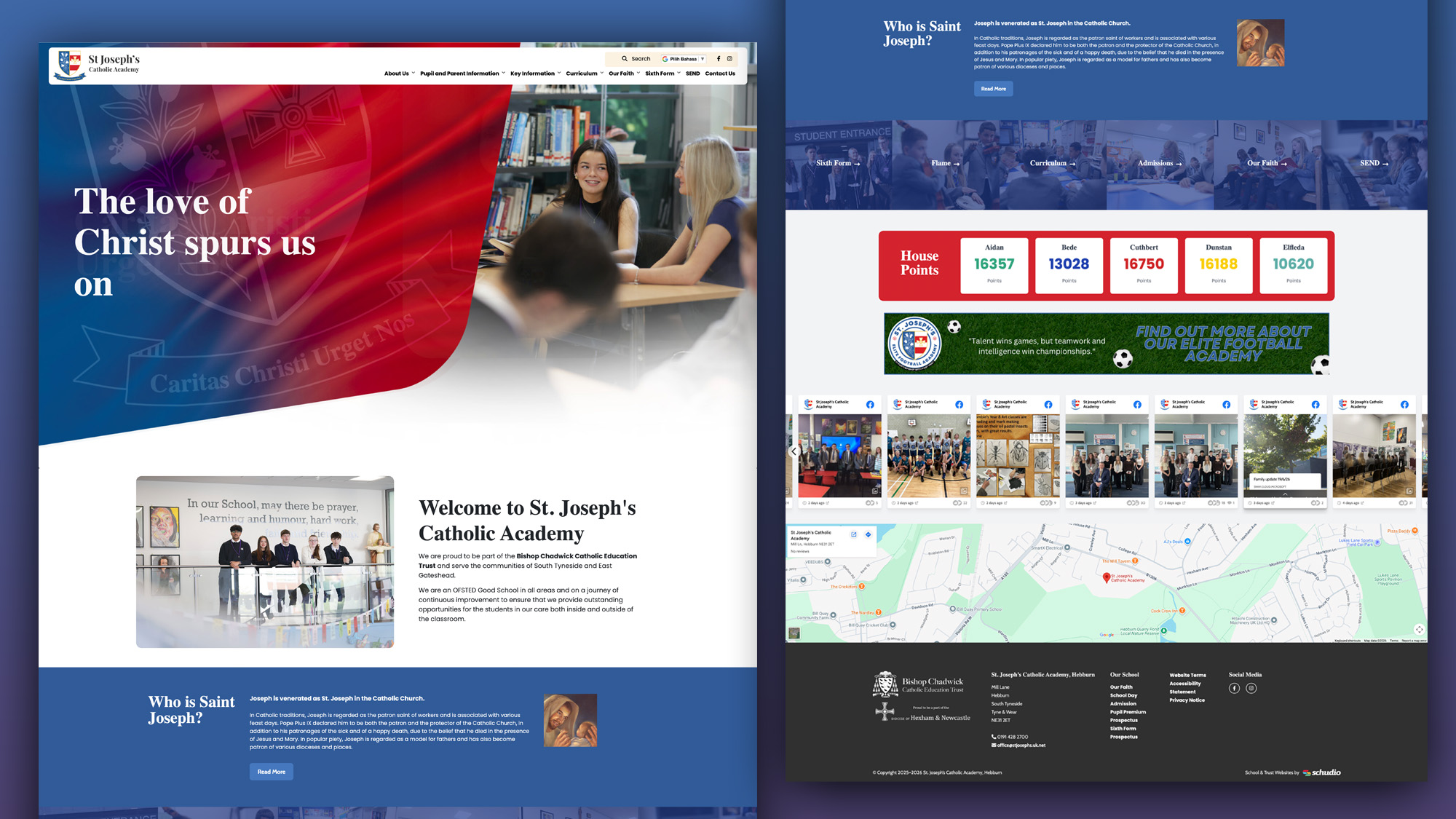
A school website says a lot before a parent reads a full page. Parents make ..
Luke Smith
June 24, 2026
School website news is one of the easiest ways to show parents, pupils and prospective ..
Luke Smith
June 17, 2026
A school website newsletter is one of the simplest ways to keep parents informed, make ..