Why a School Website CMS Should Guide Good Practice (Not Just Store Content)
Why a School Website CMS Should Guide Good Practice (Not Just Store Content)

If you’ve ever sat down to update your school website, you’ll probably recognise this.
You log in.
You find the page.
You click edit.
And then you pause.
Not because you don’t know what to say — but because you’re not quite sure how to say it on the page.
Where should this go?
Do I need a new section?
Is this already written somewhere else?
Should I create a new page or just add to this one?
So you make a decision. You write something. You move on.
And over time, that process repeats across dozens of pages.
That’s how most school websites are built.
Not through a clear structure, but through lots of small, well-intentioned decisions made by busy staff members trying to keep things up to date.
And this is where the real issue begins.
Because a school website CMS should not leave people guessing.
It should guide good practice.
Most School Website CMS Platforms Do One Thing Well
They store content.
They give you a place to upload policies, add news items, create new pages and manage documents.
And for many schools, that feels like enough.
The website exists.
The information is there.
The compliance boxes are ticked.
But over time, something starts to shift.
The school website becomes harder to manage.
The structure becomes less clear.
Content gets repeated.
Pages become longer than they need to be.
And suddenly, what should feel simple starts to feel like too much trouble.
This isn’t a people problem.
It’s a system problem.
A Content Management System Should Do More Than Store Content
A good content management system should actively support the people using it.
It should help staff members create clear, structured, user-friendly pages without needing to think about everything from scratch.
That’s what a true school website CMS is designed to do.
Not just store content.
But guide it.
Because the reality is this:
Most staff in schools are not trained in website design or content structure.
They are focused on teaching, supporting students, and running the day-to-day life of the school.
They need tools that make things incredibly easy.
The Real Role of a School Website CMS
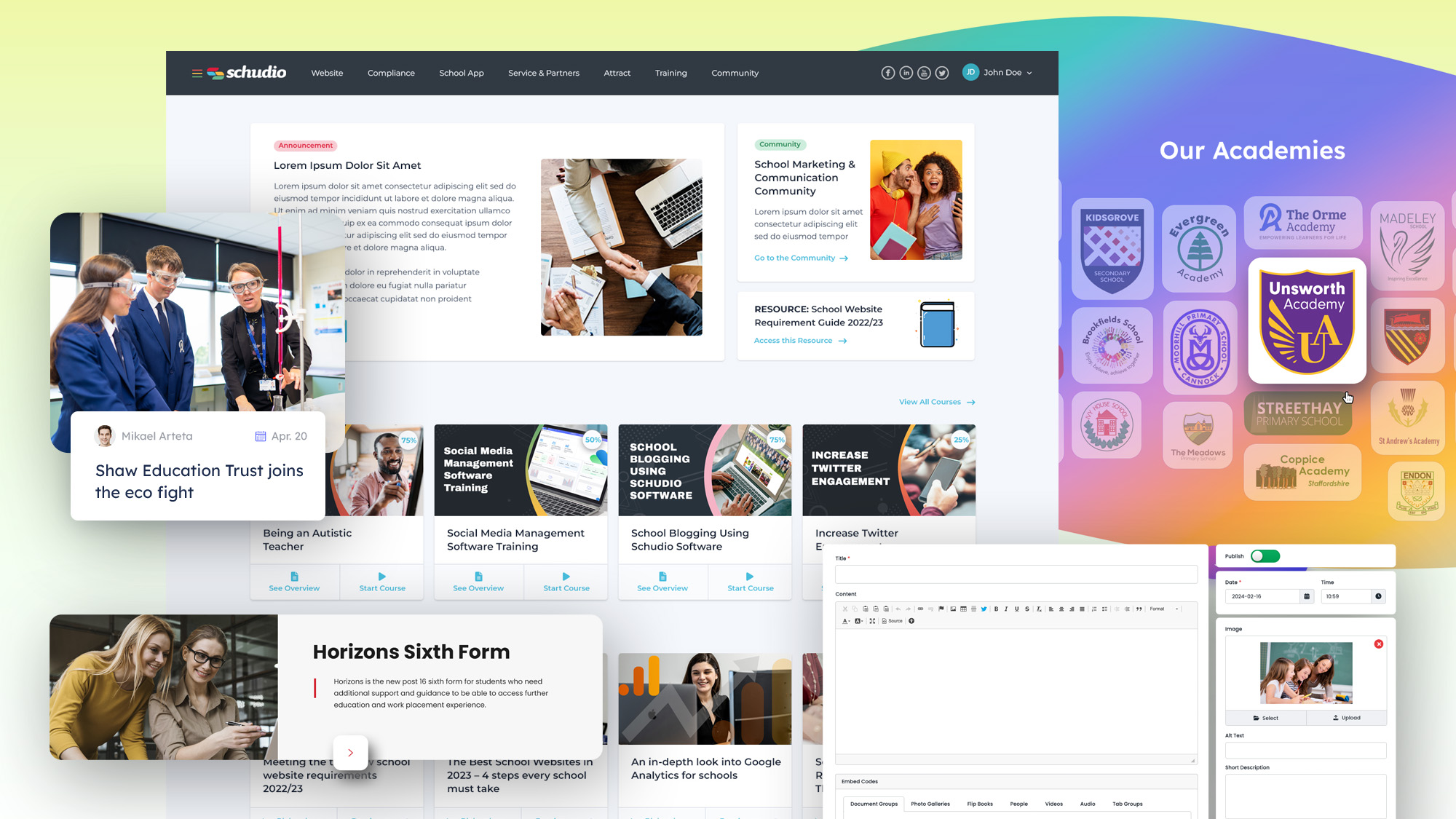
A strong school website CMS should quietly shape how content is created across the entire site.
It should:
- Guide the structure of key pages
- Help users understand what information belongs where
- Support consistency across the school website
- Reduce the number of decisions staff need to make
Instead of asking staff to create content from scratch every time, the CMS should provide a clear starting point.
For example:
When creating new pages, the system could suggest:
- A clear introduction
- Key information sections
- Contact or next steps
- Links to related pages
This transforms the experience.
Instead of starting from nothing, staff are supported from the beginning.
What Happens Without That Guidance
Without a CMS that guides good practice, most school websites drift over time.
It happens slowly.
A new page is created here.
Another section is added there.
Someone uploads a document instead of updating the content.
Before long, the structure becomes harder to follow.
You might see:
- Multiple pages covering the same topic
- Sub menus growing without a clear plan
- Important information buried several clicks deep
- Outdated content sitting alongside new content
And because the system doesn’t guide structure, every update becomes slightly harder than the last.
Why This Matters for Parents and Prospective Parents
For parents, the school website is often the first port of call.
They don’t explore it slowly.
They arrive with a question.
They want to find an answer quickly.
If they can’t, they leave.
That’s why structure matters so much.
A user friendly school website helps parents:
- Find term dates quickly
- Access contact details without searching
- Understand admissions clearly
- Explore school life through news and events
Prospective parents are doing something slightly different.
They are forming an impression.
They are asking:
What does this school feel like?
Would my child be happy here?
Does this feel organised and welcoming?
A CMS that guides structure helps create that clarity.
A School Website Should Tell a Story
A school website is not just a collection of pages.
It should tell the story of the school.
The achievements.
The culture.
The day-to-day life.
This is where features like:
- News
- Blogs
- Photo galleries
- Videos
become so important.
They bring the school community to life.
A good CMS should make it incredibly easy to create and update this kind of content.
For example:
- Adding news items that automatically appear across the site
- Uploading videos or drone footage of the school
- Creating gallery sections that showcase events and student success
These features are not just nice to have.
They are essential for engagement.
The Balance Between Control and Flexibility
One of the biggest challenges in the education sector is balance.
Schools need control.
They need to ensure compliance.
They need to manage access.
They need to protect sensitive data.
But they also need flexibility.
Different staff members need to manage different areas of the site.
A strong school website CMS solves this through:
- Role-based access control
- Password protected areas
- Secure areas for staff or governors
- Granular permissions for editing content
This allows schools to manage their website safely, without restricting progress.
Compliance Is Not Optional
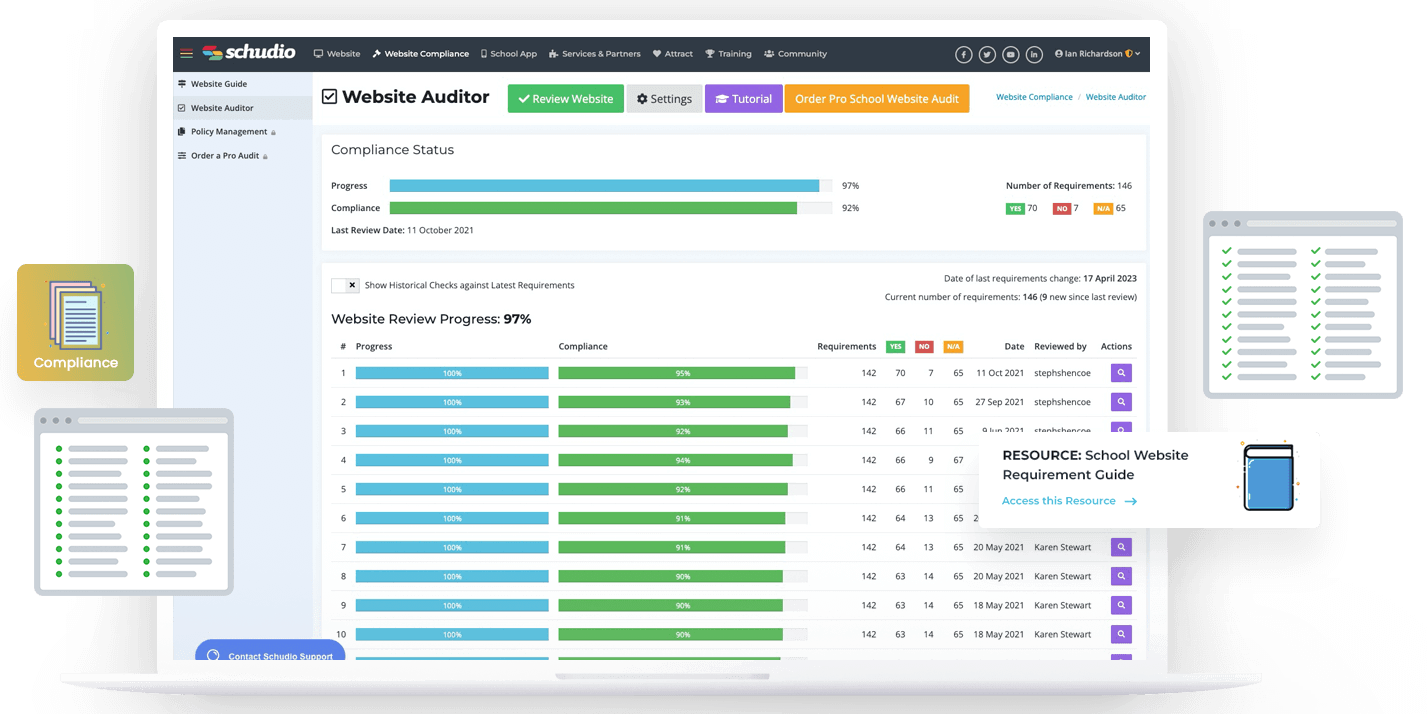
Every school website must meet strict requirements.
That includes:
- Accessibility standards
- GDPR compliance
- Secure hosting and data encryption
- Up-to-date statutory information
Ensuring compliance is a hugely important part of your school website.
A CMS should support this.
Not leave it to chance.
For example:
- Built-in accessibility checks
- Structured policy areas
- Clear navigation for statutory information
- Regular updates supported by experts
Without this, schools risk falling behind.
The Importance of Ongoing Support
This is one of the most overlooked parts of choosing a school website CMS.
The system matters.
But the support matters just as much.
Because even the best CMS still needs people behind it.
Schools need:
- Training for staff
- Ongoing support
- Access to experts
- Help when things change
This is where many platforms fall short.
They provide the system.
But not the support.
In contrast, the strongest providers offer ongoing support through phone, email or video, helping schools manage their website with confidence.
Modern Expectations Are Changing
The expectations around school websites are changing.
Parents expect:
- Mobile-friendly design
- Fast loading pages
- Clear navigation
- Regular updates
Students expect:
- Engaging content
- Visual storytelling
- Easy access to information
And across UK schools, there is a growing expectation that websites should support communication, marketing and community engagement.
A modern school website CMS needs to keep up.
That includes:
- Mobile responsiveness across every screen size
- Lightning fast performance
- Integration with other tools
- AI features that help staff create and refine content
AI is already starting to play a role here.
It can:
- Help draft news posts
- Improve existing content
- Translate content for multilingual communities
- Summarise long policies
This reduces workload and improves quality.
Why Design Alone Is Not Enough
Many schools invest in school website design.
And design is important.
Stunning visuals, strong branding, and a clear layout all help create a positive first impression.
But design alone is not enough.
If the underlying CMS does not guide good practice, the website will still become difficult to manage.
You can launch a beautiful new website…
…but without structure, it will drift.
That’s why the CMS matters just as much as the design itself.
What a Great School Website CMS Actually Looks Like
A strong school website CMS should feel like a quiet partner.
It should:
- Help staff create content quickly
- Guide structure without being restrictive
- Keep the website organised as it grows
- Support compliance and accessibility
- Provide ongoing support and training
It should make managing the school website feel simple.
Not overwhelming.
If you’re not sure whether your current school website CMS is helping or holding you back, we can help you review it.
We regularly work with schools and multi-academy trusts to:
- Review website structure
- Identify quick improvements
- Improve navigation and user experience
- Support compliance and content clarity
Final Thought
A school website CMS should do more than store content.
It should guide good practice.
It should support staff.
It should reduce complexity.
It should improve clarity.
Because the goal is not just to have a website.
It’s to have a school website that works.
For parents.
For staff.
For students.
And for the whole school community.

Related Posts

Ian Richardson
July 29, 2026
What parents look for in a school, and how your website answers it before they visit: culture, safeguarding, SEND support and clear practical information.
Ian Richardson
June 24, 2026
A school website says a lot before a parent reads a full page. Parents make ..
Luke Smith
June 24, 2026
School website news is one of the easiest ways to show parents, pupils and prospective ..

Luke Smith
June 17, 2026
A school website newsletter is one of the simplest ways to keep parents informed, make ..

Luke Smith
June 8, 2026
Good school communication makes a real difference. It helps parents know what is happening. It ..

Luke Smith
May 13, 2026
School website pupil photos have always played an important role. They help prospective parents see ..