Charging and Remissions Policies and What to Publish on Your School Website
Charging and Remissions Policies and What to Publish on Your School Website

Publishing a clear and accessible charging and remissions policy is a legal requirement for schools and academies. This policy outlines when parents and carers may be charged for activities and the conditions under which these charges may be reduced or waived. In this post, we’ll break down the latest school website requirements for charging and remissions policies, ensuring your school remains compliant and transparent.
Importance of Charging and Remissions Policies
A charging and remissions policy serves two key purposes:
- Compliance: Both maintained schools and academies are required to comply with the law on charging, outlined in Sections 449 to 462 of the Education Act 1996. Academies must follow these rules as part of their funding agreements.
- Transparency and Accessibility: A clearly outlined policy informs parents and carers about potential costs associated with school activities, providing transparency about financial expectations. This is especially important to support families who may need financial assistance.
What Schools and Academies Must Publish
To meet statutory requirements, schools and academies must publish:
- Charging Policy: This should detail which activities the school charges for, such as extracurricular trips, certain after-school clubs, or specialised instructional materials. The policy must clearly specify which activities will incur charges and the circumstances under which these charges apply.
- Remissions Policy: Schools are also required to publish a remissions policy. This explains any situations in which the school will reduce or completely waive charges for certain families. For example, the remissions policy might cover trips for pupils whose families meet specific financial criteria, ensuring that all students can participate in school activities regardless of financial status.
Schools have the option to combine these policies into a single document covering both charging and remissions, which is generally more user-friendly. A combined policy ensures parents have a clear, all-in-one resource to understand the financial expectations and support options available.
Displaying Charging and Remissions Policies on Your Website
Here are some best practices for publishing charging and remissions policies on your website:
- Organised and Easy-to-Find Location: Ensure the policy is clearly labelled and easy to access on your website. Ideally add to a section specifically for school policies or statutory information. This makes it simple for parents, carers, and inspectors to locate.
- Linking to External Resources: If you reference external resources, such as guidance documents or relevant sections of the Education Act, make sure links open in a new window or tab. This allows visitors to easily return to your school website after reading the additional information.
- Clarity and Accessibility: Write the policy in straightforward language, ensuring it’s accessible for all readers. Parents and carers need to clearly understand any costs associated with school activities and their options if they cannot cover these charges.
- Periodic Review: Charging and remissions policies should be reviewed regularly. This will ensure they remain current and reflect any changes in legal requirements or school policy updates. Include a review date on the policy document itself so readers know when it was last updated.
- Combining Charging and Remissions Policies: Where possible, combine the charging and remissions sections into a single document. This approach reduces confusion. Also, it keeps all relevant information in one place, making it easier for families to find the answers they need.
Conclusion
The charging and remissions policy is a straightforward requirement. Ensure it is comprehensive, accessible, and up-to-date. This is essential for compliance and transparency. By publishing a clear policy on your website, you support parents and carers in understanding financial expectations. Furthermore, you help ensure that all students can access enriching school activities. A well-managed charging and remissions policy is a simple but powerful way to build trust and make school resources accessible to all.


Related Posts

Ian Richardson
October 1, 2025
A school website is more than a digital noticeboard. It’s the first place prospective ..

Harry
September 24, 2025
When it comes to school website compliance for secondary schools, the rules are clear—but keeping ..
Ian Richardson
September 1, 2025
Meeting the Department for Education (DfE) website requirements isn’t just about ticking boxes—it’s about ensuring ..
Ian Richardson
August 29, 2025
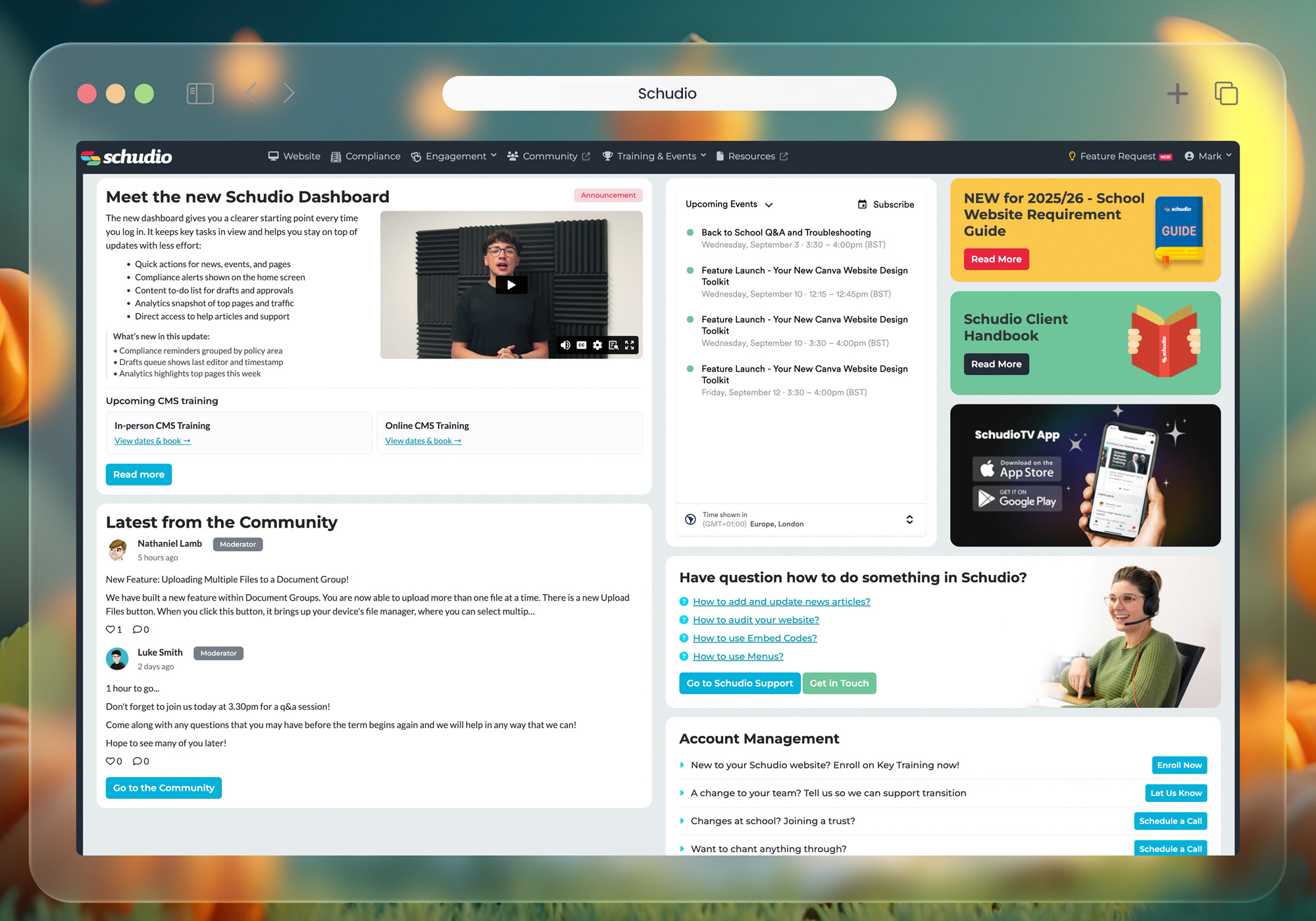
Your school website CMS should feel like a helpful home screen. The refreshed Schudio dashboard ..

Harry
May 25, 2025
The school website requirement to publish a school uniform policy was introduced in 2022, yet ..

Ian Richardson
May 15, 2025
In 2022, the requirement to publish school opening hours was introduced, yet many schools still ..