Why School Websites Should Be the Centre of School Communication
Why School Websites Should Be the Centre of School Communication
Good school communication makes a real difference.
It helps parents know what is happening. It helps carers feel included. It gives school staff a clear way to share key information. It helps teachers communicate with families in a calm, consistent way. Most of all, it helps every child get better support at home and in school.
The challenge is that school communication has become spread across too many places.
Parents may receive messages through email, apps, texts, newsletters, social media, printed letters, home-school books, phone calls and meetings. Each method can be useful. The problem comes when there is no clear central place for information.
That is where the school website matters.
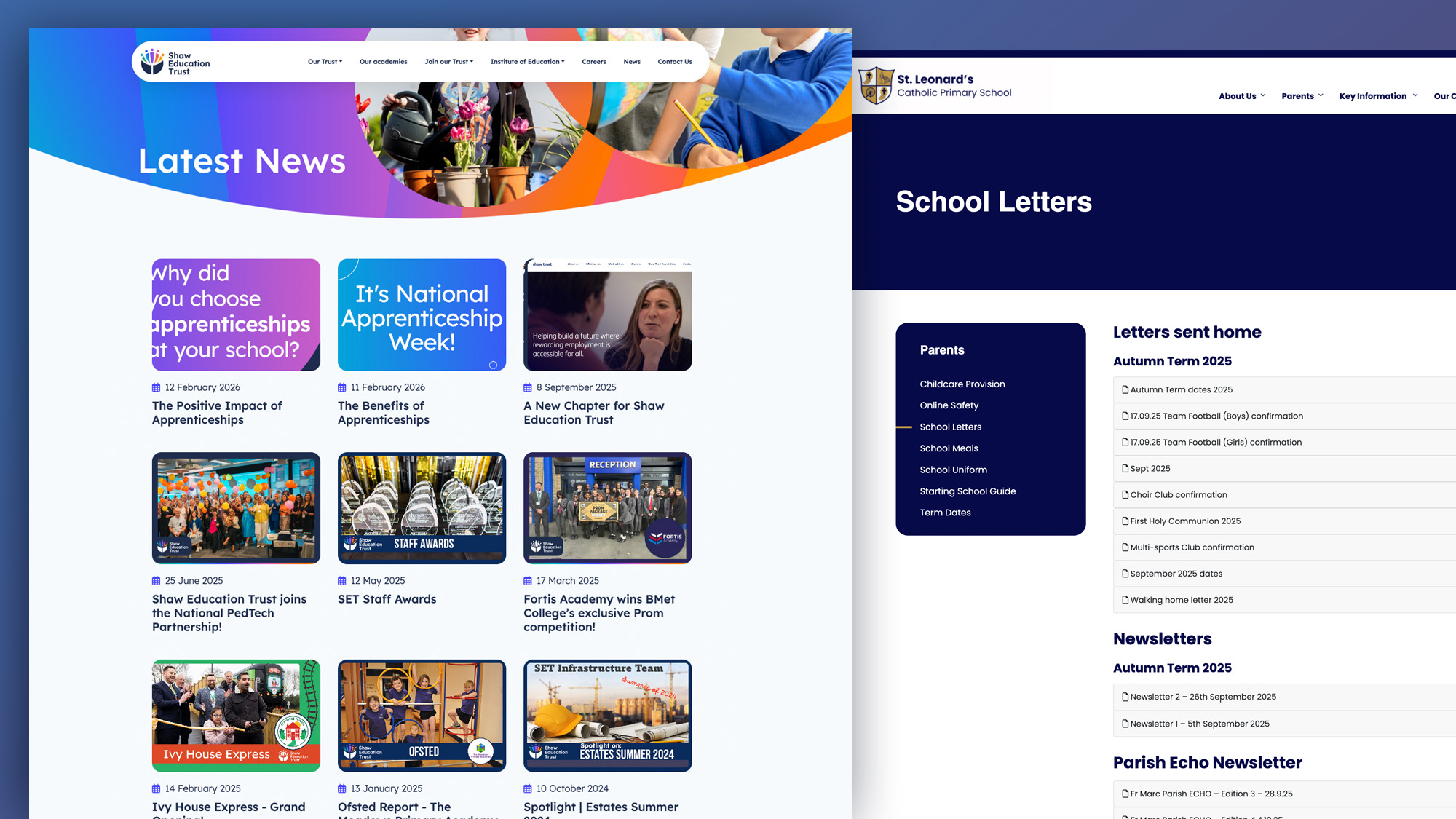
Your website should be the centre of school communication. It should be the place parents and carers can rely on when they need key information about their child’s school. Other channels can still be used, but the website should hold the core details, the full guidance and the information people may need to return to later.
A clear website helps schools communicate better, manage information more easily and build stronger relationships with families.
Why school communication needs a clear centre
Good school communication is not about sending more messages.
It is about sending the right messages, through the right channels, in a way that is easy to follow.
Many parents and carers already feel busy and overloaded. Long emails, repeated app alerts and scattered social media updates can leave families feeling unsure where to look. A parent may miss a key message, then contact the office, speak to a teacher, ask another parent or search the website.
That creates extra work for staff and extra frustration for families.
A website-first approach makes school communication clearer.
The website becomes the central platform for information. Email, apps, texts and social media can then point parents back to the right place.
For example:
- A school publishes full trip details on the website.
- A short message goes out through the app.
- An email links to the full page.
- A reminder appears in the newsletter.
- Staff know exactly where to send parents who have questions.
This gives everyone one clear source of information.
Effective communication starts with consistency
Effective communication between schools and parents relies on consistency.
Parents need to know where to find information. Staff need to know where to publish it. Leaders need confidence that important updates are clear, current and accessible.
When communication is consistent, it creates a more collaborative culture across the school community. Parents know what to expect. Teachers are less likely to repeat the same information in different places. Office staff can respond to queries more quickly. Leaders can manage key messages with greater confidence.
This matters in every setting, from a small primary school to a large secondary school or multi-academy trust.
Consistency in school communication should cover:
- who sends messages
- where information is published
- how often updates are shared
- what language is used
- how parents can respond
- where school policies are stored
- how urgent concerns should be raised
- which person or team should be contacted for each type of query
Clear guidelines help parents know whom to contact. This reduces confusion and helps staff address issues more efficiently.
The school website should be the main communication hub
Your website should hold the information that parents and carers may need to find again.
This includes:
- term dates
- school policies
- curriculum information
- newsletters
- school news
- admissions information
- safeguarding information
- special educational needs information
- attendance guidance
- uniform details
- contact details
- event information
- resources for families
- advice for parents
- information about learning and homework
- guidance on additional support
Apps, emails and social media are useful for reminders. The website is better for information that needs structure.
A social media post can get attention, but it is difficult to find later. An app message can be useful, but it may not be available to every parent or carer. Email can work well, but inboxes are easy to miss.
The website gives information a proper home.
Parents prefer concise communication
Parents usually want communication that is clear and concise.
They do not want to search through long messages to find one action. They do not want several versions of the same update in different places. They do not want to guess whether the app, email, newsletter or website has the latest information.
Concise communication increases parent engagement and reduces overwhelm.
A useful school communication strategy might be:
- publish the full information on the website
- send a short message with the link
- use plain language
- give one clear action
- make contact routes obvious
- provide dates, times and deadlines near the top
- use headings and bullet points for clarity
This approach helps parents act quickly. It helps school staff reduce repeat queries. It helps families feel informed rather than overloaded.
Parent engagement improves when information is easy to find
Parent engagement is closely linked to clear communication.
When parents understand what is happening in school, they are more likely to feel involved. They are more likely to attend meetings, respond to messages, support learning at home and raise concerns early.
High parental engagement has a strong link with better student outcomes. Parents who feel included are better placed to support their child’s progress, child’s learning and wider education.
This is especially important when a child needs additional support, has special educational needs, is finding learning difficult or is dealing with a change at home.
Good communication helps create a stronger partnership between school and home.
It helps parents and carers:
- know what their child is learning
- prepare for meetings
- discuss concerns early
- support homework
- access resources
- speak to the right member of staff
- feel confident asking for help
- encourage their child at home
Parent engagement does not happen by chance. It grows through regular, clear and respectful communication.
Proactive communication builds trust
Schools should not wait until there is a concern before they contact families.
Proactive communication helps parents feel more involved and informed. A positive message early in the school year can build trust before anything difficult needs to be discussed.
This could include:
- a welcome message from the class teacher
- a clear guide to the year ahead
- a simple explanation of expectations
- an introduction to key staff
- information about how to contact the right person
- early positive feedback about the child
- reminders about meetings and parent evenings
Trust is built through small, consistent interactions.
This is where the website can support the whole process. A class page, year group page or parent information page can give families a clear place to return to throughout the year.
Schools should create two-way feedback loops
School communication should not only be about sending information out.
Parents and carers need ways to respond, ask questions and share feedback.
Schools can gather feedback through:
- digital surveys
- focus groups
- suggestion boards
- parent meetings
- parent evenings
- annual communication surveys
- short feedback forms after events
- informal conversations with families
Active feedback loops help schools review what is working. They can help determine whether parents feel informed, whether messages are too long, whether the preferred method of communication is clear and whether families know whom to contact.
A simple annual survey can ask:
- Do you know where to find key information?
- Do you find school messages easy to read?
- Do you know who to contact with a question?
- Are you receiving the right amount of communication?
- Which communication channels work best for you?
- What would help you feel more involved?
This evidence can help leaders adapt their school communication strategy with confidence.
Communication needs to work for every family
A good communication strategy should work for the whole audience.
Families have different needs. Some parents may prefer email. Some may rely on app notifications. Some may need printed information. Some may need translation. Some may have limited access to digital tools. Some may need communication in a simpler format.
Schools can support families by using:
- simple, jargon-free language
- clear headings
- short paragraphs
- visual layouts
- structured instructions
- translated notifications where appropriate
- accessible website content
- clear contact routes
- reminders in more than one format when needed
Multilingual translation tools can help families receive notifications in their native languages. This can make a major difference for parents and carers who may otherwise miss key messages.
Clear communication is part of inclusion. It helps every family take part in school life.
Home-school books still have a role
Digital communication is valuable, but home-school books still work well in some settings.
They can support daily communication between parents and teachers, especially where a child needs regular notes between home and school. This can be particularly useful for younger pupils, pupils with special educational needs or pupils receiving additional support.
Email can serve as an alternative to home-school books where that works better for the family and staff.
The key point is to choose the right method for the right purpose.
For example:
- home-school books can support daily notes
- email can support direct updates
- phone calls can support urgent situations
- meetings can support deeper conversations
- the website can hold the main information
- newsletters can share regular updates
- apps can send quick reminders
No single channel can do everything. The website gives the wider system structure.
Phone calls still matter
Digital messages are useful, but some situations need immediate personal contact.
Phone calls are still one of the best ways to communicate in urgent situations. They allow staff to speak directly with a parent or carer, explain the issue and respond to questions in the moment.
A phone call can be particularly helpful when:
- there is a safeguarding concern
- a child is upset
- behaviour needs to be discussed
- a parent needs reassurance
- an urgent decision is needed
- a message could be misunderstood in writing
Good school communication is not about replacing personal contact. It is about using each method well.
Visual communication helps students too
Communication is not just for parents.
Students benefit from clear, structured information as well.
Visual and structured approaches can make instructions easier to digest. This is especially helpful in the classroom, during transitions, for homework tasks and for pupils who need additional support.
Schools can use:
- checklists
- simple steps
- icons
- visual timetables
- short written instructions
- clear page layouts
- consistent formats
The same principle applies to the school website. A page that is easy to scan is more useful than a long block of text. Parents, carers, staff and students all benefit when information is presented clearly.
School policies need to be easy to find
School policies are a key part of school communication.
Parents and carers may need to find policies on behaviour, safeguarding, attendance, SEND, complaints, admissions, charging, uniform and accessibility.
These documents should not be hidden away.
A clear policies section helps parents find the information they need and helps staff direct families to the right place. It can reduce misunderstandings and improve relationships with parents.
Effective communication policies set expectations for everyone. They explain how the school will communicate, how parents can contact staff, how quickly the school will aim to respond and what to do if there are concerns.
This gives communication a clear framework.
Schools should plan regular parent touchpoints
Good communication needs rhythm.
Schools should aim to meet parents at least three times per year through formal or structured opportunities. These might include parent evenings, review meetings, open classroom events, progress discussions or other planned conversations.
Regular meetings help parents stay informed about their child’s progress. They give teachers space to discuss learning, concerns, next steps and support strategies. They help families feel part of the process.
Between meetings, the website can help keep parents informed. Year group pages, curriculum updates, newsletters and resources can all support ongoing communication.
Top tips for better school communication
Here are some practical top tips for schools reviewing communication.
- Make the website the central source of information
Publish key information on the website first, then use other channels to send parents there. - Keep messages concise
Parents prefer communication that is short, clear and easy to act on. - Use simple language
Avoid jargon. Use words parents and carers will understand straight away. - Set clear contact routes
Help families know which person to contact for different queries. - Review your preferred method for each message type
Decide what belongs on the website, what should go by email, what needs a phone call and what can be shared through social media. - Build feedback loops
Use surveys, focus groups and suggestion boards to gather ideas from parents. - Share positive messages early
Start the year with communication that builds trust and relationship. - Make information accessible
Use structure, headings, translated messages where needed and clear page layouts. - Keep school policies visible
Make policies easy to find and simple to access. - Review what parents ask most often
If the same questions keep coming in, the website may need clearer information.
A better communication strategy starts with the website
School communication works best when it is clear, consistent and centred around one reliable place.
The website should be that place.
It gives parents and carers access to key information. It helps staff manage messages. It supports teachers in building stronger relationships with families. It helps leaders communicate expectations, policies and priorities. It gives prospective families a clear view of the school. It helps every child receive better support.
Apps, emails, phone calls, meetings, home-school books and social media all have a role. But the website should hold the centre.
When the website is clear, current and easy to use, school communication becomes easier to manage.
And when communication improves, families feel more involved, staff feel better supported and students have a stronger chance to succeed.
Need help reviewing your school communication?
If your school or trust is relying on lots of separate channels and parents are still struggling to find key information, it may be time to review your website communication.
At Schudio, we help schools and multi-academy trusts make their websites clearer, easier to manage and more useful for parents, staff and prospective families.
We can review how your current website supports school communication and suggest practical improvements that make information easier to find, easier to manage and easier for families to use.

Related Posts

Ian Richardson
September 30, 2026
What schools should not use AI for, the AI safeguarding risks behind each limit, what KCSIE 2026 now says, and a practical checklist for school leaders.

Ian Richardson
September 16, 2026
Introducing the Schudio AI Suite: AI school website software that checks what you publish, drafts pages in your school's voice and answers parents' questions.

Ian Richardson
July 29, 2026
What parents look for in a school, and how your website answers it before they visit: culture, safeguarding, SEND support and clear practical information.
Ian Richardson
June 24, 2026
A school website says a lot before a parent reads a full page. Parents make ..
Luke Smith
June 24, 2026
School website news is one of the easiest ways to show parents, pupils and prospective ..

Luke Smith
June 17, 2026
A school website newsletter is one of the simplest ways to keep parents informed, make ..