How Often Should School Website News Be Published?
How Often Should School Website News Be Published?
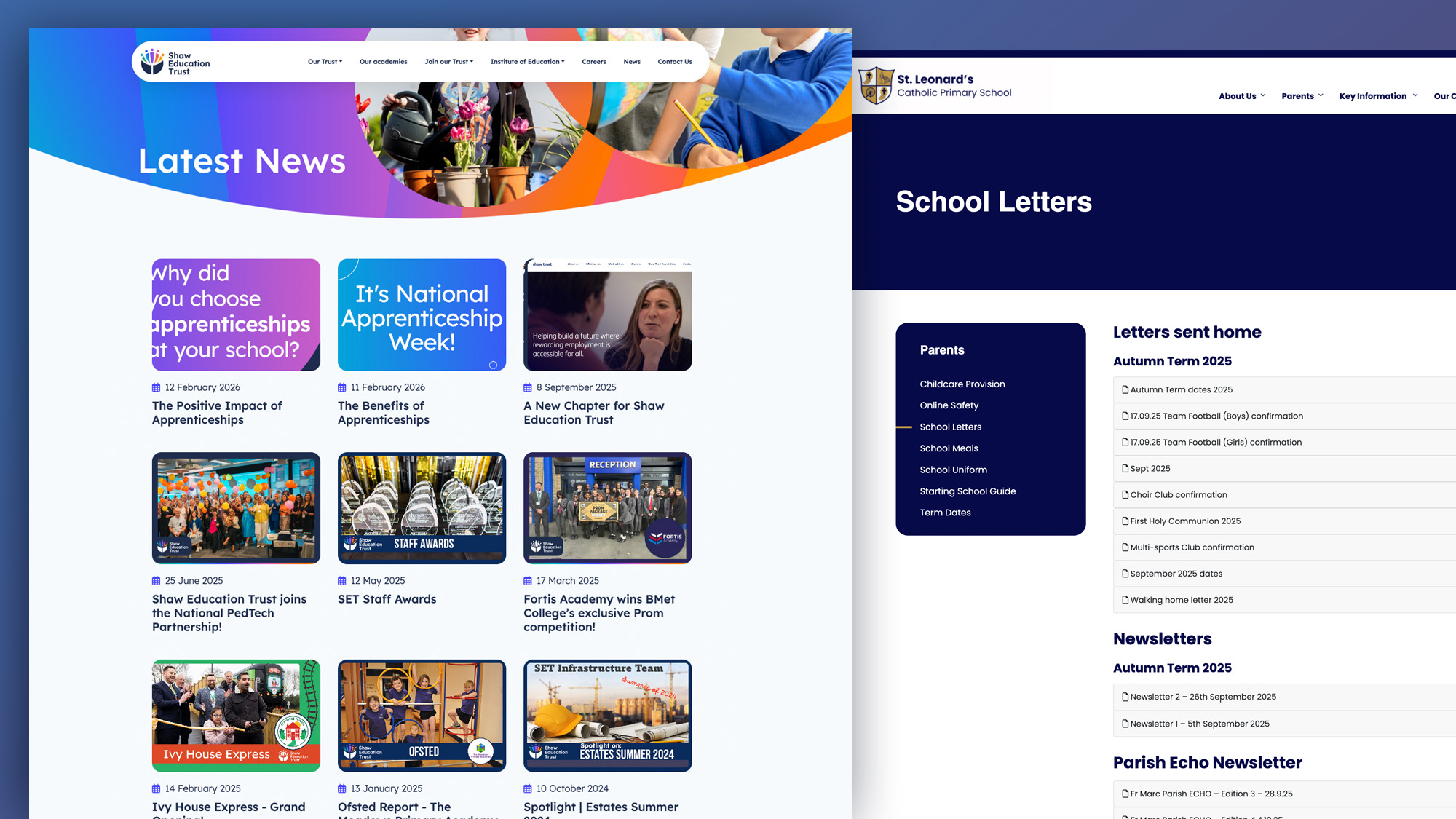
School website news is one of the easiest ways to show parents, pupils and prospective families that your school is active, organised and full of life.
It gives families regular updates. It helps students, children and young people see their work celebrated. It gives teachers and staff a simple way to share school stories. It keeps the school website fresh. It helps the wider school community see what is happening inside classrooms, departments, year groups and the wider life of the school.
Yet many schools find school website news hard to keep up with.
The problem is rarely a lack of things to share. In most schools, there is a lot happening every day. Pupils are learning, trips are taking place, teachers are leading projects, clubs are running, visitors are coming in, students are developing new skills and communities are being built.
The real issue is consistency.
Schools often wait until they have the perfect story, the perfect photo or the perfect write-up. Then the news section gets left for weeks or months. A part of the website that should show energy and life starts to feel quiet.
School website news does not need to be perfect.
It needs to be short, friendly, simple and regular.
Why school website news matters
A school website is often the first place a parent visits when they are choosing a school.
They may look at admissions, curriculum, school policies, contact details, safeguarding and support information. But they are looking for something more human too.
They want to see what the school feels like.
A good school website news section can show:
- pupils enjoying learning
- students taking part in events
- children sharing work
- teachers creating positive classroom experiences
- trips and visits
- curriculum projects
- sports, music, art and drama
- library updates
- department stories
- key stage activities
- school values in action
- links with local communities
- wider education news that affects families
These regular updates help parents see the life of the school.
A strong news section makes the school feel current. An outdated news section can create concerns, even when the school itself is busy and thriving.
If the latest post is from last term, or worse, from several years ago, a prospective parent may wonder whether the website is being looked after.
That may not reflect the school at all, but the website shapes first impressions.
How often should schools publish news?
There is no single answer that works for every school.
The right rhythm will vary based on staff capacity, school size, age range, audience, and how much content the school already publishes.
A realistic guide would be:
- Small primary schools: two posts per month as a starting point.
- Larger primary schools: one post per week during term time.
- Secondary schools: one or two posts per week, shared across year groups, subject areas or departments.
- MATs: one post per school per week, with trust-level highlights each month.
- Busy schools with strong admin or marketing support: several short posts each week.
For most schools, one short post per week during term time is a strong target.
If that feels too much, start with one post every two weeks. A steady rhythm is better than a busy burst followed by silence.
Consistency matters more than perfection
One of the biggest reasons schools stop publishing news is that every article starts to feel too big.
The post does not need to be long.
A useful school website news post can be:
- one clear headline
- one short paragraph
- one photo or video where suitable
- one link if needed
For example:
Year 4 enjoyed a brilliant visit to the local library this week as part of their reading project. Pupils explored a broad range of books, talked about favourite authors and chose new stories to bring back into the classroom.
That is enough.
It tells a story. It celebrates pupils. It shows learning. It gives parents something to talk about with their kids at home.
Schools should keep posts short, friendly and simple. Bite-sized posts are easier for families to read and easier for staff to create.
Clear headlines make school news easier to read
Clear, concise headlines help parents find the main point quickly.
A good headline should say what the story is about without trying too hard.
Good examples include:
- Year 2 Visit the Local Fire Station
- Students Take Part in Careers Workshop
- Library Reading Challenge Begins This Week
- Year 7 Pupils Explore Science Through Practical Research
- School Council Share Their Views
- Key Stage 2 Pupils Celebrate Music Performance
- Department Spotlight: Art and Design
- Children Raise Money for Local Charity
These headlines are simple, searchable and useful.
They help parents, staff, pupils and prospective families scan the news section quickly.
What broad range of topics should count as school news?
Schools sometimes look for big stories and miss the smaller ones.
But small stories are often the most powerful.
Good school website news can include:
- classroom learning
- curriculum projects
- teaching highlights
- trips and visits
- school clubs
- student leadership
- pupil achievements
- library updates
- charity events
- department activities
- staff training
- school council news
- careers education
- local community links
- research projects
- sports fixtures
- art displays
- reading challenges
- outdoor learning
- visitors and workshops
These stories help families see what their children are experiencing.
They show the daily life of school, not just the special events.
Website news should support education, not add pressure
Education staff are busy.
Teachers, office teams, leaders and educators have enough work to manage without school website news becoming another heavy task.
The aim should be to save time, not create more pressure.
A simple process helps.
Ask staff to send:
- what happened
- who was involved
- one photo, where rights and permissions allow
The website lead can turn that into a short post.
The person writing the post does not need to produce a long article. They need to capture the moment and make it easy for parents to read.
This makes school website news far more manageable.
Segment website content by key stage and audience
Not every story needs to speak to every person.
Segmenting school website content by audience can improve engagement.
For example:
- Reception updates for new parents
- Key stage news for families in specific year groups
- Secondary school department news for subject areas
- SEND updates for families needing extra support
- Careers education updates for older students and teens
- School trip updates for parents of pupils taking part
- Community stories for local partners
- Trust-wide news for governors and leaders
This does not mean creating a complicated website. It means giving content a clear place.
Parents should be able to find news that relates to their child. Students should be able to see stories linked to their stage. Staff should know where updates belong.
Use media carefully
News posts on school websites should include rich media where suitable.
Images, short videos, galleries and embedded clips can make school stories more engaging. A photo of a classroom activity, a short video from a performance or a few images from a trip can bring the story to life.
But media should be used with care.
Schools need to check:
- photo permissions
- safeguarding rules
- copyright rights
- file size
- website performance
- whether the content works on phones
- whether captions or short context are needed
A post does not need a perfect photo to be useful. But visually appealing media can make school news much more engaging.
Connect news with calendars and events
Regular updates in newsletters, calendars and event details are useful for parents.
A dynamic calendar integration can improve accessibility of school news. An interactive calendar on the school website can help parents see event details, dates, times and locations in one place.
For example, a news post about a school production could link to:
- the event page
- booking information
- a Google Calendar entry
- rehearsal details
- related photos after the event
A post about a trip could link to:
- payment information
- consent forms
- kit lists
- arrival times
- follow-up photos
This makes the news section practical, not just promotional.
Use homepage alerts for urgent updates
School website news is useful for regular stories and updates.
But urgent items need a different approach.
Prominent tickers or alert bars can be used on school homepages for emergencies, closures, transport problems or certain alerts that parents need to see quickly.
This keeps the news section clear and prevents urgent messages from being buried among regular articles.
A good structure might be:
- homepage ticker for urgent alerts
- calendar for dates
- newsletter for round-ups
- news section for school stories
- policy area for school policies
- contact page for queries
Each part of the website has a clear job.
School trips are changing, so news matters
School trips remain an important part of education, but the way schools plan and communicate trips is changing.
Curriculum pressure has reshaped the way many UK schools think about trips. Budget concerns, staffing pressures, cost scrutiny and parental expectations can all affect planning.
New figures and sector insights suggest school trip dynamics are changing across the country, with schools having to be clearer about value, learning aims and cost.
This makes website news useful.
A short post before or after a trip can explain:
- what pupils learned
- how the trip links to the curriculum
- which skills students developed
- why the visit mattered
- what parents need to know
- how the trip supported classroom teaching
This helps families see trips as part of education, not just a day out.
Wider education stories about young people can inspire school content
Schools do not need to publish only internal updates.
Carefully chosen wider education stories can give schools useful content ideas.
For example, the DfE announced a new national framework for Management Information Systems. MIS reform is significant for school technology advancement, and over 10,000 schools use Management Information Systems worldwide.
A school would not need to write a technical article about MIS. But a short update about how technology supports school administration, parent communication or learning could be useful.
In the same way, news resources used by schools can inspire content.
Over 10,000 schools use First News subscriptions. First News supports reading for pleasure through engaging stories, improves oracy through discussion of current events, offers interactive quizzes for students during term time and has provided free digital subscriptions during summer holidays.
A school could turn this into a simple post about reading, debate, current affairs or how pupils learn about the wider world.
The point is not to copy national stories. It is to connect them to the life of your school.
What if nothing big has happened?
There is nearly always something worth sharing.
Schools do not need to wait for a major event.
Useful prompts include:
- What are pupils learning this week?
- What has happened in the classroom?
- Has a teacher led a new activity?
- Has a department started a new topic?
- Has the library introduced new books?
- Have students taken part in a discussion?
- Have pupils shared their views?
- Has a member of staff completed training?
- Has the school joined a local project?
- Are there upcoming events parents need to know about?
- Has anything changed in the curriculum?
- Are there concerns parents need advice on?
- Has a group of children achieved something worth celebrating?
These ideas can become short posts that help parents stay connected.
A realistic monthly plan for school website news
A busy school could use this simple plan.
| Week 1 | Week 2 | Week 3 | Week 4 |
| Classroom learning story. | Pupil achievement or student voice story. | Trip, club, library or event update. | Curriculum, community or newsletter link. |
That gives the school four posts per month without requiring long articles.
A secondary school could rotate across departments:
- English and library news
- science research project
- arts or media story
- careers education update
- sports news
- student leadership
A primary school could rotate across year groups or key stage areas.
A MAT could ask each school to share one update per week, then use trust news to highlight the best stories from across its schools.
Community Classroom idea
This topic would work well as a Community Classroom session.
A useful session could help schools:
- plan a realistic news schedule
- decide what counts as news
- write short, friendly posts
- create clear headlines
- link news with newsletters and calendars
- use photos and videos safely
- segment content by audience
- share school stories through social media
- avoid letting the news section go quiet
Many schools know they should publish more website news. What they need is a simple routine that fits real school life.
School website news should show the truth of school life
A quiet news section can make a busy school look inactive.
Regular school website news helps show the truth.
It shows pupils learning. It shows teachers teaching. It shows students growing. It shows staff supporting families. It shows children taking part in the life of the school. It shows education as active, personal and full of stories.
Schools do not need to publish perfect articles.
They need regular updates that parents can read, trust and share.
One short post each week can make a real difference.
Need help improving your school website news?
If your school website news section has gone quiet, it may be time to create a simpler publishing plan.
At Schudio, we help schools and multi-academy trusts make their websites clearer, more useful and easier to keep up to date.
We can help you review your school website news, create a realistic content plan and make sure your school stories are easy for parents, pupils, staff and prospective families to find.

Related Posts

Ian Richardson
October 20, 2026
What should a school website look like in 2027? The school website trends that matter for UK schools and trusts, with a practical checklist and an FAQ.

Ian Richardson
October 13, 2026
AI-generated school content saves time, but accuracy, tone and safeguarding still need a person. What DfE guidance says, who reviews what, and a checklist.

Ian Richardson
October 7, 2026
What a school website chatbot should answer, what it should never answer, and how to get your pages ready before you switch one on. A guide for leaders.

Ian Richardson
September 30, 2026
What schools should not use AI for, the AI safeguarding risks behind each limit, what KCSIE 2026 now says, and a practical checklist for school leaders.
Ian Richardson
September 16, 2026
Introducing the Schudio AI Suite: AI school website software that checks what you publish, drafts pages in your school's voice and answers parents' questions.
Ian Richardson
July 29, 2026
What parents look for in a school, and how your website answers it before they visit: culture, safeguarding, SEND support and clear practical information.