School Website Student Recruitment: Turning Your Website Into a Recruitment Machine
School Website Student Recruitment: Turning Your Website Into a Recruitment Machine
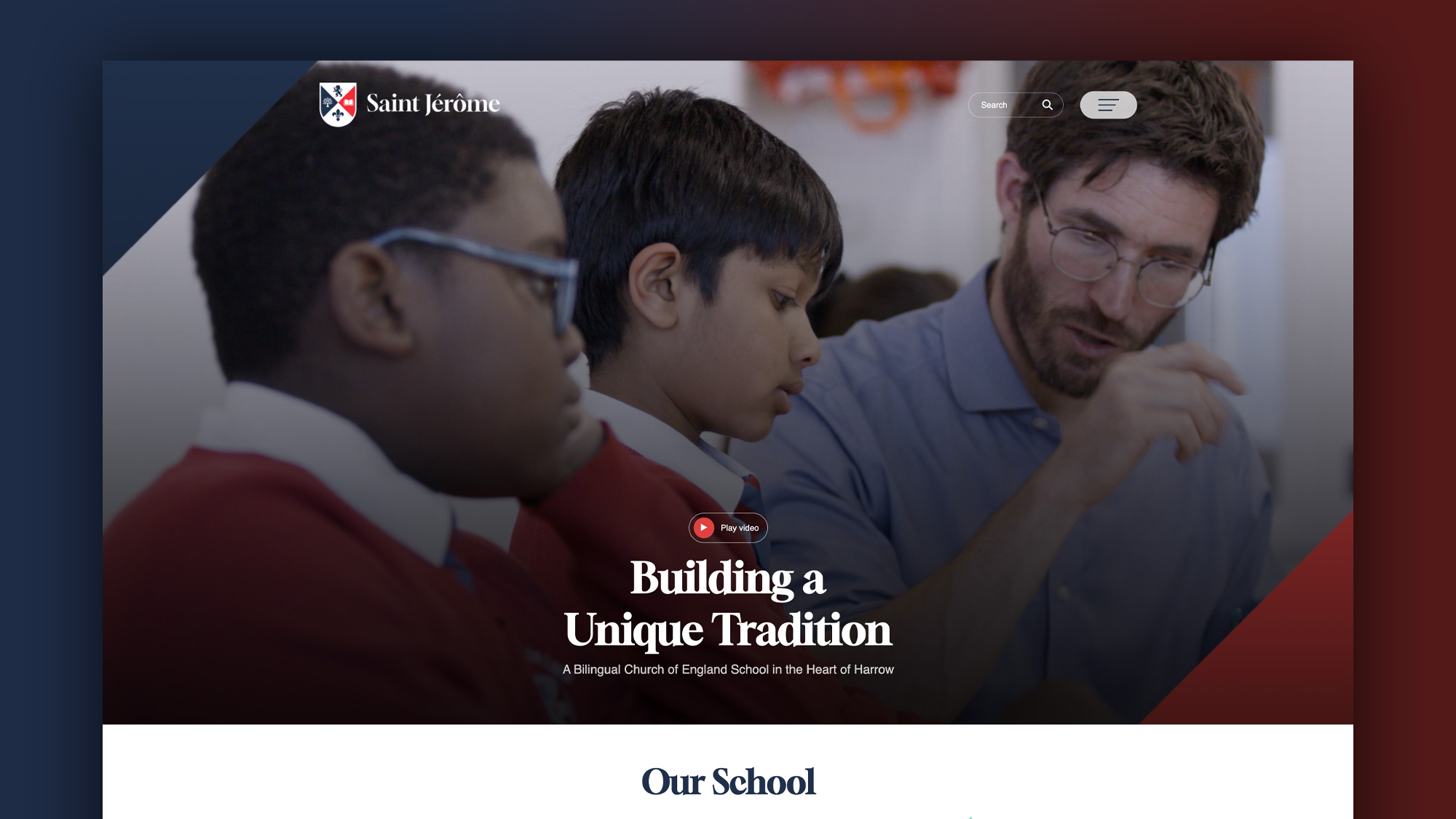
Your website is one of the most valuable student recruitment tools your school has.
For many families, it is the first proper experience they have of your school. They may have heard about you from other parents, seen a social media post, found you through Google, or driven past your site locally. The next step is often the same: they visit your website.
That moment matters.
A strong school website gives prospective students and their families a clear, positive and practical first impression. It helps them understand what makes your school different, what support is available, how admissions work and what to do next.
That is why school website student recruitment should be treated as a central part of your admissions and marketing strategy, rather than an afterthought.
Your website is where families begin their journey with your school
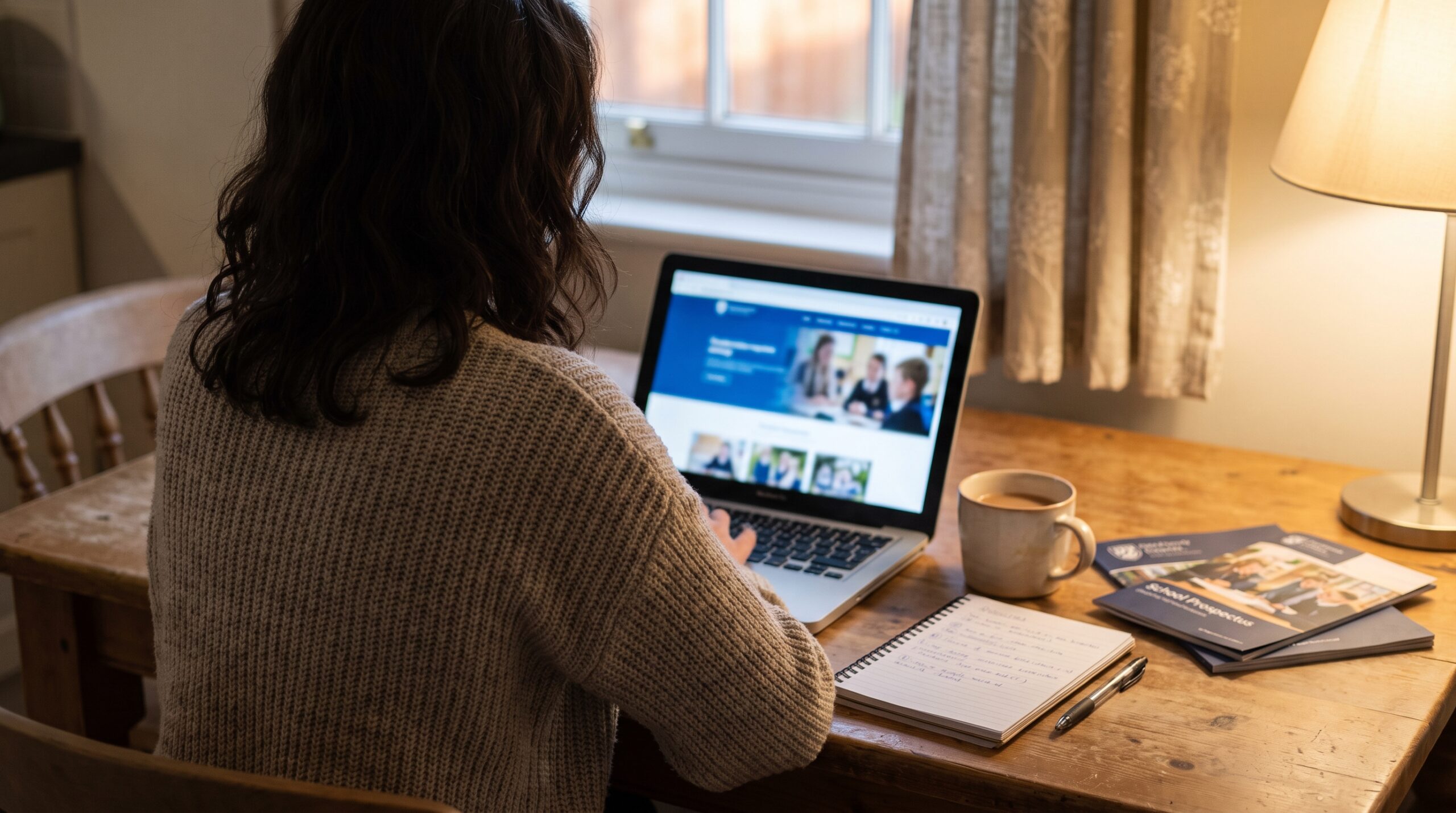
Prospective families often research schools online long before making contact. They may be comparing several schools, colleges or other education options at the same time. They may be looking on a phone during a short break, checking information in the evening, or sharing links with family members before making a decision.
Your website needs to do two jobs well.
It needs to tell the story of your school in a way that feels warm, authentic and clear. It also needs to make the practical side of admissions easy.
An effective school website attracts students by acting as a virtual front door, providing a clear, engaging narrative of school life while simplifying the practicalities of enrollment.
That means your website should help families:
- understand your values and ethos
- explore curriculum, teaching and support
- find admissions information quickly
- book a visit or open day
- ask questions
- view key policies and compliance information
- see what daily life in school is really like
A good recruitment website is not just attractive. It guides people from interest to action, helping prospective students gain confidence and feel more comfortable with your school, which ultimately increases their likelihood to enroll.
Build one clear admissions hub
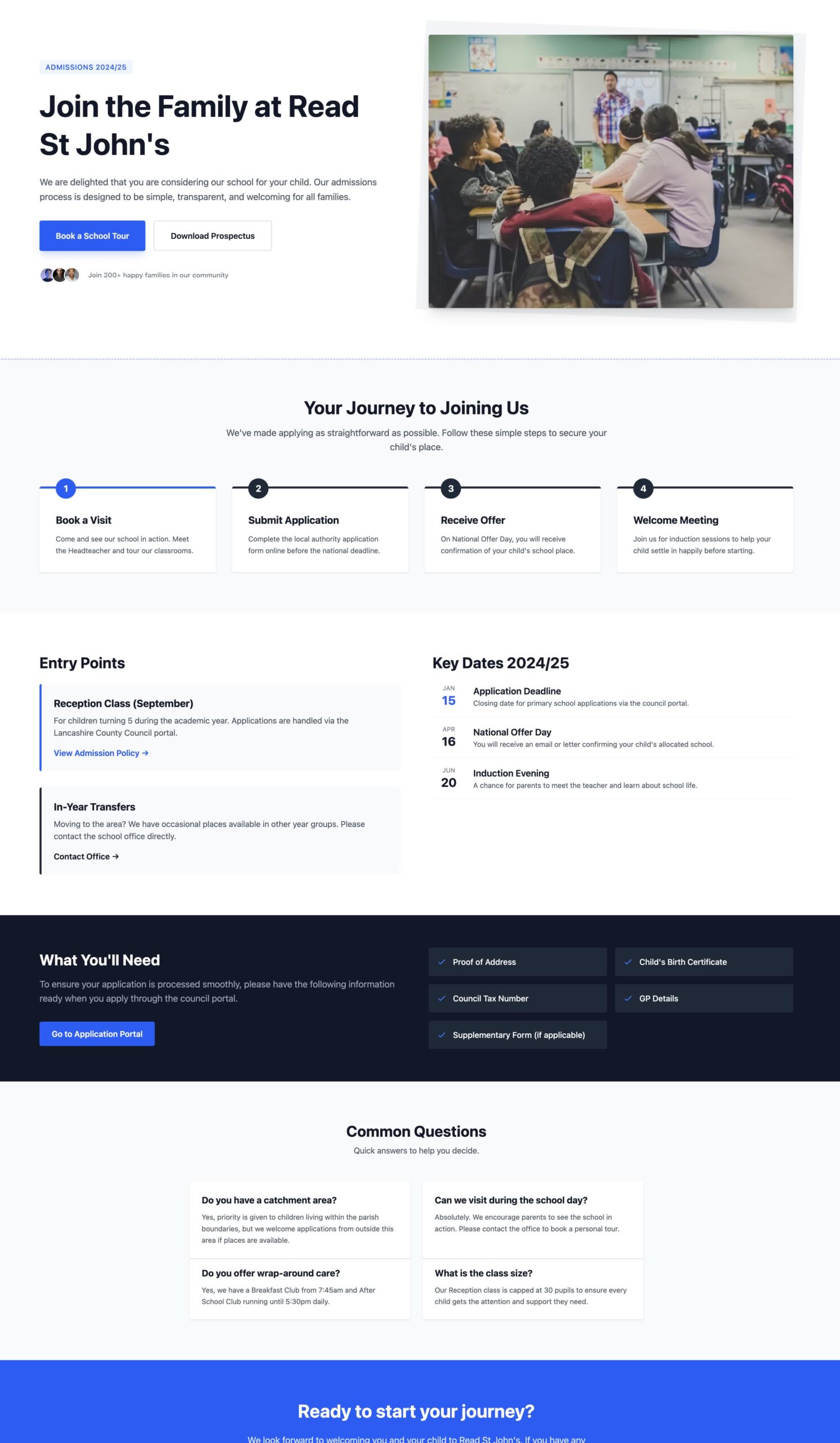
One of the best improvements any school can make is to create a clear admissions hub.
This should bring all recruitment-related information into one platform or one easy-to-access section of your website. Parents and candidates should not need to hunt through news posts, PDFs, local authority pages and hidden menu items to work out how to apply.
Your admissions hub should include:
- how to apply
- open day and visit booking details
- in-year admissions information
- contact details for admissions questions
- links to local authority admissions pages
- key dates
- FAQs
- prospectus download
- transport or catchment information, where relevant
- clear next steps
For primary schools, this may focus on nursery, reception and in-year places. For secondary schools, it may include transition, options, careers, pastoral support and open events. For colleges, higher education providers or an institute or institution with international recruitment needs, the same principle applies: make the process simple, visible and easy to manage.
The goal is to remove friction. If a family or candidate is interested, the website should help them act.
Make your homepage work harder
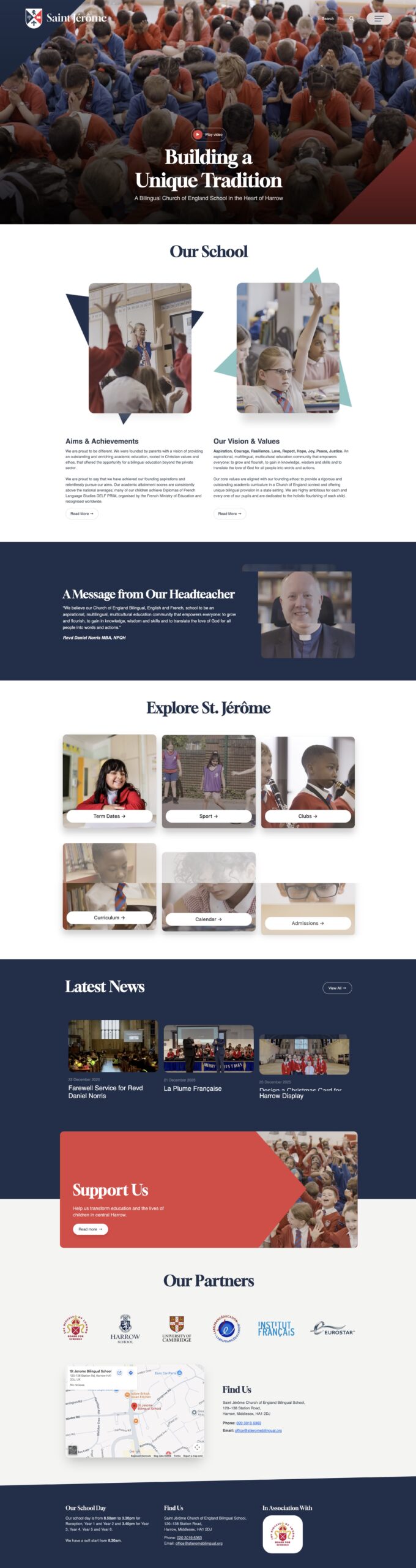
Your homepage should quickly answer one question: why should a family explore your school further?
Your unique selling propositions should be clear near the top of the page and prominently featured on the homepage to differentiate your school. These might include:
- strong pastoral support
- specialist provision
- excellent facilities
- small class sizes
- community links
- faith or values-led education
- enrichment and careers opportunities
- strong outcomes and student success
- inclusive practice
- partnerships with employers
- a clear focus on widening participation
- attracting and developing student talent
This is where many schools need more focus. A homepage should not just be a noticeboard. It should give prospective students and parents confidence that they are in the right place and highlight your commitment to supporting student success.
Use strong signposting. Make it easy to explore admissions, curriculum, SEND, pastoral support, open days, news and contact information.
Use storytelling to build trust
Parents trust other parents more than formal school marketing materials. Student stories, parent feedback, alumni reflections, and real examples of school life can make your website far more persuasive by sharing knowledge and experiences among peers, which builds credibility and trust.
This does not mean turning your website into a glossy brochure. It means showing real people, real learning, and real community.
Useful content might include:
- parent quotes
- student voice
- alumni stories
- short videos
- open day highlights
- classroom photos
- examples of student achievements
- news from trips, clubs and events
- case studies showing support, progress, and the sharing of knowledge
- resources aimed at providing students with opportunities for community integration and educational success
Peer-to-peer marketing strategies, such as those implemented by platforms like Unibuddy, can significantly increase student yield and application rates by fostering trust and community engagement among prospective students.
High-quality visuals matter. Professional photos and videos of classrooms, student achievements, and facilities, as well as images of students, teachers, and the wider school community, help families picture what it would feel like to join you.
For families who cannot visit in person, interactive virtual tours help students experience the campus remotely. This is especially useful for busy parents, relocating families, international recruitment, or students comparing several options.
Make mobile the priority
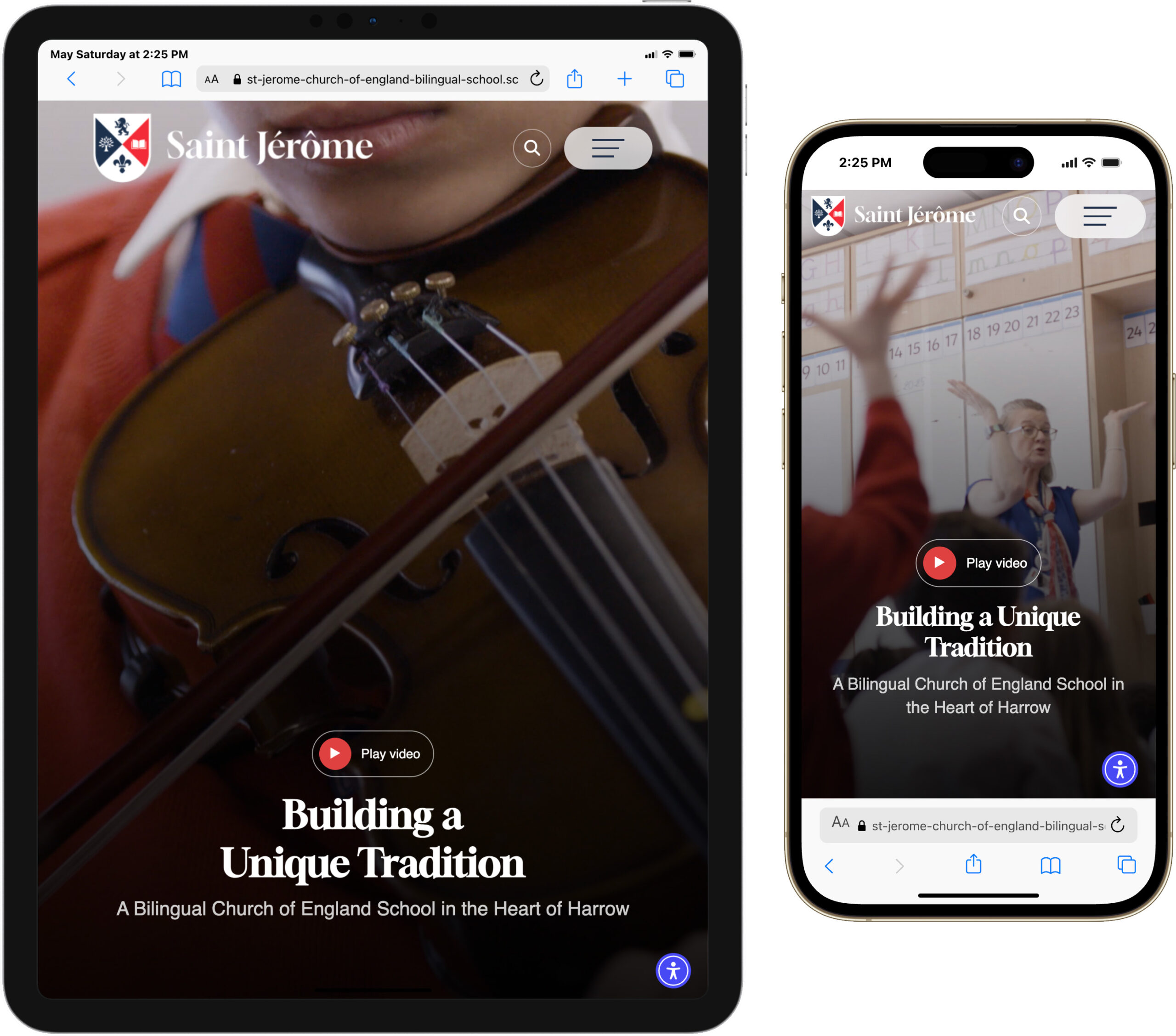
Most parents will view your school website on a smartphone at least some of the time. Your website must be fast, clear and easy to use on a small screen.
Check the parent journey on mobile. Can they find admissions information quickly? Can they book a visit? Can they tap the phone number? Can they complete a form? Do videos load properly? Are pages easy to read?
A mobile-first approach is now best practice for school website student recruitment.
Accessibility matters too. Public sector websites must meet accessibility requirements and publish an accessibility statement. The regulations are based on making websites usable by as many people as possible, including people with disabilities.
If families cannot access your website properly, you may lose trust before they ever contact you.
Use local SEO to help families find you
Local SEO is vital for schools that want to remain competitive.
Parents often search for schools near them, open days, admissions information or local specialist provision. Your website content should use clear local language, including your town, area, school type and relevant admissions terms.
Your Google Business Profile should be kept up to date with accurate contact details, opening hours, photos and links. Google says local results are shaped by relevance, distance and prominence, and complete business information helps Google match a profile to relevant searches.
This matters for recruitment. A parent searching locally may meet your school through Google before they reach your website.
Connect social media, news and real time insight
Your website should give families a live sense of school life. A strong digital presence is essential for effective engagement, helping your school connect with prospective students and parents online.
Event calendars, news updates, social media feeds, webinars, term dates and contact information all support better communications with the school community.
A carefully integrated social media feed on the school website can provide real-time insights into daily activities, celebrations and events. This helps prospective students and parents see that the school is active, welcoming and engaged.
This should never replace properly managed website content, but it can support your wider recruitment and outreach activity.
Personalise the journey where appropriate
Some schools, colleges and higher education providers are beginning to use behavioural personalisation to show relevant content based on previous browsing history.
For example, a prospective student who has viewed sixth form courses might be shown open evening details. A family looking at SEND support might be directed to the SENCO contact page, local offer information or relevant resources. Someone exploring careers pathways might see employer partnerships, alumni stories or destinations data.
Used carefully, this can give people a more useful experience.
Schools must take care with privacy, consent and data protection. UK GDPR requires personal data to be handled lawfully, fairly and transparently. Schools and multi-academy trusts need clear policies and processes to protect personal data, and security measures such as encryption may be appropriate depending on the data and risk.
Make follow-up simple and consistent
A website can generate interest, but the follow-up process needs to be simple, clear and consistent.
For most UK schools, this does not need to mean introducing complex new systems. Often, the biggest improvement comes from making sure enquiries, open day bookings and visit requests are handled in the same way every time.
That might mean having:
- a clear admissions enquiry form
- a shared inbox for admissions questions
- a simple spreadsheet to track enquiries and visits
- a standard confirmation email for open day bookings
- a reminder email before visits or events
- a follow-up email after a family has visited
- a named person responsible for admissions communication
Utilising a comprehensive CRM system can streamline the recruitment process by automating administrative tasks, allowing teams to focus on building relationships and improving conversion rates from enquiries to enrolments. A good CRM system helps your team get the job done efficiently, ensuring every step is managed promptly and no interested family gets missed.
For example, when a parent books an open day or school visit, they should receive clear information about:
- the date and time
- where to arrive
- parking or access information
- who they will meet
- what they will see
- what to do if they have questions
- useful links to admissions, curriculum and support pages
After the visit, a short follow-up can make a big difference. It can thank the family for attending, remind them of the next step, and give them a named contact if they need help.
This does not need to feel like a sales process. It is simply good communication.
For student recruitment, small gaps matter. If one school replies quickly and clearly, and another leaves parents unsure what happens next, that can shape a family’s decision.
The best school websites make the first step easy. The best admissions processes make the next step feel just as clear.
Keep compliance clear and easy to find
Recruitment and compliance should work together.
DfE guidance sets out what maintained schools must or should publish online, with separate guidance for academies, free schools and colleges. This includes areas such as admissions, curriculum, policies, performance information and contact details.
A well-designed school website should make this information easy to access without letting statutory content overwhelm the parent journey.
That means clear menus, well-structured pages, accessible documents and plain English explanations.
Measure what works
Student recruitment should lead to measurable results.
Track what families do on your website. Look at admissions page visits, open day bookings, enquiry form submissions, prospectus downloads and key page engagement.
These key insights help leaders make better decisions. They show which content is working, where families drop off and where the website needs improvement.
A recruitment-focused website is never really finished. Ongoing development is essential, using feedback, data, and adapting to changing admissions challenges to ensure continuous improvement.
Final thoughts
Using your school website for student recruitment is about much more than design.
It is about helping families make an informed decision. It is about creating confidence. It is about showing the quality of your education, the strength of your community and the support available to every student.
The best school websites combine clear storytelling, practical admissions tools, strong visuals, accessible design, local SEO, helpful communications and a simple path to enquiry.
Get that right, and your website becomes far more than a place to publish information.
It becomes one of your most effective student recruitment tools, supporting students as they prepare for their future careers. Parental engagement is crucial for student success, as research indicates that students with involved parents are more likely to achieve higher grades and have better attendance. Schools that actively involve parents in the educational process often see increased trust and collaboration, leading to a more supportive learning environment for students.
Collaboration with educators, seeking expert advice, strong finance oversight, effective hiring, strategic partner relationships, recruiting skilled leadership, ongoing training, and the vital role of universities all contribute to a successful school website student recruitment strategy.

Related Posts
Ian Richardson
July 29, 2026
What parents look for in a school, and how your website answers it before they visit: culture, safeguarding, SEND support and clear practical information.
Ian Richardson
June 24, 2026
A school website says a lot before a parent reads a full page. Parents make ..
Luke Smith
June 24, 2026
School website news is one of the easiest ways to show parents, pupils and prospective ..

Luke Smith
June 17, 2026
A school website newsletter is one of the simplest ways to keep parents informed, make ..
Luke Smith
June 8, 2026
Good school communication makes a real difference. It helps parents know what is happening. It ..

Luke Smith
May 13, 2026
School website pupil photos have always played an important role. They help prospective parents see ..