School Website Analytics Engagement: What Your Website Is Telling You (If You Know Where to Look)
School Website Analytics Engagement: What Your Website Is Telling You (If You Know Where to Look)

Most schools already have a website.
Most schools also have access to analytics.
Very few feel confident using either.
When people talk about school website analytics engagement, the conversation often jumps straight to numbers. Page views. Traffic. Charts that look impressive but do not really answer the questions schools are asking.
The more useful question tends to be much simpler:
Is our website actually working for the people who use it?
That is where engagement comes in.
Engagement on a school website looks different
A school website is not an online shop.
It is not a media platform.
It is not trying to keep people scrolling for the sake of it.
A school website exists to help people get what they need, quickly and calmly.
Engagement on a school website often means:
- Parents finding key information without emailing the office
- Current parents returning to familiar pages during the year
- Visitors reaching the safeguarding or admissions pages and staying there
- Students accessing the curriculum or learning information easily
- Fewer repeated questions that are already answered online
These moments rarely show up clearly in basic analytics reports. Engagement-focused data makes them visible.
Why traffic alone does not tell the full story
Traffic figures can feel reassuring.
High numbers look positive.
Low numbers can cause worry.
Neither tells you much on its own.
A page with heavy traffic can still fail if users leave immediately.
A page with modest traffic may still succeed if visitors spend time reading it.
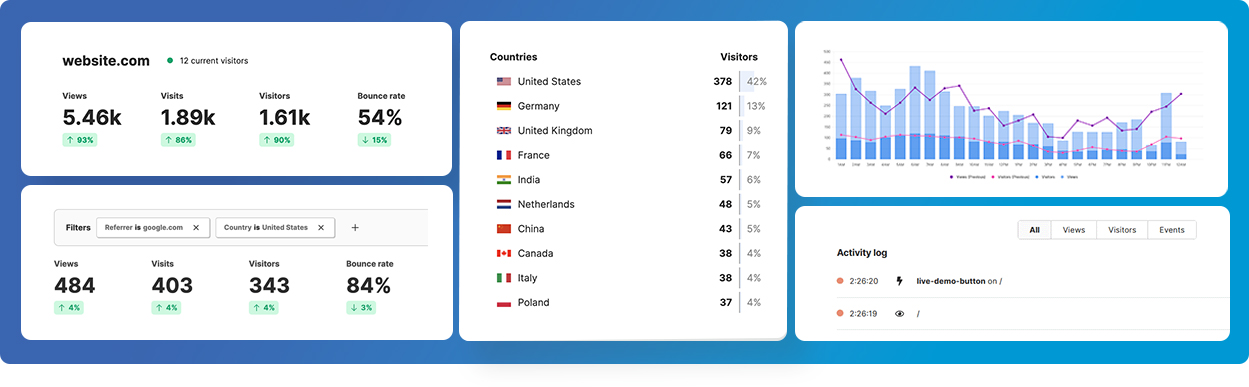
School website analytics engagement focuses on behaviour rather than volume. It looks at what visitors do after they arrive, not just how they got there.
The engagement signals that matter most for schools
Schools do not need dozens of metrics. A small number of clear signals tends to be enough.
Time spent on key pages
Time spent helps show whether important pages are being read or skimmed past. Safeguarding pages, admissions pages, and policy pages often benefit from careful attention here.
Bounce rate
Bounce rate shows when visitors leave the site after viewing just one page. A high bounce rate on a critical page can suggest unclear language, missing links, or content that does not match what users expected.
Entry and exit points
Seeing where visitors arrive and where they leave helps schools understand how people move through the site.
Returning visitors
Repeat visits often come from parents and students who rely on the website throughout the year.
Mobile users
A large proportion of visitors now access school websites on phones. Engagement patterns on mobile users can look very different from desktop behaviour.
Together, these signals give schools a clearer picture of real use.
Engagement, privacy, and trust
Schools operate in a space shaped by trust, safeguarding, and data protection.
That is one reason many schools feel uncomfortable using tools such as google analytics. The amount of data collected, the use of cookies, and the lack of transparency do not always sit well with education settings.
School website analytics engagement should feel ethical and proportionate.
That usually means:
- Anonymous visitors
- No cookies
- No personal profiles
- Clear reporting
- Data that stays under school control
When analytics feels respectful, schools are far more likely to use it.
Analytics built into the website
For schools using Schudio, analytics is already part of the content management system.
There is no separate setup.
There is no additional login.
There is no extra cost.
Schools can access:
- Visitor numbers and trends
- Engagement by page
- Time spent across web pages
- Traffic sources such as search engines, direct traffic, and referrals
- Device usage
- Real-time activity when needed
This analytics data focuses on insight rather than surveillance. It gives schools confidence without raising new concerns.
If you are a school website manager, looking for more information on Schudio Analytics – you’ll find more information in this article.
Using engagement data to improve school website content
Analytics becomes useful when it supports decisions schools already want to make.
Engagement data can help schools:
- Review pages that parents leave quickly
- Improve wording on pages with high bounce rate
- Reorder navigation based on how users move through the site
- Refresh news articles that still attract visitors from google search
- Assess which pages matter most to prospective students
This supports steady improvement without creating extra work.
Engagement across Multi Academy Trusts
For multi academy trusts, engagement data supports consistency and shared learning.
Trust teams can view engagement across multiple sites and see:
- Which pages perform well across the trust
- Where patterns differ between schools
- Which structures appear to support better engagement
- Where additional support may be helpful
This makes reporting clearer and removes guesswork from conversations about website development.
Engagement and search visibility
Search engine optimisation matters for schools, particularly around admissions, inspection readiness, and visibility.
Engagement supports this naturally.
Search engines respond positively when:
- Visitors stay on pages
- Users move through related content
- Pages answer search intent clearly
Good engagement often aligns closely with good SEO without schools needing to chase keywords or trends.
Different audiences, different behaviour
A single school website serves many audiences at once.
Parents behave differently from students.
Prospective students behave differently from current parents.
Staff access pages in different ways again.
Engagement analytics helps schools see those differences and adjust structure and web content without redesigning everything.
Analytics as part of normal review
Engagement analytics works best as part of a light, regular review rather than a large research exercise.
A short monthly check often reveals enough to prompt action:
- A page that needs rewriting
- A link that needs moving
- A section that needs simplifying
- A post that still attracts traffic
Small changes based on real use often bring noticeable improvements.
Measuring engagement without pressure
Schools do not need to become analysts.
Analytics should answer practical questions such as:
- How much time do parents spend on key pages?
- Which pages attract the most visitors?
- Where do users leave the site?
- Which pages are reached through search engines?
Clear answers support confident decisions.
Engagement reflects the school’s ethos
A school website quietly reflects the school’s ethos.
Clear structure, accessible content, and sensible engagement patterns suggest care and organisation. Analytics shows whether that is happening in practice.
This matters across education settings, from primary through to links with higher education pathways.
Final thoughts
School website analytics engagement is not about chasing numbers.
It is about clarity.
It is about confidence.
It is about understanding how people really use the website.
When schools can see what is working, decisions become easier and communication becomes calmer.
That is when analytics starts to earn its place.

Related Posts

Ian Richardson
October 14, 2025
We’re rolling out a new AI feature in our online learning platform, SchudioTV: the Schudio ..

Ian Richardson
June 15, 2025
Choosing the right school website provider is about more than just the design. It’s ..
Ian Richardson
August 13, 2024
We are thrilled to announce the launch of our newly updated School Website Software (CMS). ..
Ian Richardson
July 30, 2024
There are several features that you may not know about in the Schudio CMS. Part ..

Ian Richardson
October 20, 2023
School websites are the cornerstone of effective communication between schools, parents, students, and the broader ..

Ian Richardson
August 24, 2023
How was your summer break? I am sure you can imagine things go pretty quiet ..