What Best Practice Actually Looks Like on a Headteacher Welcome Page
What Best Practice Actually Looks Like on a Headteacher Welcome Page

When someone lands on a school website for the first time, there are a few pages they tend to visit almost immediately.
Admissions.
News.
Curriculum.
And very often, the headteacher welcome page.
The headteacher welcome page is one of the most visited pages on any school website, yet it is often one of the least strategically written.
Many schools treat the headteacher’s welcome as a short introduction. A few paragraphs about the school, perhaps a brief mention of the school motto, and a polite invitation for families to visit.
There is nothing wrong with that approach.
But the reality is that the headteacher welcome page carries far more influence than many schools realise.
For prospective families and parents, the headteacher welcome page is often the first real insight into what the school stands for. It sets the tone for the whole school website, and in many cases it shapes a parent’s first impression of the school itself.
A strong headteacher welcome page communicates pride, purpose and values. It reassures parents that their child will be supported, encouraged and given the opportunity to achieve their potential.
And importantly, it helps inspectors and external visitors understand the ethos and priorities of the school before they ever step through the gates.
Why the Headteacher Welcome Page Matters So Much
The headteacher welcome page is not simply an introduction.
It acts as the voice of the school.
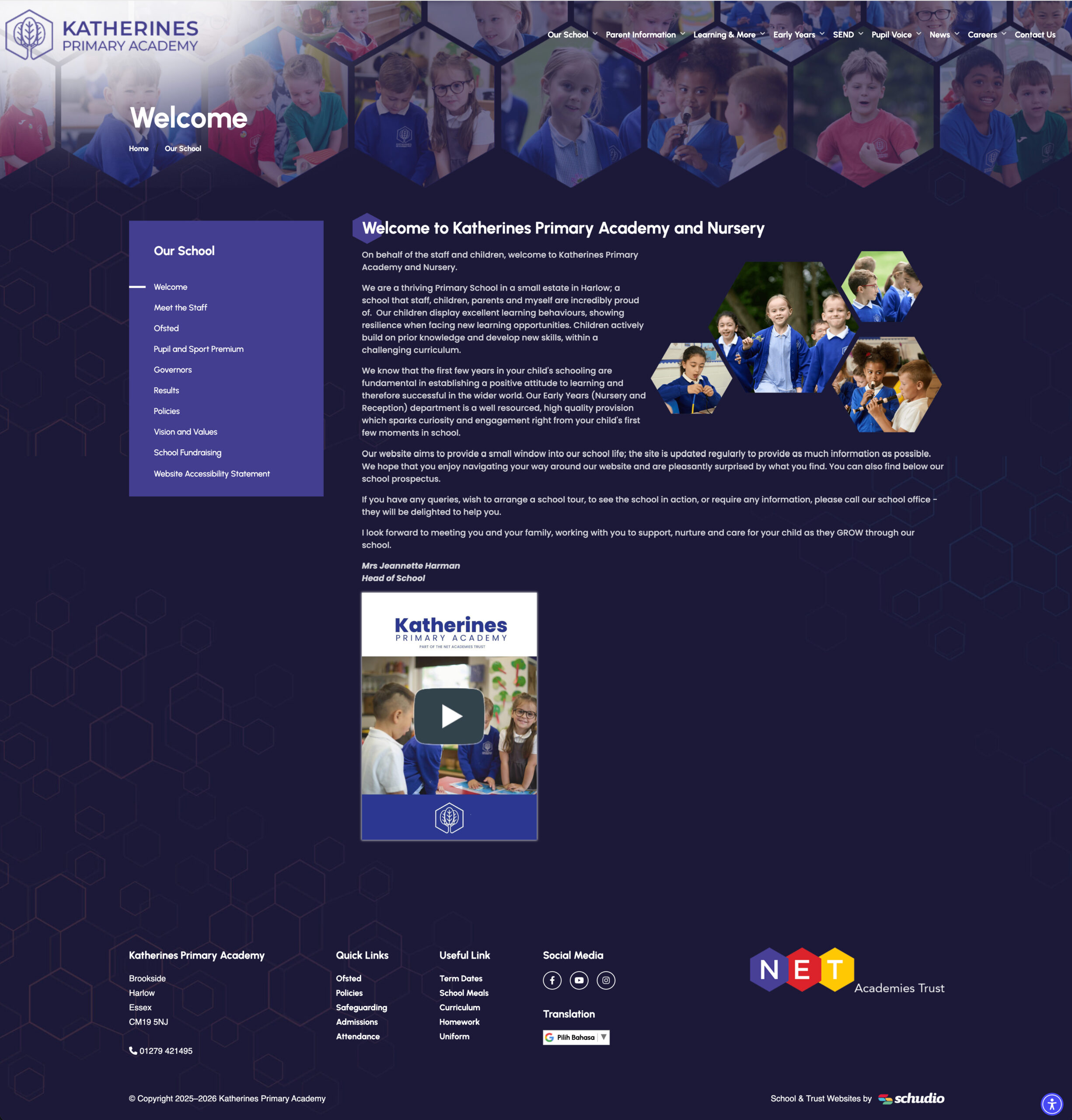
For many visitors, especially prospective parents, the headteacher welcome page provides the first sense of the school’s identity and the type of environment children will experience.
Parents visiting the school website are usually trying to answer a few important questions.
Is this a good school?
Will my child feel safe and supported here?
Do the staff care about children and their development?
What values guide the school community?
The headteacher’s welcome helps answer these questions.
It gives parents a sense of what daily school life feels like and how the school supports children to develop confidence, curiosity and strong relationships.
It also shows how the school works with families and the wider community to support children’s education and life chances.
That is why many headteachers express how extremely proud they are of their school community in their welcome messages. This sense of pride helps visitors understand that the school is a place where children are known, supported and encouraged to succeed.
Why Inspectors Often Read This Page First
School leaders sometimes forget that inspectors frequently review the school website before they arrive.
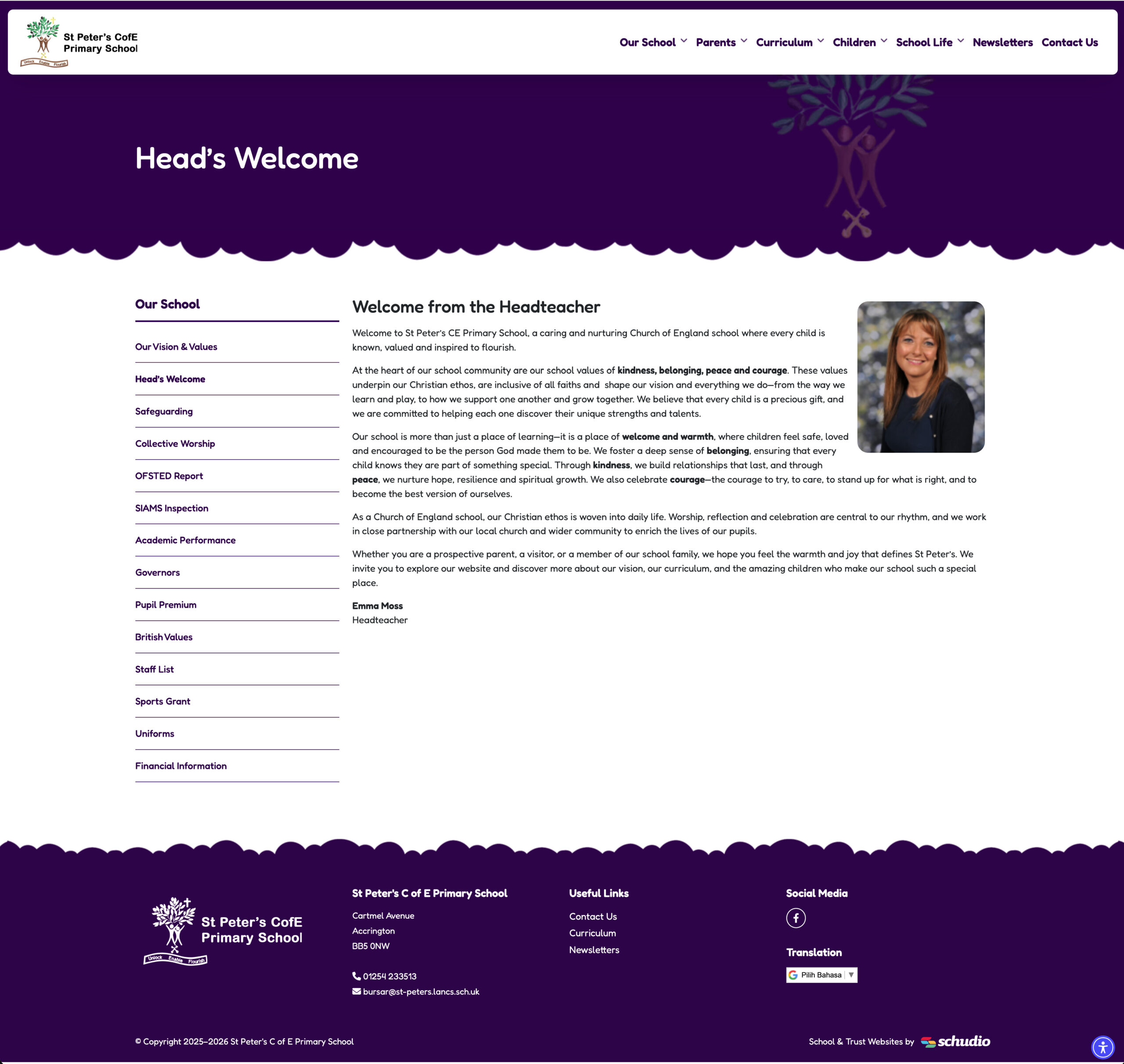
Ofsted will look for statutory information such as policies, safeguarding information, curriculum content and Ofsted reports.
But inspectors also read the headteacher welcome page to gain early insight into the school.
The headteacher’s welcome often reveals:
- the school’s educational philosophy
- the values that guide the school community
- how leaders talk about children and their development
- how the school works with parents and the local community
Inspectors are interested in whether the school’s messaging reflects a clear sense of purpose.
Do leaders emphasise personal development and wellbeing?
Do they talk about enabling children to become confident individuals?
Do they emphasise a safe and inclusive environment where every child can thrive?
A strong headteacher welcome page communicates these priorities clearly.
It shows that the school has a clear commitment to providing the very best education for its pupils and supporting their life chances.
The Headteacher Welcome Page Sets the Tone for the Whole Website
Another reason the headteacher welcome page matters is that it shapes how the rest of the school website is experienced.
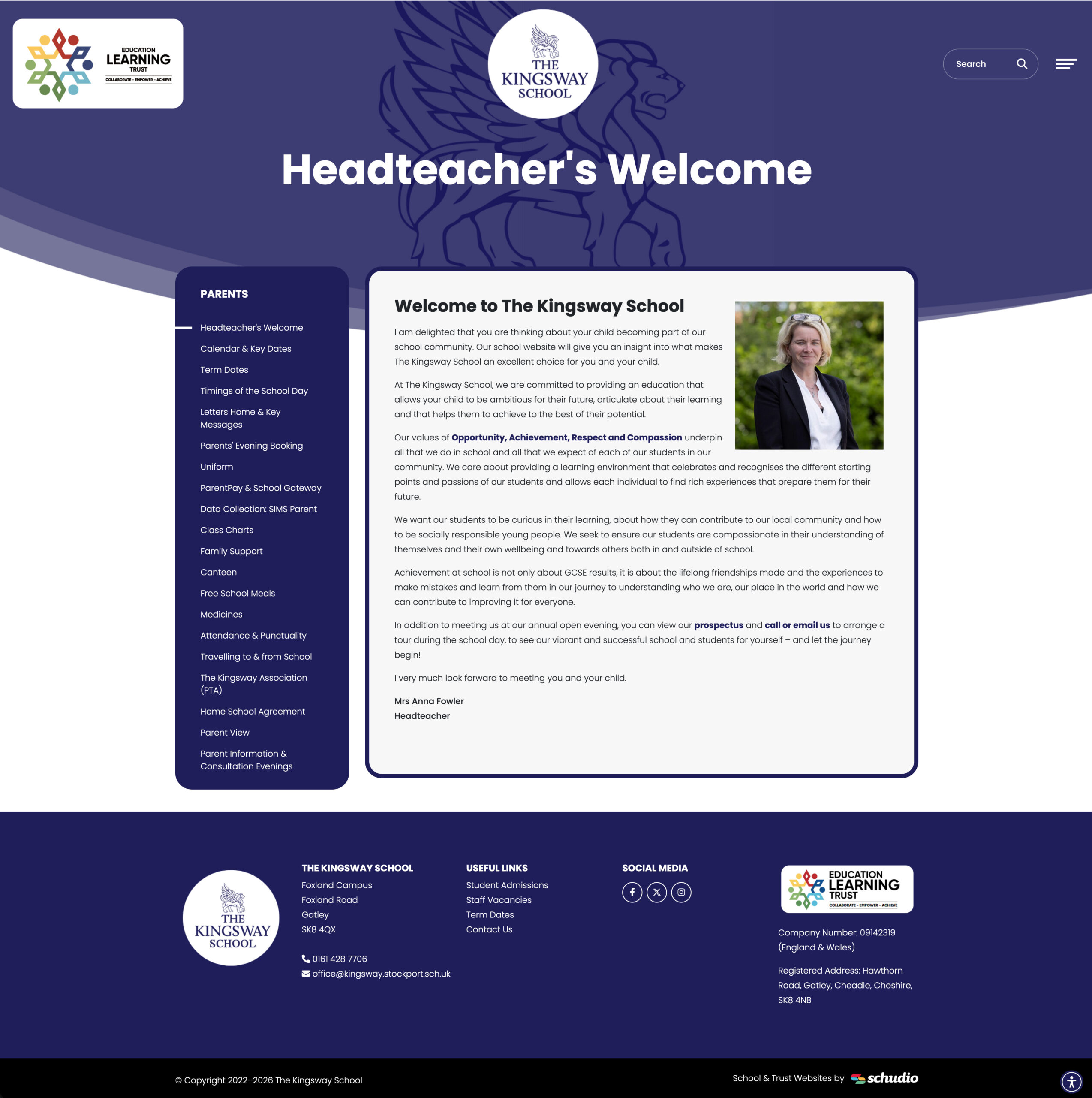
When parents visit a primary school website, they are often exploring the school for the first time.
They might arrive through a search engine.
They might follow a link shared within the local community.
They might have heard about the school through friends or neighbours.
The headteacher’s welcome is often the moment where they begin to form an emotional connection.
This is why the tone of the headteacher welcome page matters.
Most headteachers use this space to express pride in their school and the achievements of their children and staff. Many also explain how proud they are of the relationships that exist within the school community.
This helps parents see the school as more than a building. It becomes a community built around shared values and shared commitment to children’s success.
Start With the School’s Values and Purpose
Best practice for a headteacher welcome page is to begin with clarity.
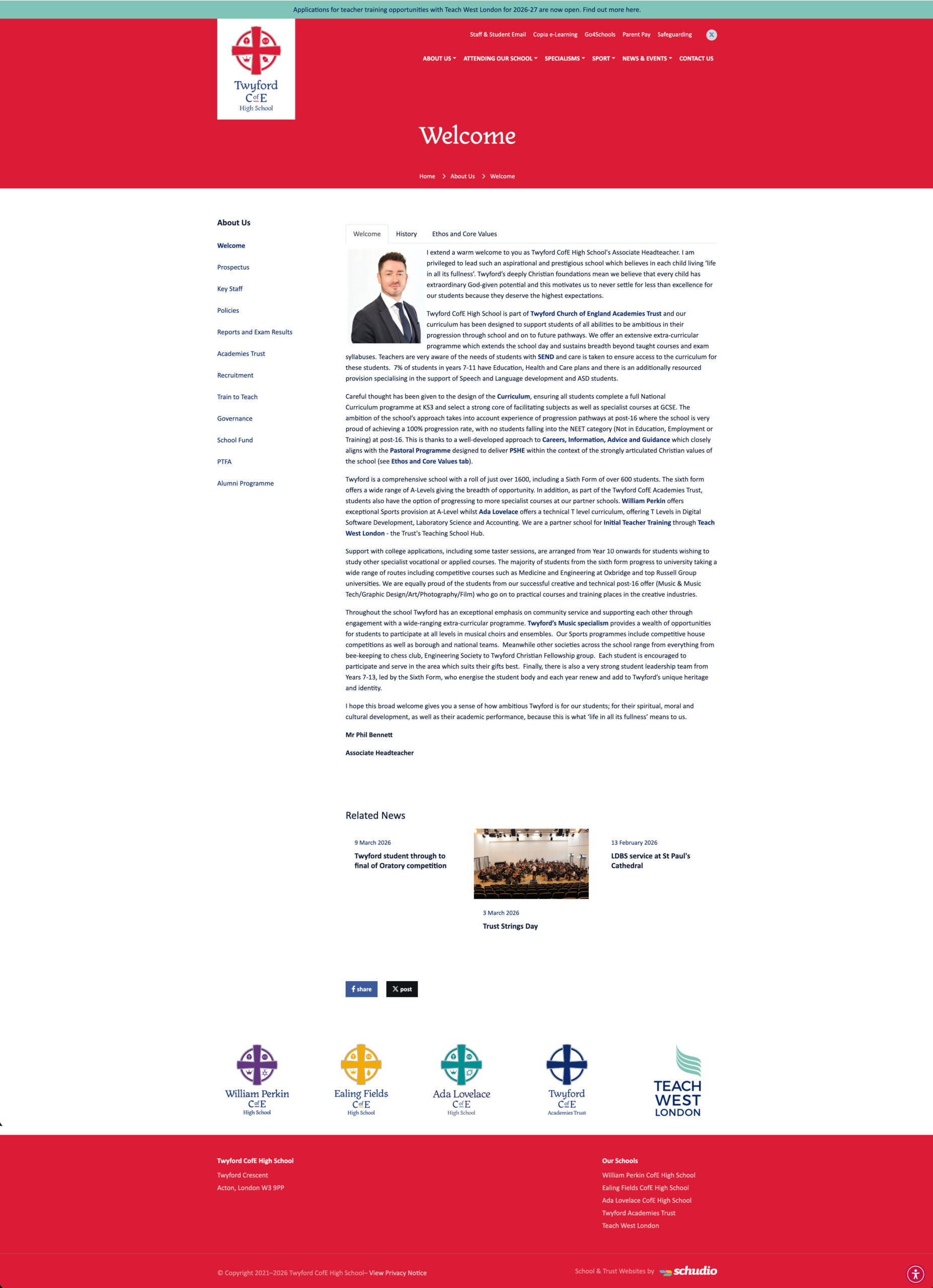
Parents want to understand what the school believes in.
That means explaining the values that guide the school and how those values shape the daily experience of pupils.
Many schools describe their commitment to creating a nurturing and inclusive environment where children feel safe, respected and encouraged to learn.
Schools frequently emphasise values such as:
- respect for others
- kindness and compassion
- responsibility
- inclusion
- high standards
These values are not just words on a page.
They shape behaviour, learning and relationships throughout the school community.
Schools aim to nurture children so they grow into responsible, tolerant and confident individuals who can contribute positively to the wider world.
Personal development therefore becomes a central focus of the school’s work.
A strong headteacher welcome page often reflects this by explaining how the school supports pupils to develop both academically and personally.
Highlight the Role of the School Community
Another essential element of the headteacher welcome page is the emphasis on partnership.
Schools do not educate children alone.
Strong partnerships between home and school are essential for supporting children’s learning.
Headteachers frequently emphasise the importance of collaboration between staff, parents and the wider community. Schools foster these partnerships to help children succeed and to create a supportive environment for learning.
This message reassures parents that they are part of the learning journey.
The school community includes:
- children and pupils
- parents and carers
- staff and governors
- the local community
When these groups work together, children benefit from stronger relationships and better opportunities.
Many schools encourage parental involvement through events, parent forums, workshops and community initiatives. These opportunities allow parents to engage directly with the school community and play an active role in their child’s education.
Community engagement is essential for improving children’s life chances and helping them feel connected to the world around them.
Show What School Life Looks Like
Parents often want to understand what daily life looks like for children in the school.
A good headteacher welcome page helps visitors picture the school environment.
This might include references to:
- the curriculum and learning opportunities
- extracurricular activities and clubs
- sports and creative opportunities
- the school’s commitment to personal development
Schools aim to provide a broad and balanced education that combines excellent teaching with strong pastoral care.
Extracurricular activities also play an important role in supporting student wellbeing and development.
Many schools explain how they encourage children to explore their interests, develop new skills and take part in a wide range of activities.
This helps pupils grow into confident learners and independent thinkers.
Schools often emphasise that they want children to enjoy coming to school, feel valued and develop a lifelong love of learning.
Emphasise a Safe and Supportive Environment
Parents are naturally concerned about the wellbeing of their children.
That is why a strong headteacher welcome page often emphasises the school’s commitment to creating a safe and supportive environment.
Schools strive to ensure that every child feels included and respected.
They aim to create an environment where pupils are encouraged to develop confidence, compassion and resilience.
Respectful relationships between pupils, staff and families are central to this approach.
Many schools also highlight their commitment to high standards of behaviour and positive relationships across the school community.
These messages reassure parents that their children will be supported academically, socially and emotionally.
Invite Families to Visit
Another important feature of a strong headteacher welcome page is an invitation.
Many headteachers invite parents and families to visit the school to experience the environment firsthand.
This simple message makes the school feel open and welcoming.
Parents may be encouraged to contact the school office, explore the rest of the school website, or arrange a visit to see the facilities and meet the staff.
This invitation reinforces the message that the school values relationships with families and the wider community.
Keep the Structure Clear and Easy to Read
Although the headteacher welcome page often contains important messaging, it should remain easy to read.
Parents rarely read every word on a webpage.
Instead, they scan.
Clear headings and short paragraphs make the page easier to navigate.
This is especially important when the school website is viewed on mobile devices.
A well-structured headteacher welcome page helps parents quickly understand the most important information about the school.
Show Pride in the School
One of the most consistent features of a strong headteacher welcome page is pride.
Headteachers often express how proud they are of the achievements of their pupils, staff and wider school community.
They may highlight:
- the dedication of the staff
- the enthusiasm of the children
- the support of parents and carers
- the strong relationships across the community
This sense of pride helps visitors understand that the school is a place where people work hard together to support children and help them succeed.
Final Thoughts
The headteacher welcome page is one of the most influential pages on a school website.
It introduces the school community.
It communicates the school’s values.
It gives parents insight into school life.
It sets the tone for everything else visitors will read.
For inspectors, it provides early insight into the ethos and priorities of the school.
For prospective families, it offers reassurance about the environment their children will join.
And for the wider community, it reflects the pride, commitment and relationships that define the school.
When written thoughtfully, the headteacher welcome page becomes far more than an introduction.
It becomes the voice of the school.
And when that voice is clear, welcoming and confident, the whole school website feels stronger.

Related Posts

Ian Richardson
October 7, 2026
What a school website chatbot should answer, what it should never answer, and how to get your pages ready before you switch one on. A guide for leaders.

Ian Richardson
September 30, 2026
What schools should not use AI for, the AI safeguarding risks behind each limit, what KCSIE 2026 now says, and a practical checklist for school leaders.

Ian Richardson
September 16, 2026
Introducing the Schudio AI Suite: AI school website software that checks what you publish, drafts pages in your school's voice and answers parents' questions.

Ian Richardson
July 29, 2026
What parents look for in a school, and how your website answers it before they visit: culture, safeguarding, SEND support and clear practical information.
Ian Richardson
June 24, 2026
A school website says a lot before a parent reads a full page. Parents make ..
Luke Smith
June 24, 2026
School website news is one of the easiest ways to show parents, pupils and prospective ..