School Website Content: Why Structure Matters More Than Words
School Website Content: Why Structure Matters More Than Words
Key Takeaways
- Most UK schools already have decent school website content, but parents still struggle because structure and layout are confusing.
- Parents experience a journey across several school website pages, not single pages in isolation.
- Concrete examples like admissions, term dates, uniform, and SEND show how good content in the wrong place creates repeated calls and emails.
- Improving school website content usually means simplifying, shortening, and restructuring rather than adding more pages.
- Schudio is rethinking how schools build website pages, with a follow-up article setting out a more practical approach.
Why “Better School Website Content” Isn’t Fixing the Problem
Picture this: a parent on their mobile phone at 7:30pm, trying to find one simple answer. What time does school finish on the last day of term? They scroll, tap, scroll again. Eventually they give up and email the school office.
When this happens, most school leaders respond by asking staff to update the website content or add more detail to school website pages. It feels like the logical thing to do.
But from Schudio’s experience auditing hundreds of UK school websites, content quality is rarely the core issue. The real problem is structure, layout, and the way pages guide users through a task or decision.
This article is based on repeated patterns we see when working with schools. No marketing language. Just what actually helps.
Parents Don’t Read Pages, They Follow Journeys
Here is the key point: parents experience flow across your school website, not isolated pages. They click between admissions, term dates, policies, and contact pages in one sitting.
Think about a prospective parent in September 2026. Their journey might look like this:
- Google search for local primary schools
- Land on your home page
- Click to admissions page
- Look for the prospectus
- Search for open evening details
- Try to find contact details
Small breaks in this journey cause confusion even when each page, read alone, looks fine. A dead end here, a missing link there, repeated content across sections.
Across most school websites, important journeys like admissions, reporting absence, or requesting SEND support are spread across several unconnected pages.
Improving school website content without mapping these journeys is like improving individual road signs without checking where the roads actually go.
When Good Content Lives in the Wrong Place
Many schools have detailed, accurate information hidden inside PDFs, long text blocks, or sub-pages that parents never find.
Take uniform rules. On a typical school website, this information might appear in three different places:
- A formal policy PDF in the policies section
- A newsletter from June 2025
- A parents’ handbook page
This duplication creates mixed messages. Parents ring the school office to check which version is right. Your school staff spend time answering the same questions repeatedly.
Adding yet another clarifying notice or news item often makes things worse by scattering school website content even further.
One of the simplest wins in school website design is consolidating repeated information. Create one clear, up to date source for each common question.
Admissions: The Clearest Example of Broken Journeys
Admissions is the section where structural problems show up fastest. Prospective parents starting their school search for September 2027 places hit walls almost immediately.
A realistic admissions journey often looks like this: parent clicks Admissions from the main menu, then has to jump between local authority links, policy PDFs, and a separate page for open evenings with upcoming events.
The pain points we see time and time again:
- No clear “Start here” guidance
- Multiple application deadlines scattered across pages
- Outdated PDFs still visible in searches
- Links to external portals without context
In reality, prospective families want three simple things: who can apply, what to do next, and when key dates apply to them.
Strong admissions school website content should be broken into clear steps with obvious next actions, not long narrative paragraphs.
What a Clearer Admissions Structure Could Look Like
A practical admissions page layout in plain language might include:
| Section | Purpose |
|---|---|
| Short intro | One or two sentences explaining what this page covers |
| “Start here” panel | Helps parents identify which intake applies to them |
| Reception 2027 section | Clear steps for prospective parents |
| In-year admissions | Separate section for those moving mid-year |
| Sixth Form (if relevant) | Its own distinct pathway |
Use short headings like “Step 1: Check if this is the right page for you” and “Step 2: How to apply” to guide current parents and prospective parents through the process.
Place links to local authority portals, downloadable forms, and contact details at the exact point parents need them. Not all bunched at the bottom.
This page should have short, scannable sections to match how mobile users view sites. At Schudio, we often restructure admissions content first because it reduces phone calls and emails almost immediately for school office teams.
How Long Pages and Scattered Content Create More Work for Your Office
Across most school websites, the response to new information is to add another paragraph, link, or news item. Updated term dates for the 2026 to 2027 academic year? Add a paragraph. New teacher training days? Another bullet point.
Over several years, this creates very long pages. Key facts like Inset days sit halfway down, buried between old updates and unrelated details about school activities.
Imagine a parent on their mobile phone scrolling through a term dates page that shows:
- Three academic years of important dates
- Multiple PDFs with slightly different information
- Contradictory statements about the school calendar
When parents cannot quickly find an answer, they ring reception. They send emails. They message via social media.
Simplifying and restructuring existing content often saves more administration time than adding new tools or systems.
Structure, Layout and User Experience: The Missing Piece
User experience, in straightforward terms, means how easily someone can get from where they are to what they need on your school website.
Structure covers navigation labels, which items sit under which menus, and how pages link to one another.
Layout is about how information is visually grouped on each page. Headings, panels, buttons, and white space. Not just the words themselves.
A well designed school website lines up these three things so that journeys like “report an absence” or “find term dates” feel obvious.
In Schudio workshops, when staff watch real parents try to complete a task, they quickly see the structural issues that content edits alone cannot fix. The school’s identity stays intact, but website visitors can actually find school information.
Simple Structural Checks You Can Do This Week
Try these practical checks:
- Pick three common tasks (check club times for Spring 2026, report an absence, find the SEND Information Report)
- Time how long it takes a colleague to find them
- Note where the journey breaks down
Review your main menu labels. Do they match the language parents actually use? Avoid internal terms like “Key Information” where possible. “Parents” or “Term Dates” work better.
Check that every long page has clear headings. Each heading should answer a single question rather than bundling multiple topics together.
Remove or archive out of date pages from 2023 and earlier that still appear in searches and confuse visitors.
A structured content audit focuses as much on page relationships as on wording.
Designing School Website Content for Scanning, Not Reading
Most parents scan school website pages on a mobile device during short gaps in their day. They do not read from top to bottom.
This means headings, bullet points, and short paragraphs do more work than carefully crafted long prose.
| Content Type | Scannable Format |
|---|---|
| Term dates | Simple table |
| Uniform rules | Clear checklist |
| Policies | Grouped by theme, not A to Z document titles |
| School meals | Pricing, menus, ordering in distinct sections |
Pages should use consistent patterns across the site. Once parents learn how one section works (for example, Parents then Lunches), others feel familiar.
Schudio’s CMS is set up to encourage this kind of structured, repeatable layout rather than walls of text.
What to Change on a Typical Page Layout
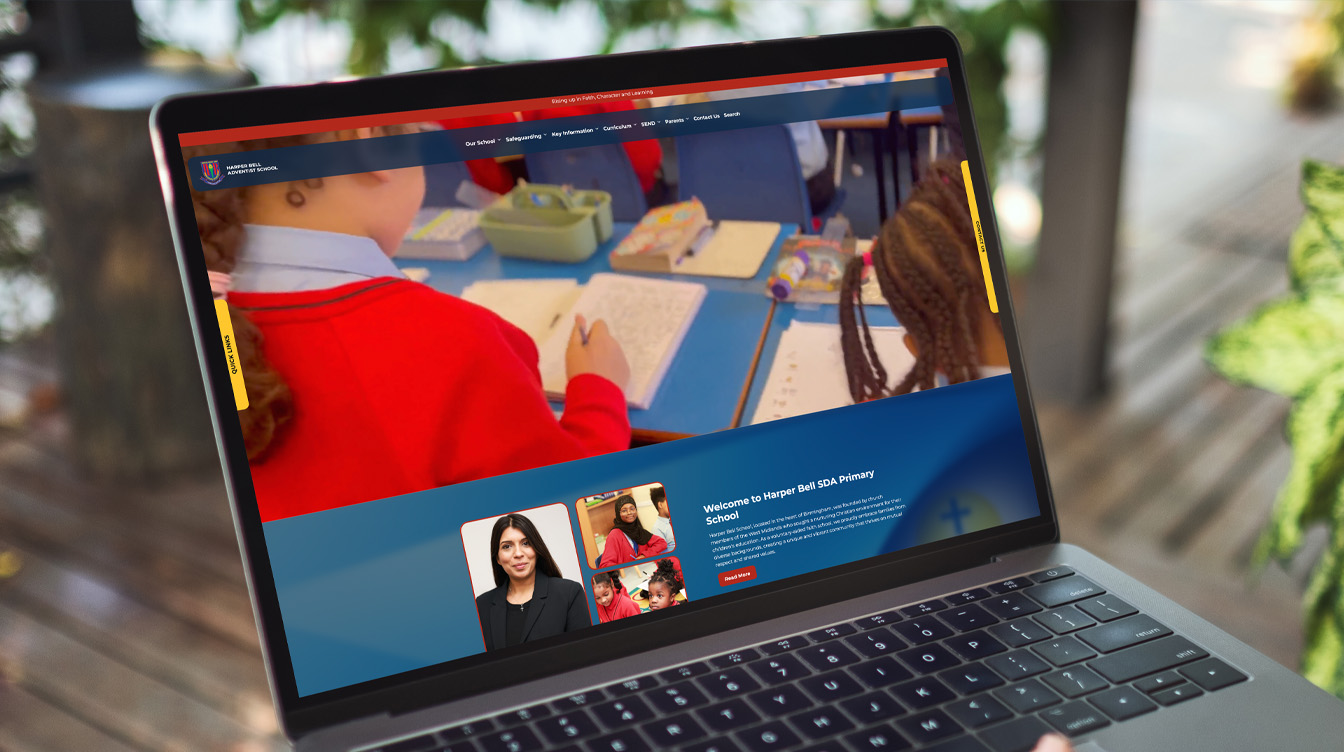
A standard information page might move from a welcome message plus a long block of text to a short intro followed by 3 to 5 clear headings.
Practical changes:
- Replace PDF-only content with key points shown on the page
- Keep the full document available as a download
- Use simple visual emphasis like boxes for the one or two actions parents need most
- Remove repeated lines such as “For more information, contact the school” if there is already a clear contact route at the bottom
Keep content as a central hub for each topic rather than scattered across school news posts and statutory requirements pages.
Common Problem Areas We See Time and Time Again
These sections usually cause trouble across most schools:
- Admissions: Conflicting information across news posts and PDFs, unclear next steps
- Term dates: Multiple academic years shown, important announcements buried
- Uniform: Policy split across formats, no clear current version
- Attendance: Unclear absence reporting, multiple contact methods
- SEND: Information Report hard to find, special educational needs links unclear
- School meals: Pricing, menus, ordering spread across pages
In Multi-Academy Trusts, this multiplies because each school handles pages slightly differently. Even within the same trust navigation, secondary schools might structure things completely differently from primary schools.
Inconsistent structure leads to complaints at trust level even where each individual school believes its content is accurate.
Schudio’s MAT Portal exists partly to bring key journeys into a consistent pattern without removing each school’s identity.
Why Adding More Content Usually Makes These Worse
When staff feel pressured to show how much they are doing, they naturally add more photos, school news posts, and text to already busy sections.
This creates content noise. The most important two or three items for parents get buried among minor updates from previous years. Fresh content is good, but only when it replaces rather than adds to the pile.
In these cases, the best next step is to remove, archive, or combine older items rather than write fresh paragraphs.
A simple rule: any page parents use regularly should be short enough to scan in under 30 seconds on a mobile phone. Think about how the wider community and local community actually use your site.
How Better Structure Quietly Supports Ofsted and GDPR
Statutory information for Ofsted and DfE in 2026 is extensive. It often ends up in long lists of policies or scattered across sub-pages. Curriculum information, religious education details, music development plan, music curriculum, sport premium, pupil premium, financial information, accessibility plan, mandatory subjects, science experiment documentation, and Ofsted reports all need homes.
Clear groups, headings, and logical navigation help inspectors. They also reassure parents looking for safeguarding or key stage curriculum information.
Structured content reduces the likelihood of leaving out required information. It forces schools to think in terms of complete sections.
For GDPR: when it is clear who owns each section and where personal information is referenced, schools find it easier to keep content current and compliant.
Schudio’s compliance tools focus on where information lives and how it is presented, not just ticking items off a checklist.
What This Means for Your Next Round of Website Changes
Do not start with rewriting every page.
Instead:
- Map the 5 to 10 journeys parents use most from September to July
- Use those journeys to decide which school website pages should exist
- Determine what order they appear in and how they link together
- Plan a small number of layout patterns (task page, information page, policy index)
- Reuse them across the site
Strong school website content is still important. But only once structure and layout are doing their job.
An effective school works with parents and students to make school life visible and easy access a reality. A well structured, mobile responsive, user friendly site achieves this better than any amount of fresh content piled onto broken foundations.
We’ve Been Rethinking How Schools Build Website Pages
At Schudio, we have been rethinking how school website pages are put together based on what parents actually do online. The school logo and visually engaging design matter, but so does whether prospective staff can find the head teacher’s welcome message.
The next article will go deeper into specific page types and templates that support journeys like admissions, absence reporting, and SEND enquiries.
There is a more manageable, structured approach that does not rely on constant rewriting of content.
Before your next round of changes, try looking at your current site with this journey first mindset. Small structural changes can have a big impact on parent experience and staff workload.
A paper copy of your prospectus tells one story. Your school online presence tells another. Make sure they work together.
FAQ
These questions often come up in Schudio audits and workshops but are not fully covered above.
Who Should Lead on Improving Our School Website Content and Structure?
Responsibility usually sits best with a small group: a senior leader, someone from the school office team, and the person who actually updates the website. This mix balances strategic decisions, day to day knowledge of parent queries, and practical editing skills. The group should meet briefly once each term to review key journeys and decide small, manageable changes. Schudio often supports this group through audits, online training, and practical recommendations.
How Much Time Should We Expect to Spend on Restructuring Our Website?
For a typical maintained school, an initial tidy-up focused on 5 to 10 key journeys can usually be planned over half a term. Most schools tackle it in short blocks, perhaps one or two hours a week, rather than trying to do everything at once. Ongoing maintenance is lighter once the main structure is in place. Trusts using Schudio’s MAT tools can complete some of this work centrally, saving time for individual schools.
What If Our Content Is Locked in PDFs and We Don’t Have Capacity to Rewrite Everything?
This is common, especially where policies and handbooks have grown over many school years. Start by pulling out only the key points parents ask for most often, such as start times and uniform basics, and placing those on the page. Keep the full document as a download. Over time, schools often move more content out of PDFs and into structured web pages as capacity allows. Use relevant keywords in your headings so search engines can find the content.
How Does This Approach Work for Multi-Academy Trusts with Many Schools?
Trusts benefit from defining a small set of standard page types and navigation structures that every school follows for core sections. This makes it easier for parents who have children at more than one trust school. Schudio’s MAT Portal supports this by allowing central control of shared content like policies and trust-wide messages. Start with a pilot group of schools, refine the structure, and then roll it out more widely.
Can Better Structure Really Reduce Phone Calls and Emails to the Office?
In practice, schools that clarify journeys like term dates, absence reporting, and admissions almost always see fewer routine enquiries. When parents can find answers in under 30 seconds, they are much less likely to call or email. This frees school staff to focus on more complex, personal queries where human contact truly adds value. The school community benefits, and so does the school environment for everyone working there.