SIAMS School Website Guide for Church Schools
SIAMS School Website Guide for Church Schools
How Church schools can support SIAMS, Ofsted readiness and DfE website compliance through one clear website structure
For Church of England and Methodist schools, SIAMS is a key part of school life.
It is different from Ofsted. It is different from the Department for Education’s website publishing requirements. SIAMS sits within the wider Church of England education system and is overseen by the Church of England Education Office.
Yet all three areas rely on schools being able to explain clearly:
- who they are
- what they do
- how they support pupils
- how their vision is lived out in practice
That is where your school website matters.
Your website cannot make your school SIAMS-ready on its own. SIAMS is about the lived reality of your school. It looks at how your Christian vision shapes decisions, relationships, curriculum, collective worship, religious education and the flourishing of pupils and adults.
The SIAMS framework is the national tool used to evaluate the impact of a Church school’s Christian vision.
But your website can still do a lot of helpful work.
It can make your Christian vision easier to understand. It can show how that vision is lived out. It can connect your Church school identity to curriculum, worship, RE, inclusion, safeguarding, behaviour, community and wider school life.
For that reason, being “website ready for SIAMS” is really about making sure your website tells the right story clearly, truthfully and accessibly.
What does SIAMS look at?
SIAMS stands for the Statutory Inspection of Anglican and Methodist Schools.
It is the statutory inspection process for Church of England and Methodist schools and academies. It applies to England schools with a religious character and is linked to Section 48 of the Education Act 2005.
SIAMS inspectors look at the impact of the school’s Christian vision. They consider how that vision guides ethos, strategies, provision and school life.
The inspection framework explores areas such as:
- Christian vision
- curriculum
- collective worship
- school culture
- justice and responsibility
- religious education
- partnerships with church, diocese, trust and community
The evaluation schedule helps SIAMS inspectors conduct the inspection and focus their evaluation. The process includes self evaluation by the school, usually supported by documents such as a summary SEF, self evaluation templates, inspection reports and other relevant documentation.
Inspectors seek to answer six or seven inspection questions. These cover the school’s Christian vision, its culture of justice and responsibility, and the effectiveness of religious education.
For voluntary aided schools, the SIAMS inspection framework includes a separate judgement for religious education.
A school’s presence on the annual SIAMS inspection list means it is likely to be inspected during that academic year. It does not guarantee that an inspection will take place.
SIAMS is not a website checklist. It is much deeper than that.
Yet a clear website helps your school show how those areas connect. It gives visitors a coherent picture before they meet staff, read documents, visit classrooms or speak to pupils.
The helpful overlap: SIAMS, Ofsted and DfE website requirements
This is where schools can save time.
Many Church schools treat SIAMS preparation, Ofsted readiness and DfE website compliance as three separate jobs. In practice, there is a lot of overlap.
The DfE sets out what maintained schools must publish online. There is separate guidance for academies, free schools and colleges.
These requirements cover areas such as:
- contact details
- admissions
- curriculum
- behaviour
- SEND
- equality information
- governance
- financial information
- Ofsted reports
- statutory policies, including the complaints policy
Ofsted looks at areas such as safeguarding, inclusion, curriculum and teaching, achievement, attendance and behaviour, personal development and wellbeing, leadership and governance.
SIAMS looks at how your Christian vision shapes the life of the school, including curriculum, worship, culture, justice, responsibility and religious education.
That means one clear website improvement project can support all three areas.
A well-structured website can help with:
- DfE publishing duties
- Ofsted readiness
- SIAMS readiness
- parent communication
- governor oversight
- trust consistency
- staff confidence
- inspection preparation
This is the “one piece of work, two outcomes” opportunity.
Rather than creating a separate SIAMS section that sits apart from the rest of the website, schools should connect SIAMS evidence to the pages that already matter.
Where the overlap happens
Here are some of the clearest areas where schools can improve several things at once.
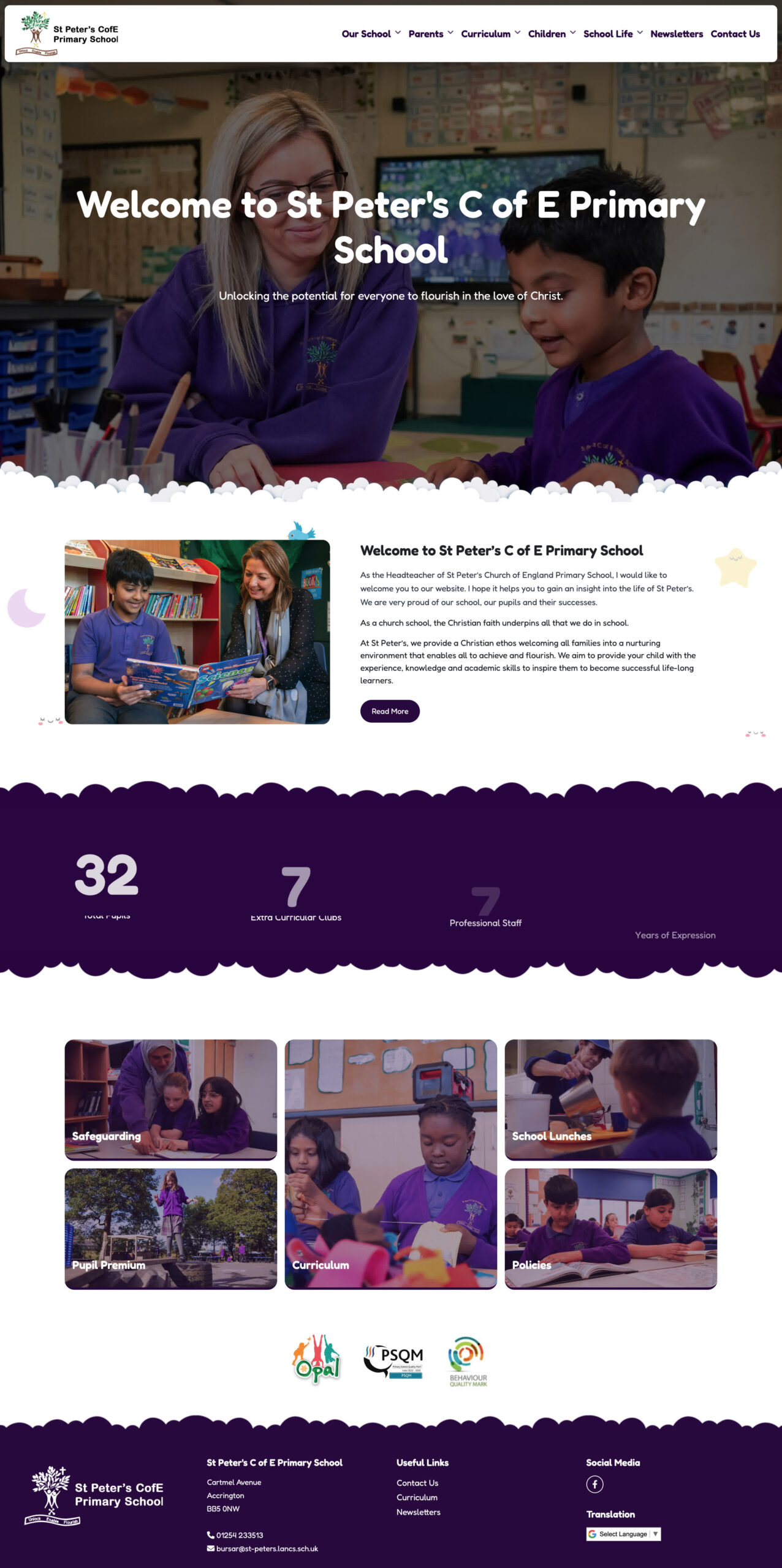
Each Church school should reflect its Christian vision in its own particular context. There is no single set template that will work for every school.
Curriculum
The DfE requires schools to publish curriculum information online. Ofsted looks closely at curriculum and teaching. SIAMS asks how the curriculum reflects the school’s Christian vision.
That makes the curriculum section one of the most useful places to connect compliance, inspection readiness and Church school identity.
A strong curriculum section should explain:
- what pupils learn
- why the curriculum is structured as it is
- how it meets the needs of pupils
- how it supports personal development
- how it reflects the school’s values and Christian vision
- how RE fits within the wider curriculum
- how pupils are helped to flourish within a Christian environment
For Church schools, the curriculum overview page is a key opportunity.
It can connect statutory curriculum information, Ofsted curriculum thinking and SIAMS vision in one place.
The Statement of Entitlement for RE may help schools reflect on the place of religious education within the wider curriculum.
Religious education
Religious education has a specific role in SIAMS. It is part of the school’s statutory curriculum too.
A useful RE page should make clear:
- what is taught
- how the curriculum is planned
- which syllabus or scheme is used
- how Christianity is taught
- how pupils learn about other faiths and worldviews
- how RE supports reflection, respect and deeper thinking
- how RE links to the school’s Christian vision
This page can support SIAMS, parent communication and curriculum clarity at the same time.
For Methodist schools, Anglican and Methodist schools, and Church of England schools, RE should be easy to find, clear and current.
Collective worship
Collective worship is central to SIAMS.
For Church schools, it should be visible and well explained.
A strong page might include:
- the purpose of collective worship
- how worship links to the Christian vision
- how pupils take part
- how worship supports spiritual development
- how the local church is involved
- how key Christian festivals and themes are explored
- examples from school life
This does not need to be a long page. It needs to be clear, current and meaningful.
Vision, values and ethos
Many schools publish their vision and values, but the content can be quite thin.
For SIAMS, the Christian vision needs to be much more than a phrase on a page.
It should be explained in plain English and connected to school life. The Church school’s Christian vision is central to being effectively Christian. It should guide the school’s ethos, practices, provision, worship, relationships and approach to education.
This page can help with Ofsted readiness too, as it explains the school’s direction, culture, leadership and priorities.
A good vision page should include:
- the school’s Christian vision statement
- the theological root or Bible passage behind it
- what it means for pupils, staff and families
- how it shapes decisions
- examples of the vision in action
- links to curriculum, worship, RE, behaviour, inclusion and community pages
Inclusion, SEND and pastoral care
DfE website requirements include SEND information and equality information.
Ofsted looks at inclusion, safeguarding, behaviour, attendance, personal development and wellbeing.
SIAMS looks at how the school’s vision creates a culture where people are treated well.
This is a major area of overlap.
Your website should help families understand:
- how pupils are supported
- who they can contact
- how SEND provision works
- how pastoral care is organised
- how safeguarding is prioritised
- how behaviour and relationships are approached
- how the school supports vulnerable pupils
- how the Christian vision shapes care, dignity and inclusion
For parents, this is practical information. For inspectors and governors, it shows the school’s priorities in action.
It can help show the provision the school makes for pupils and how that provision reflects the school’s Christian vision.
Safeguarding
Safeguarding is central to Ofsted. It is part of the wider culture of care that matters in SIAMS too.
Your safeguarding information should be easy to find, current and clear.
A strong safeguarding section should include:
- named safeguarding leads
- contact routes
- child protection policy
- online safety information
- support links
- clear reporting routes
- related policies
- information for pupils and families
This is one of the areas where website clarity really matters. People should not have to search hard to find help.
Behaviour, relationships and culture
Behaviour policies are part of DfE website publishing requirements.
Ofsted considers attendance and behaviour.
SIAMS asks how the school’s Christian vision shapes relationships, dignity, respect and culture.
A strong behaviour or relationships page should explain:
- the school’s approach
- how expectations are communicated
- how pupils are supported
- how relationships are restored
- how bullying is addressed
- how the school’s values shape behaviour
- how strategies for behaviour and relationships are shaped by the school’s Christian vision
- where families can find the full policy
This helps move the page beyond a policy upload. It helps families understand the school’s approach.
Justice, responsibility and community
SIAMS looks at justice, responsibility, courageous advocacy, service and impact.
These areas often appear in school life but are easy to miss on the website.
Schools can show this through:
- news stories
- pupil leadership pages
- charity work
- eco work
- local community partnerships
- global learning
- church projects
- social action
- pupil voice
- case studies
The key is to connect activity to purpose.
A charity event is good news. A charity event linked clearly to Christian vision, pupil leadership and community impact is much stronger.
This is where the guidance from the National Society and the national SIAMS team can help schools think about justice, responsibility and the impact of their Christian vision.
The mistake: creating one huge SIAMS page
A common mistake is to create one huge SIAMS page and put everything there.
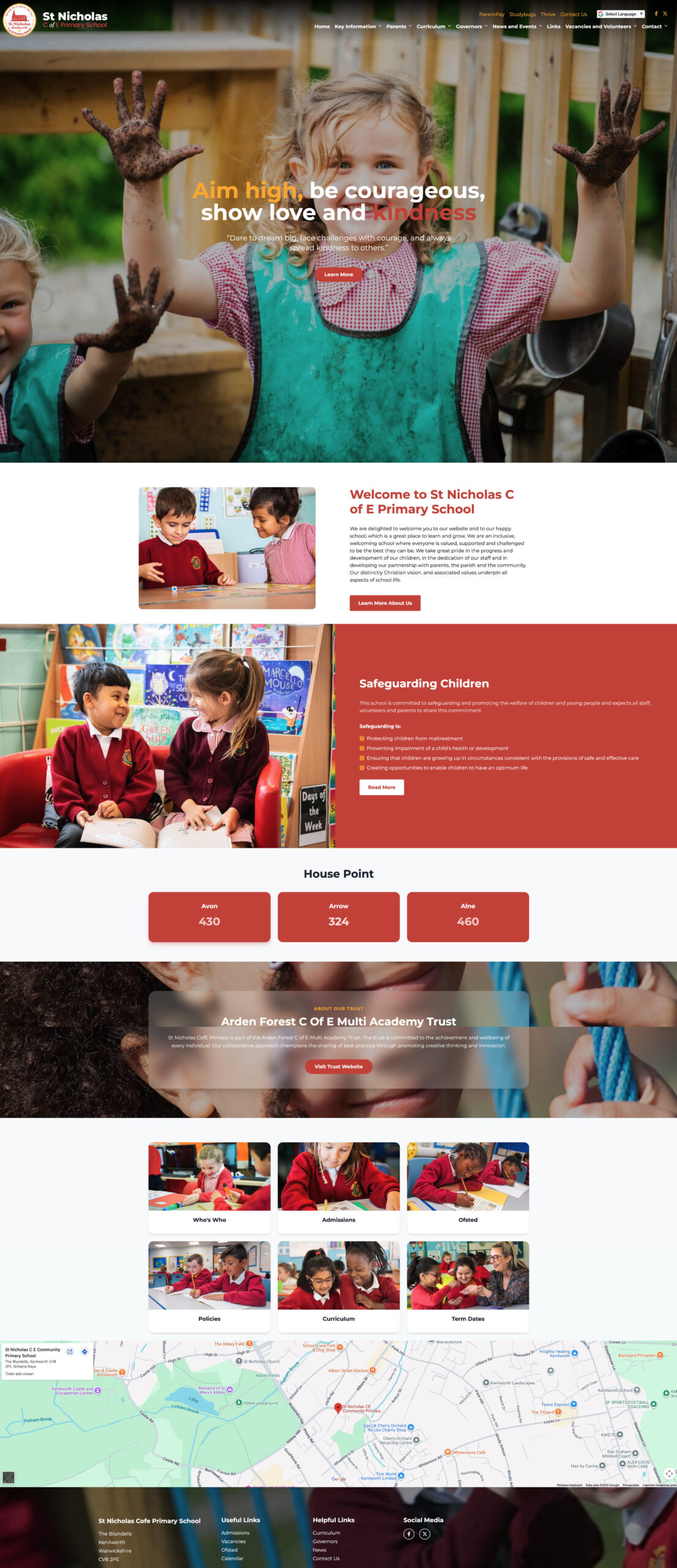
That can be hard to read and hard to maintain.
A better approach is to create a small SIAMS or Church School landing page that links to the right areas of the website.
For example:
Church School
- Christian Vision
- SIAMS
- Collective Worship
- Religious Education
- Spiritual Development
- Faith in Action
- Church and Diocese Links
Then link across to:
- Curriculum
- SEND
- Safeguarding
- Behaviour
- Equality
- Governance
- Admissions
- Policies
- News
This keeps the website simple. It stops duplication. It helps staff update information in one place rather than copying the same content across several pages.
Self evaluation templates created by the national SIAMS team may help schools prepare their own documents. A short summary SEF can help leaders and governors reflect on vision, impact, outcomes and next steps.
The website does not need to hold every internal document. It does need to make public-facing information clear, current and easy to find.
A practical “one review, several benefits” checklist
Here is a simple way to review your website.
Ask:
Can visitors find your Christian vision quickly?
Does the website explain what the vision means?
Does your curriculum section show intent, structure and values?
Is religious education easy to find and clearly explained?
Is collective worship visible and current?
Can families find safeguarding information quickly?
Are SEND and inclusion pages clear and helpful?
Does your behaviour information explain the school’s approach, not just link to a policy?
Is your latest SIAMS report easy to find?
Is your latest Ofsted report easy to find?
Are statutory policies current?
Are church, diocese and trust links clear?
Do news stories show pupils living out the school’s values?
Does the website show spiritual development, service, justice and responsibility?
Can governors and leaders use the website as part of regular self evaluation and review?
If several answers are no, the school may not need a new website.
It may need a clearer structure, stronger signposting and a focused content review.
The SIAMS inspection reports library can help schools find reports from inspections carried out from September 2021 onwards. Schools should refer to official SIAMS guidance for further information on reports, inspections, evaluation and documentation.
What this means for school leaders
The best approach is not to build separate website areas for every inspection or compliance need.
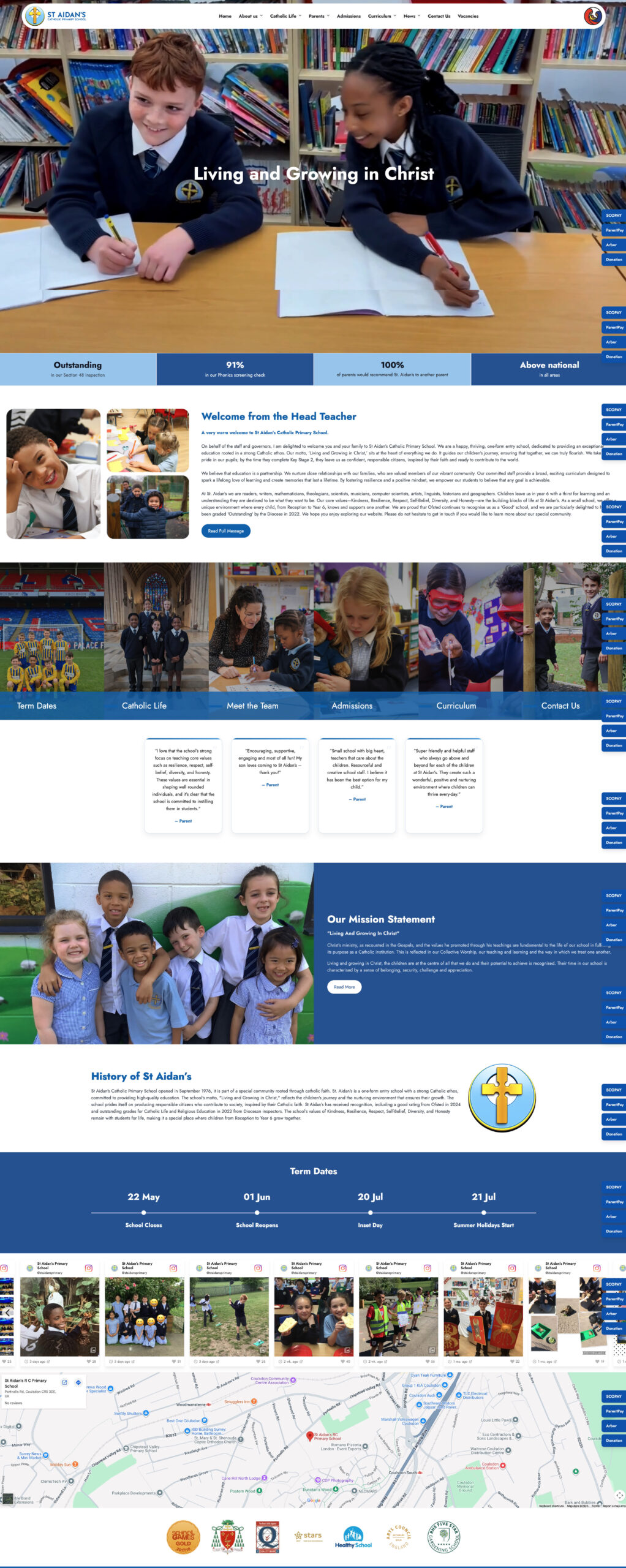
The best approach is to create one clear, well-maintained website structure that supports many purposes.
For Church schools, that means:
- DfE-required information is published and kept up to date
- Ofsted-relevant information is easy to find
- SIAMS is supported by visible evidence through the life of the website
- parents get clearer information
- staff spend less time duplicating content
- leaders can review the website with more confidence
Each academic year, annual lists of schools likely to be inspected under SIAMS are published. A school’s presence on these lists highlights potential inspection within the academic year, but it does not guarantee an inspection.
The SIAMS Manager can help schools interpret these annual lists and understand the wider SIAMS process.
From a website point of view, the goal is simple.
One good page can serve several purposes.
A curriculum page can support DfE compliance, Ofsted readiness and SIAMS.
An RE page can support curriculum clarity, parent communication and SIAMS.
A safeguarding page can support statutory duties, Ofsted expectations and the school’s culture of care.
A Christian vision page can support SIAMS, leadership communication and parent trust.
A Faith in Action page can support SIAMS, community engagement and school marketing.
This is where schools can reduce workload.
Final thoughts: your website should support the life of your Church school
A school website cannot make a school SIAMS-ready on its own.
SIAMS is about the lived reality of the school: its Christian vision, its relationships, its curriculum, its collective worship, its religious education, its culture, and the way pupils and adults are enabled to flourish.
But the website still has an important role to play.
It should help people understand what matters to the school. It should make key information easy to find. It should show how the school’s Christian vision connects to everyday life, decision-making, learning, worship, care and community.
For Church schools, this is also a helpful way to reduce duplicated work. A clear curriculum page can support DfE website requirements, Ofsted readiness and SIAMS. A strong religious education page can support parent communication, curriculum clarity and SIAMS. A well-structured safeguarding or SEND page can support statutory information, family confidence and the school’s wider culture of care. A thoughtful Christian vision page can help parents, governors, trustees, diocesan teams and inspectors understand the heart of the school more clearly.
The aim is not to create a huge SIAMS section or upload every possible document. The aim is to create a school website that is clear, current, accessible and connected.
Your SIAMS evidence comes from the life of your school. Your website should help people see that life more easily.

Related Posts
Ian Richardson
August 25, 2026
The school website mistakes we find most often in compliance audits, what the rules actually say, and a practical checklist for fixing each one this term.
Ian Richardson
August 17, 2026
Only 6.5% of school websites we audited were fully compliant. A school website compliance checklist plus the year-round routine that keeps you always ready.
Ian Richardson
August 10, 2026
Only 6.5% of school websites we audited in 2025 were fully compliant. What our data shows, what changed for September 2026, and how to stay always ready.
Ian Richardson
July 14, 2026
Publishing an allergy safety policy on your school website became a legal duty on 1 September 2026. What the law now requires, and what that date really means.
Ian Richardson
July 9, 2026
Your school website is the public front door to your school. It is where ..
Ian Richardson
June 1, 2026
School website policies are one of the most important parts of a school website, but ..