Ofsted Ready School Website: Always Ready, Not Ofsted Panicked
Ofsted Ready School Website: Always Ready, Not Ofsted Panicked
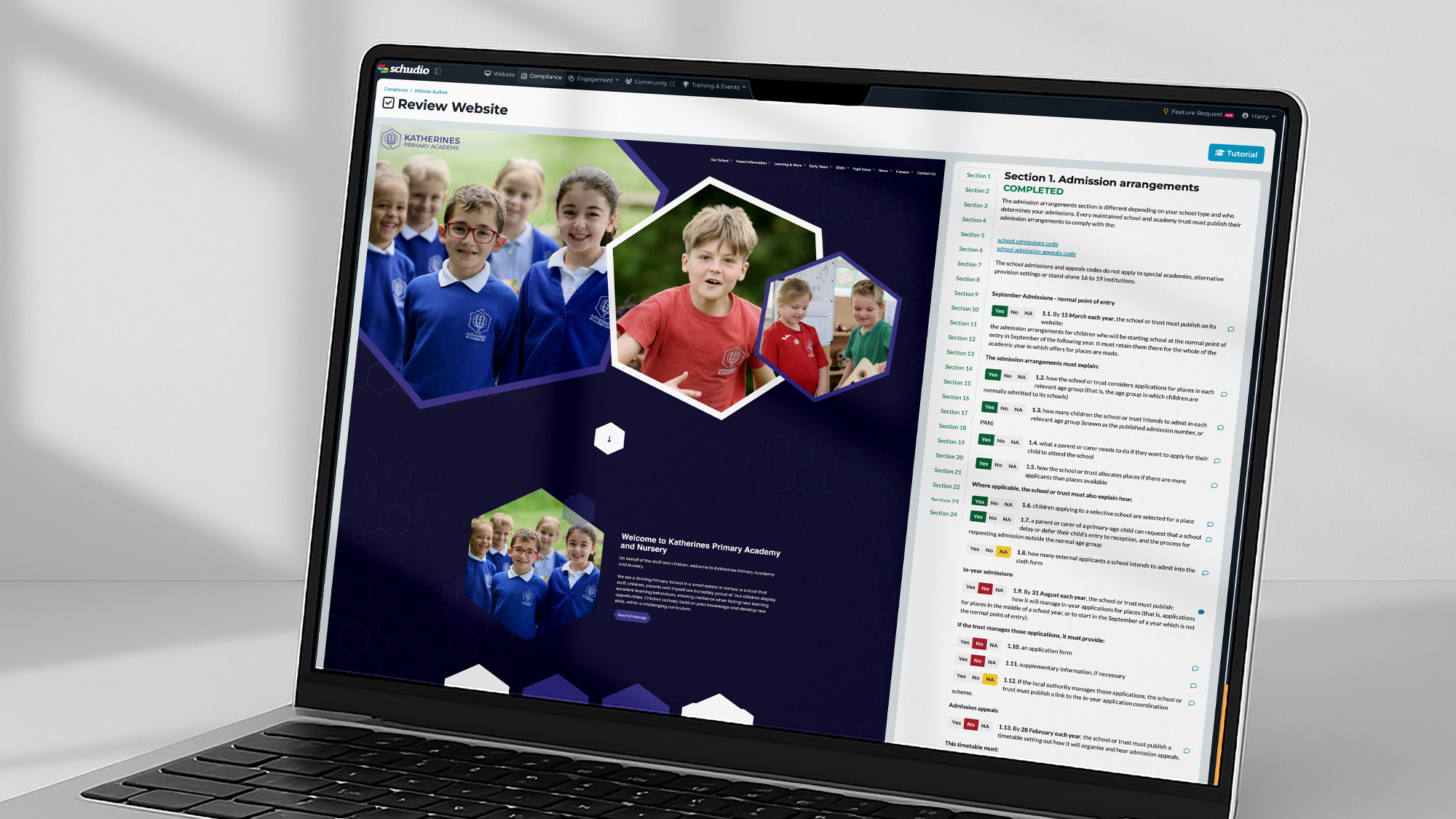
For many schools, the phrase “Ofsted ready” creates an immediate sense of pressure.
- A quick check of the school website.
- A scramble to find missing policies.
- A sudden worry that key information is out of date.
- A last-minute review of safeguarding, curriculum, SEND, admissions, governance, financial information and results pages.
We understand why this happens. A school website holds a large amount of statutory information, practical guidance, communication resources and day-to-day content for parents, pupils, staff, governors, trustees, prospective parents and the wider school community.
The Department for Education sets out what maintained schools must or should publish online. There is separate guidance for academies, free schools and colleges. Both sets of DfE requirements cover a wide range of areas, including behaviour policies, complaints, contact details, curriculum, governance information, Ofsted reports, pupil premium, PE and sport premium, SEND, equality information, school opening hours and exam or assessment results.
That means a school website is never really “finished”.
It needs care, review and steady attention across the school year. But here is the key point: schools should not have to wait for an Ofsted inspection before they feel ready. The aim should be simple. Your school website should be accurate, useful, accessible and compliant all year round.
The problem with last-minute inspection thinking
Some schools ask whether website alerts or last-minute checks are the best way to stay prepared for inspection. At first glance, that might sound useful. A school gets an alert. The team checks the website. Missing information is tidied. Policies are reviewed. Key pages are updated.
But we think there is a better way.
A warning alert may help a school react. It does not build better habits. It can create pressure at the exact moment school leaders, office teams and website managers already have plenty to handle. For many schools, the anxiety is the real problem. Schools do not need more pressure. They need a clearer routine.
Why pressure-based prompts can make website compliance harder
There is a wider issue here too.
Most people already know what it feels like to receive a sudden alert that demands attention. It interrupts what you are doing. It creates urgency. It pushes you to check, react and deal with the issue straight away.
In a school context, that matters.
School leaders, office teams and website managers are already working with competing priorities. A sudden prompt linked to inspection pressure can add to that sense of urgency, particularly when the team is unsure what needs fixing, who owns the work or how much time it will take.
That does not mean reminders are bad. Good reminders are useful. A calm prompt to review safeguarding this month, check policy dates this term or update admissions before applications open can be very helpful.
The difference is the tone and timing.
- A planned review helps people prepare.
- A high-pressure warning can make people react.
That is why our approach is built around calm, regular improvement. The goal is to make website compliance part of a manageable routine, rather than something that appears suddenly when everyone is already under pressure. The school website should not become another source of panic. It should be a calm, reliable and well-managed part of school life.
Ofsted’s current inspection materials set out how inspectors gather evidence to reach fair and accurate grades. Website compliance may form part of that wider evidence picture, but it should never be treated as a rushed last-minute task. We do not want schools to feel warned. We want them to feel ready.
At Schudio, our approach to school website compliance has always been built around preparation, confidence and ongoing support.
We help schools understand:
- what they need to publish
- where key statutory information should sit
- which policies need review
- which pages need updating
- how to make information easier for parents and prospective parents to find
- how to keep the website useful, compliant and manageable
- how to communicate clearly with the whole school community
This is why we believe the future of school website compliance should be built around calm preparation, clear routines and year-round support.
We believe it should be built around an Always Ready approach.
What is an Always Ready school website?
An Always Ready school website is not perfect every day. No school website is.
Schools are busy. Policies change. Staff change. Dates change. Curriculum information needs review. New guidance appears. Pages drift over time. News, events, letters and resources need keeping up to date. Website content can become hard to manage, even in a strong school with a committed team.
An Always Ready school website is one where the school has a clear system for keeping things under control.
That system should help school leaders and website managers answer questions like:
- Do we know which pages matter most for statutory requirements?
- Do we know which policy document is live?
- Do we know when policies are due for review?
- Do we know where parents and prospective parents look for key information?
- Do we have a clear way to check the site against current DfE requirements?
- Do staff know what to update and when?
- Do we have a routine for reviewing content during the school year?
- Do we have expert support when guidance changes?
- Do we have accessible pages that work well on mobile devices?
- Can Ofsted inspectors, parents, governors and trustees find key information quickly?
That is the difference between a website that is online and a school website that is properly managed.
The Always Ready School Website System
The Always Ready School Website System is the way we help schools stay prepared throughout the year. It brings together guidance, tools, training, audits and expert support so schools are not left guessing. It is built around six key areas.
1. Clear school website compliance guidance
The first step is knowing what is required.
School website compliance can feel confusing. Some information is required by law. Some is set out in statutory guidance. Some is recommended by the Department for Education. Some is expected by parents, governors, trustees or inspectors.
For example, maintained schools must publish contact details including their postal address, telephone number and the name of the member of staff who deals with queries from parents, carers and the public. Mainstream schools must publish the name and contact details of their SENCO.
Schools must publish curriculum information for each academic year for every subject. Schools with Key Stage 1 provision must publish any phonics or reading schemes they use. Schools with Key Stage 4 provision must publish a list of the courses they offer, including GCSEs.
This is why we create practical guidance for schools, including our School Website Requirements Guide and regular compliance training.
The aim is to make the requirements easier to understand and easier to act on. Schools should not have to spend hours interpreting guidance before they can update a page. They need clear, plain-English support that helps them know what matters.
FREE RESOURCE – Download The School Website Requirements Guide
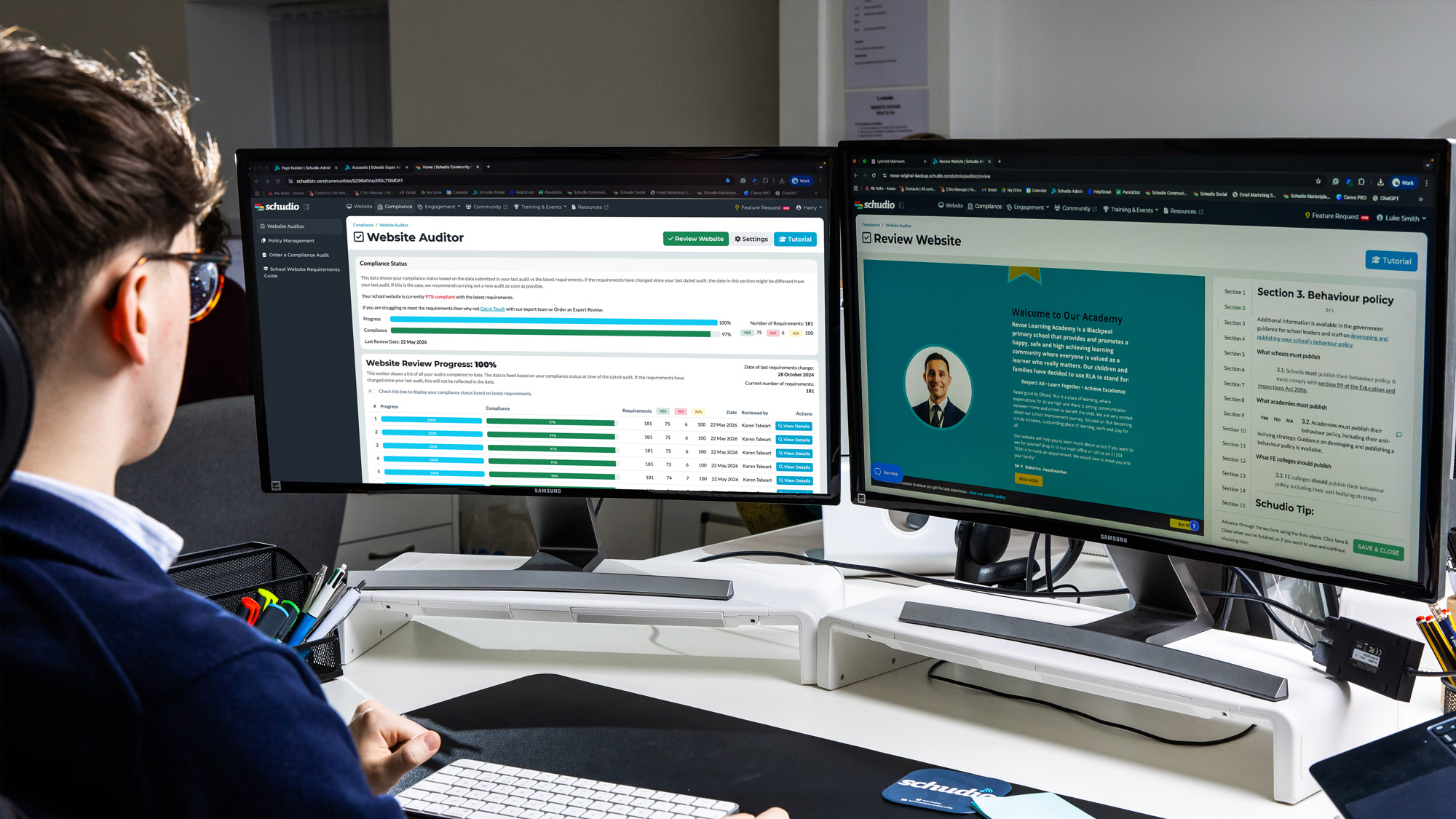
2. Regular compliance reviews
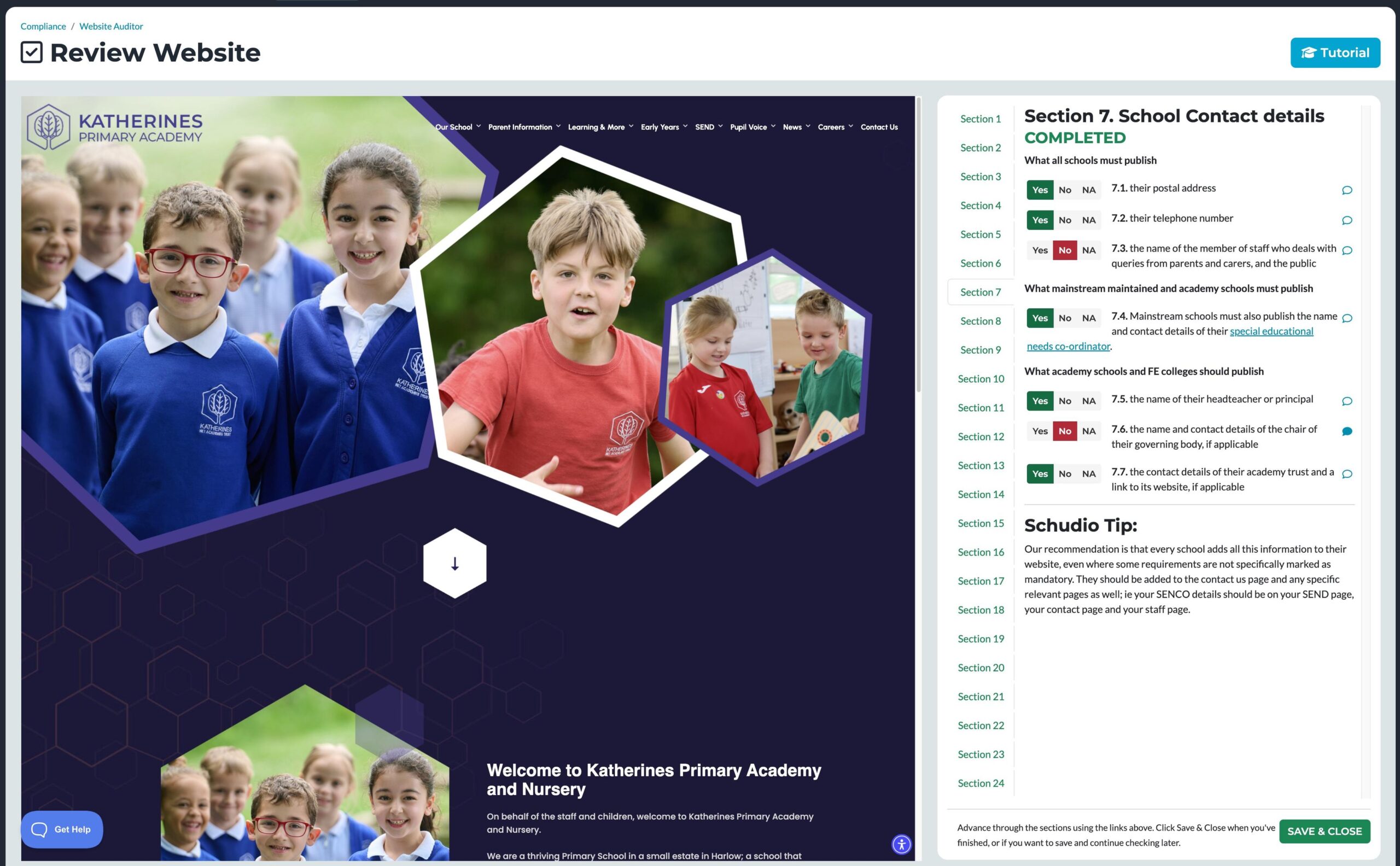
A school website should be checked regularly, not just when an Ofsted inspection is expected.
This is where school website compliance audits and reviews become so useful.
A proper review can help identify:
- missing statutory information
- out-of-date policies
- broken links
- unclear page structures
- hard-to-find information
- outdated governance details
- missing curriculum information
- weak safeguarding visibility
- accessibility concerns
- pages that are technically compliant but hard for parents to use
That final point matters.
A school website can contain the right information and still be hard to use. Compliance is the baseline. Clarity is what makes the website work. Schools should be able to explore their website from the point of view of a parent, a prospective parent, a governor, a trustee, a member of staff and an inspector. Each person comes to the site with a different job to do. The website needs to help them complete that job quickly.
Struggling to know where to start? Request a School Website Audit by Schudio experts
3. Policy and document management
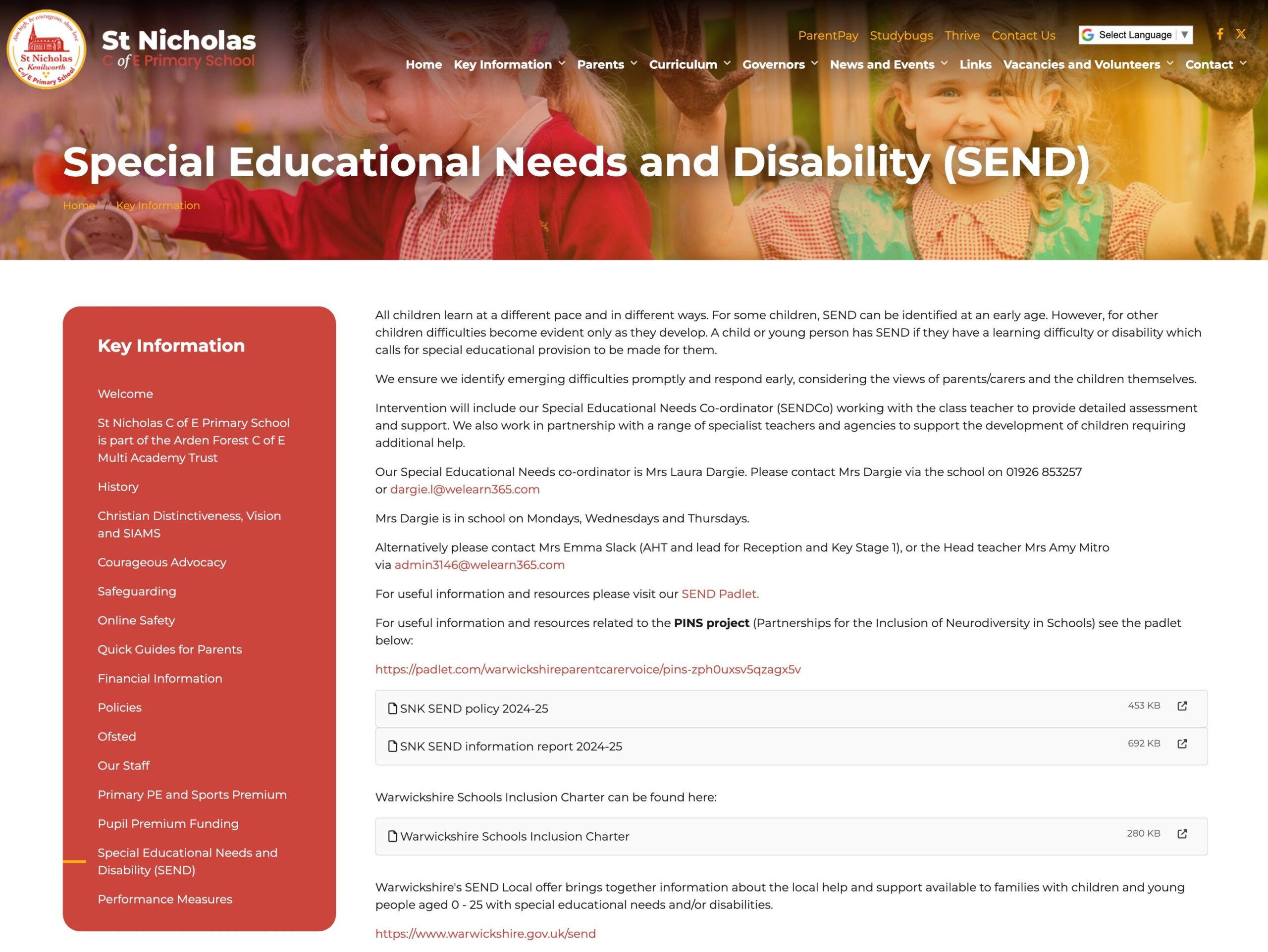
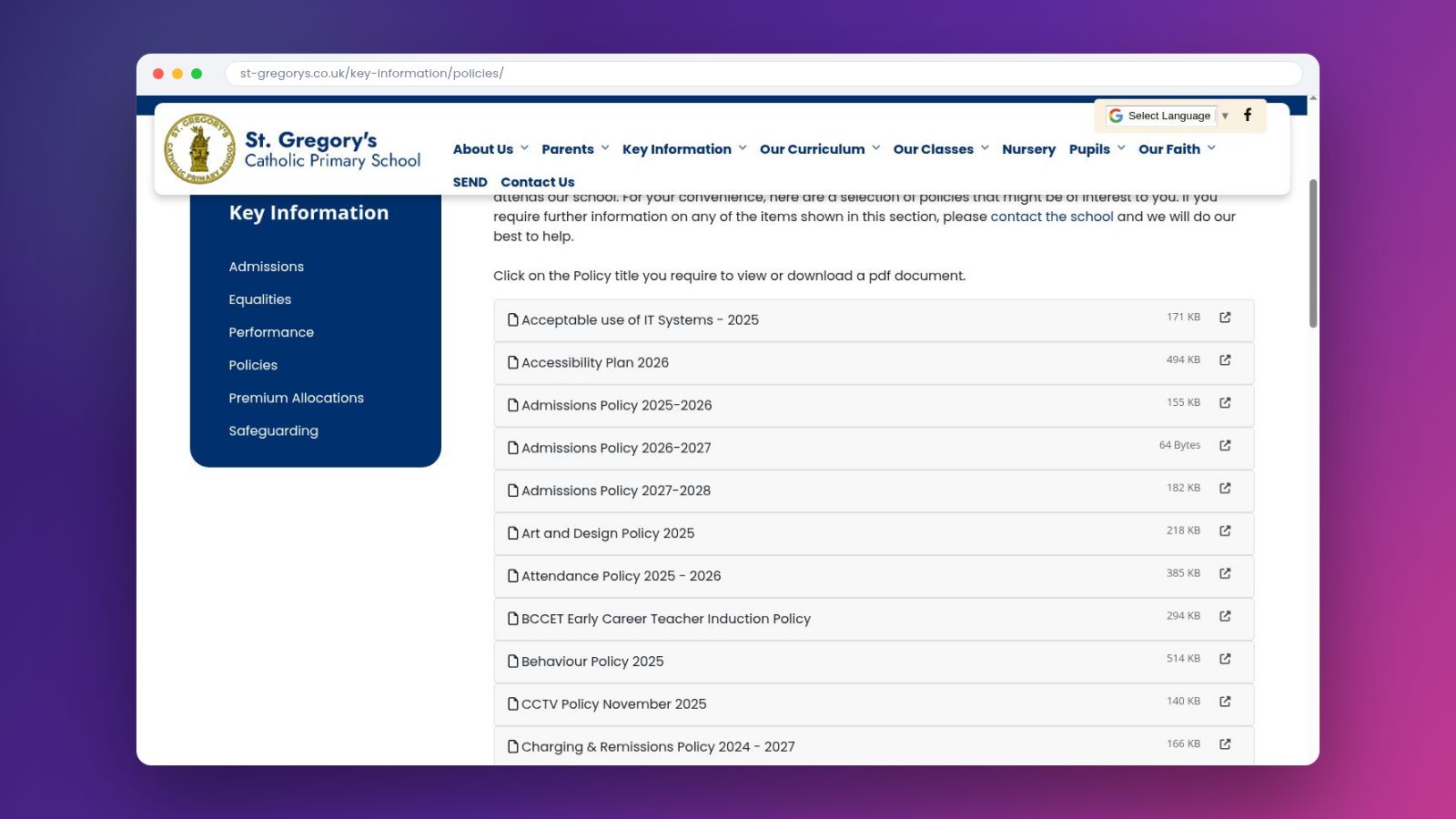
Policies are one of the biggest sources of school website compliance issues. They are easy to upload, but much harder to manage over time. A school may have policies spread across different pages, different folders, old file names and historic versions. Over time, this creates confusion for staff and visitors.
Statutory policies and key documents commonly include safeguarding, behaviour, complaints, charging and remissions, school uniform, SEND information and equality information. Maintained schools must publish their behaviour policy, charging and remissions policies, complaints policy and SEN information report. Schools whose pupils wear a uniform should publish an easy-to-understand uniform policy.
An Always Ready approach needs a better system.
Schools should be able to see:
- which policies are live
- which version is current
- when each policy was last reviewed
- when each policy is next due for review
- where each policy appears on the website
- whether old versions need removing
- who owns each update task
For Multi-Academy Trusts, this becomes even more valuable.
Trusts need central oversight. They need to know which schools have published the right information, which policies are up to date and where progress is needed.
That is why centralised policy and compliance management is such a key part of the Schudio MAT Portal.
4. Training for the people managing the website
A website system is only useful when school staff feel confident using it.
Many compliance issues are not caused by neglect. They happen when the person managing the website has not been given enough training, time or support. That is why ongoing training matters. Schools need more than a launch handover.
They need regular access to:
- live training
- practical workshops
- recorded guidance
- help from people who understand school websites
- simple reminders when requirements change
- space to ask questions
- resources they can share with the wider team
This is where SchudioTV, our live compliance workshops and our ongoing client support make such a difference. We want school staff to feel capable, not caught off guard.
LEARN FAST: Join a School Website Compliance Workshop
5. Parent-friendly website structure
Being Ofsted-ready should never mean building a website only for inspectors. That is the wrong focus. Your school website should serve parents, carers, children, pupils, students, prospective parents, staff, governors, trustees and the wider school community.
When parents visit your website, they are usually trying to answer a practical question:
- Is this the right school for my child?
- How do I apply?
- Who do I contact?
- What support is available?
- What does the curriculum look like?
- What happens if my child has SEND?
- What are the term dates?
- Where is the latest letter?
- How do I raise a concern?
- What does the school value?
- How can I support my child’s learning at home?
A good school website answers these questions clearly. This is why an Always Ready school website is not just a compliance checklist. It is a communication tool. The best school websites make statutory information easy to find, but they help families feel informed, reassured and connected to school life too.
For prospective parents, this is often their first proper impression of the school. A clear admissions page, a warm welcome, strong curriculum pages, helpful SEND information, current news, simple contact details and engaging examples of school life can all help a family build confidence in the setting.
6. Calm preparation, not panic
The strongest schools do not wait for a signal before checking their website.
- They have a routine.
- They review key pages.
- They keep policies current.
- They use training.
- They ask for help when they need it.
- They check the website from a parent’s point of view.
- They know what needs attention before pressure arrives.
That is what we mean by Always Ready. It is not about fear. It is about confidence.
Key areas every Ofsted-ready school website should review
Every school is different, but these are the areas we would expect most schools to review as part of an Ofsted-ready school website process.
Safeguarding and child protection
Safeguarding should be easy to find.
Parents, pupils, staff, governors and visitors should be able to find the school’s safeguarding and child protection information quickly. The safeguarding area should include the latest policy document, clear contact routes and details of key staff, including the Designated Safeguarding Lead. This page should never feel hidden.
SEND information
SEND pages need to be clear, calm and helpful.
The DfE guidance says schools must publish an SEN information report. It should be updated every year, with changes made during the year when needed. It must include information set out under the Children and Families Act 2014 and SEND regulations.
This is an area where plain language matters. Parents may be worried, tired or unsure what help is available. A clear SEND page can reduce anxiety and help families know what to do next.
Curriculum
Curriculum pages should explain what children learn and how the curriculum is structured.
For parents, curriculum content needs to be more than a long list of documents. It should explain subjects, year groups, key stages, learning, reading, phonics, assessment and how parents can find out more. For secondary schools, Key Stage 4 course lists and exam results need to be clear and current.
For primary schools, phonics and reading scheme information should be easy to find.
Governance
Governance information should be accurate and current.
Names, roles, terms of office, committee information, attendance records and business interests should be reviewed on a routine cycle.
For MATs, governance content can become harder to manage across multiple schools, so central oversight is very helpful.
Financial information
Financial information is a common source of missed updates.
Pupil premium strategy statements need to explain how the funding is being spent and the education outcomes achieved for disadvantaged pupils. Schools receiving PE and sport premium funding must publish details including the amount received, how it has been or will be spent, the impact on participation and attainment, and how improvement will be sustained.
These pages often have clear dates attached, so they should be part of the school year compliance calendar.
Performance and results
Schools must publish a link to the compare school and college performance service and the school’s performance measures page on it.
Primary schools must publish their latest Key Stage 2 performance measures, and secondary schools must publish their latest Key Stage 4 performance measures. This is a good example of content that needs both accuracy and clarity. The information needs to be present, but it should be easy for parents to understand too.
Accessibility and mobile usability
An Ofsted-ready school website should be accessible.
That means content should be readable, structured well, simple to use on mobile and usable by people with disabilities.
Equality information and accessibility planning are part of the wider statutory picture. Schools must publish details of how they comply with the public sector equality duty each year, and equality objectives at least every four years.
Accessibility is not just a technical issue. It is part of good communication.
Top tips for building an Ofsted-ready school website
Here are our top tips for keeping your school website ready across the year.
1. Keep one central compliance checklist
- Do not rely on memory.
- Use a clear checklist based on the latest DfE requirements for your school type.
- Maintained schools, academies, free schools and colleges do not all have the same publishing duties, so check the right guidance for your setting.
- Use the Schudio School Website Compliance Software or, if you’re a Trust, use MAT Portal.
2. Review key pages termly
- A simple termly review can prevent most last-minute issues.
- Focus on safeguarding, SEND, curriculum, admissions, contact details, governance, financial information, policies, Ofsted reports and performance data.
3. Add policy review dates
- Every policy document should have an owner, a review date and a next action.
- This helps the website team avoid expired documents and old versions.
4. Check the site as a parent
Ask a practical question and try to find the answer.
For example:
- “How do I apply?”
- “Who do I contact about SEND?”
- “Where is the behaviour policy?”
- “What does my child learn in Year 4?”
- “What support is available for reading?”
This is often the quickest way to find confusing content.
5. Make the website useful for more than inspection
Ofsted Ready is useful, but it is too narrow on its own.
Your school website should help parents, children, prospective parents, staff and the wider school community every week.
6. Use plain language
School website content should be easy to read.
This matters most on pages where parents may already feel anxious, such as SEND, safeguarding, admissions, behaviour and complaints.
7. Keep evidence easy to find
Ofsted inspectors gather evidence during an inspection. Governors, trustees and parents look for evidence too.
Clear pages, current policies, dated reports, helpful curriculum content and visible support routes all make the website easier to trust.
Why this matters for school leaders
School leaders already carry a huge amount of responsibility.
The website should support that work, not add stress.
When the website is well managed, it gives leaders confidence that key information is in place. It helps governors and trustees see that compliance is being taken seriously. It helps parents find answers quickly. It helps office teams reduce repeated queries. It helps schools present themselves clearly.
For MAT leaders, the benefits are greater.
A trust-level view of school website compliance can help central teams spot gaps across schools, share approved content, manage policies consistently and support schools before issues build up. That is far more useful than waiting for a warning.
Why we take this approach at Schudio
Schudio has worked with schools since 2011.
We know how hard school teams work. We know how much information schools are expected to publish. We know how easy it is for websites to become messy over time, even with the best intentions. That is why our approach is built around long-term support.
We do not want schools to rely on a moment of panic. We want schools to have a clear system that helps them stay ready week after week, term after term.
This includes:
- School website compliance audits
- Live compliance workshops
- The School Website Requirements Guide
- SchudioTV training
- Ongoing CMS support
- MAT Portal compliance tracking
- Policy and document management tools
- Practical advice from school website specialists
Together, these create a calmer and more reliable way to manage school website compliance.
Ofsted ready is useful. Always Ready is better.
There is nothing wrong with wanting an Ofsted-ready school website. Schools should be ready.
But the phrase can sometimes narrow the website’s purpose too much.
A school website should not be treated as something to tidy up before inspection. It should be a living, useful, well-managed communication tool that supports the school community all year round.
That is why we prefer the idea of being Always Ready.
- Always ready for parents.
- Always ready for governors.
- Always ready for trustees.
- Always ready for prospective parents.
- Always ready for staff.
- Always ready for Ofsted inspectors.
- Always ready for the people who rely on your website every day.
Need help checking your school website?
If you are not sure whether your school website is compliant, clear or easy to use, we can help. Download our free School Website Requirements Guide or join one of our live School Website Compliance Workshops.
We will help you understand what needs to be published, what often gets missed and how to build a calmer system for keeping your website up to date.
Your school website should not be a source of last-minute stress. It should give you confidence.
Suggested FAQs

Related Posts

Ian Richardson
August 25, 2026
The school website mistakes we find most often in compliance audits, what the rules actually say, and a practical checklist for fixing each one this term.
Ian Richardson
August 17, 2026
Only 6.5% of school websites we audited were fully compliant. A school website compliance checklist plus the year-round routine that keeps you always ready.
Ian Richardson
August 10, 2026
Only 6.5% of school websites we audited in 2025 were fully compliant. What our data shows, what changed for September 2026, and how to stay always ready.
Ian Richardson
July 14, 2026
Publishing an allergy safety policy on your school website became a legal duty on 1 September 2026. What the law now requires, and what that date really means.
Ian Richardson
July 9, 2026
Your school website is the public front door to your school. It is where ..
Ian Richardson
June 1, 2026
School website policies are one of the most important parts of a school website, but ..