School Website Pages: Why Most Don’t Work (And What Actually Helps Parents Decide)
School Website Pages: Why Most Don’t Work (And What Actually Helps Parents Decide)
If you spend any time reviewing school website pages across the UK, you start to notice something quite quickly.
Most of them aren’t bad.
In fact, a lot of them are pretty solid.
The content is there. The structure looks fine on the surface. The information is accurate.
However, many school websites miss the opportunity to engage the wider community, not just parents and students.
And yet… they don’t really work.
Not in the way schools need them to.
Not in the way parents expect them to.
And definitely not in the way a great school website should—one that creates a strong first impression for all visitors, including the wider community.
This Isn’t a Content Problem
Let’s get this out of the way early.
Most schools do not have a content problem.
They’ve already done the hard part.
They’ve written:
- detailed admissions information
- strong curriculum pages
- a thoughtful Headteacher welcome
- policies, reports and statutory content
From a compliance point of view, the school website is doing its job.
From an effort point of view, school staff have put a huge amount of time in.
But from a parent’s point of view?
It often still feels hard to use.
Parents Don’t Use School Website Pages the Way Schools Expect
This is the bit that changes everything.
Schools tend to think in pages.
Parents don’t.
Parents move.
They:
- land on the homepage (which, for most schools, is the first port of call for over 90% of visitors)
- click into admissions
- jump to term dates
- look for contact details
- go back
- try something else
They are constantly navigating.
They are trying to find information quickly.
They are making decisions as they go.
And most school website pages simply aren’t built for that.
What Most School Website Pages Still Look Like
Across many schools, the pattern is the same.
A page is built like a document:
- a heading
- a few paragraphs
- maybe a list
- maybe a link
That’s fine for reading.
But parents aren’t reading.
They are scanning.
They are trying to:
- find key information
- understand next steps
- feel confident about a decision
A well designed school website needs to support that behaviour by using clear messaging and incorporating user-friendly features such as animations, interactive elements, carousels, and responsive design. These elements help parents quickly find what they need and make the experience more engaging.
Most don’t.
This Is Why Even “Good” Pages Don’t Work
You can have:
- a strong admissions page
- a clear curriculum section
- a well written Headteacher welcome
…and still have school website pages that don’t convert prospective families.
Because they don’t guide.
They just present information, without clear calls to action to guide visitors towards key actions, such as admissions and event registrations. Effective marketing strategies on school websites are essential to help convert prospective families by making next steps obvious and encouraging engagement.
And This Shows Up Fastest in Admissions
If you want to see this clearly, look at admissions.
A typical admissions section might include:
- policy documents
- links to the local authority
- a block of explanation
- maybe a mention of open days
Everything technically correct.
But from a parent’s perspective?
They’re asking:
- Where do I start?
- What happens next?
- When do I need to act?
- Should I even apply here?
- Where can I find information on upcoming events and open days?
And the page doesn’t answer those clearly.
That’s the gap.
Schools can improve parental engagement by providing clear and accessible information about school events, policies, and student progress through their websites.
The Shift We’ve Been Working On
This is what we’ve been rethinking.
Not “how do we add more content?”
But:
How do we build school website pages that actually guide people?
A thoughtful design process is key to creating pages that guide users effectively.
And the answer keeps coming back to the same thing:
Structure.
Not more words.
Better structure.
Moving From Content Blocks to Structured Pages
Instead of building school website pages as long pieces of content, schools are now moving towards using a content management system (CMS) to easily update and structure their pages. A CMS enables staff to manage content without technical expertise, making it simple to keep information current and well-organised.
We’ve been breaking them into structured sections that each do a job. Features such as newsletters, event calendars, and social media links can also be integrated into school website pages to foster better communication and engagement with parents.
This is where things start to change.
Showing Your School Clearly (Without Overwriting It)
One of the biggest issues across school website pages is that schools try to explain too much in text.
Parents don’t take it in.
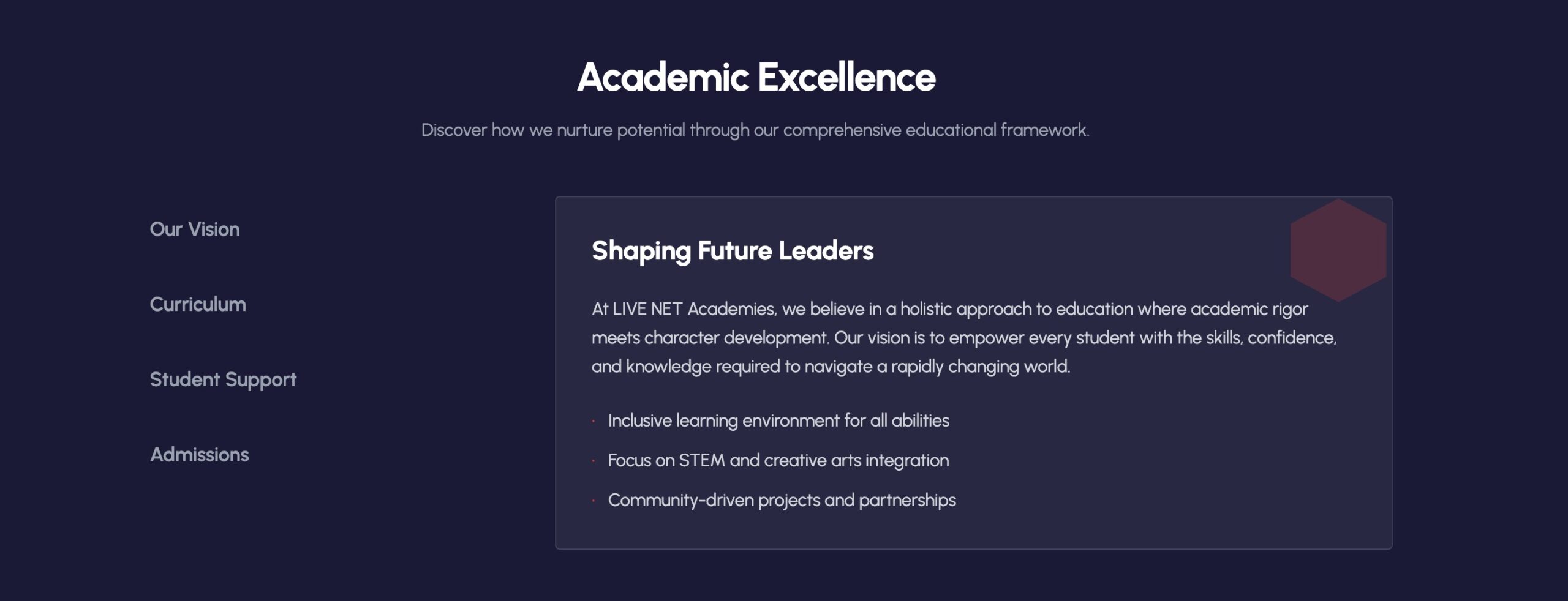
So we started structuring those messages instead.
This kind of section:
- pulls out your school’s values
- makes your vision visible
- helps parents understand what matters quickly
- uses bespoke school website design to visually convey the school’s values and ethos through tailored visual storytelling
Instead of reading three paragraphs, they get it instantly.
That’s what strong school website design should do.
Building Trust Properly
Another thing we see across many schools:
They say they are a great school.
But they don’t show it clearly.
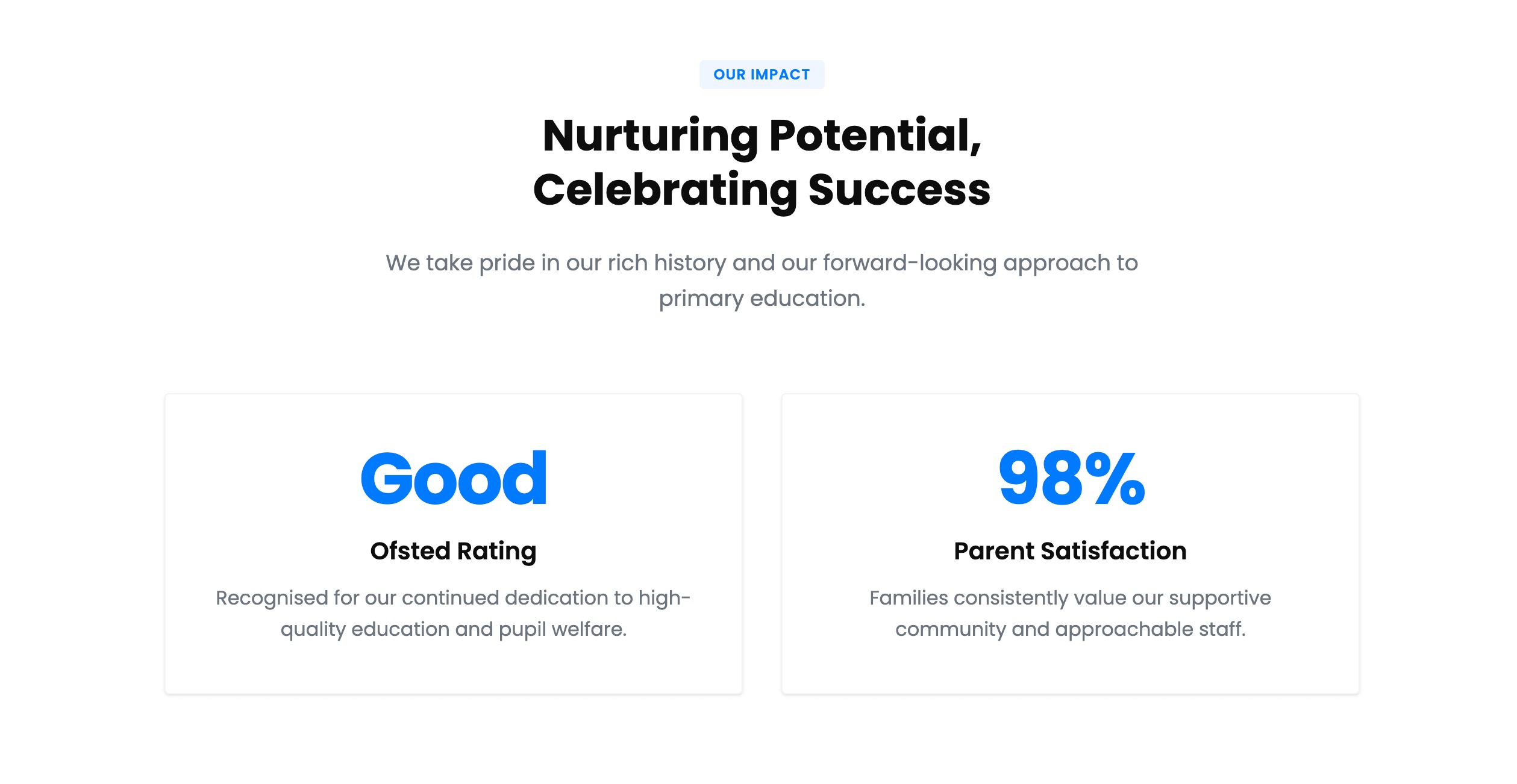
This type of section:
- gives quick reassurance
- supports decision-making
- builds trust early
- uses website features to showcase achievements, testimonials, and performance data
For prospective parents, this is huge.
It removes uncertainty before it builds.
Helping Parents Understand the Journey
One of the biggest gaps across school website pages is that there’s no sense of progression.
Parents can’t picture what school life actually looks like, and students may not see how the website supports their journey and interests.
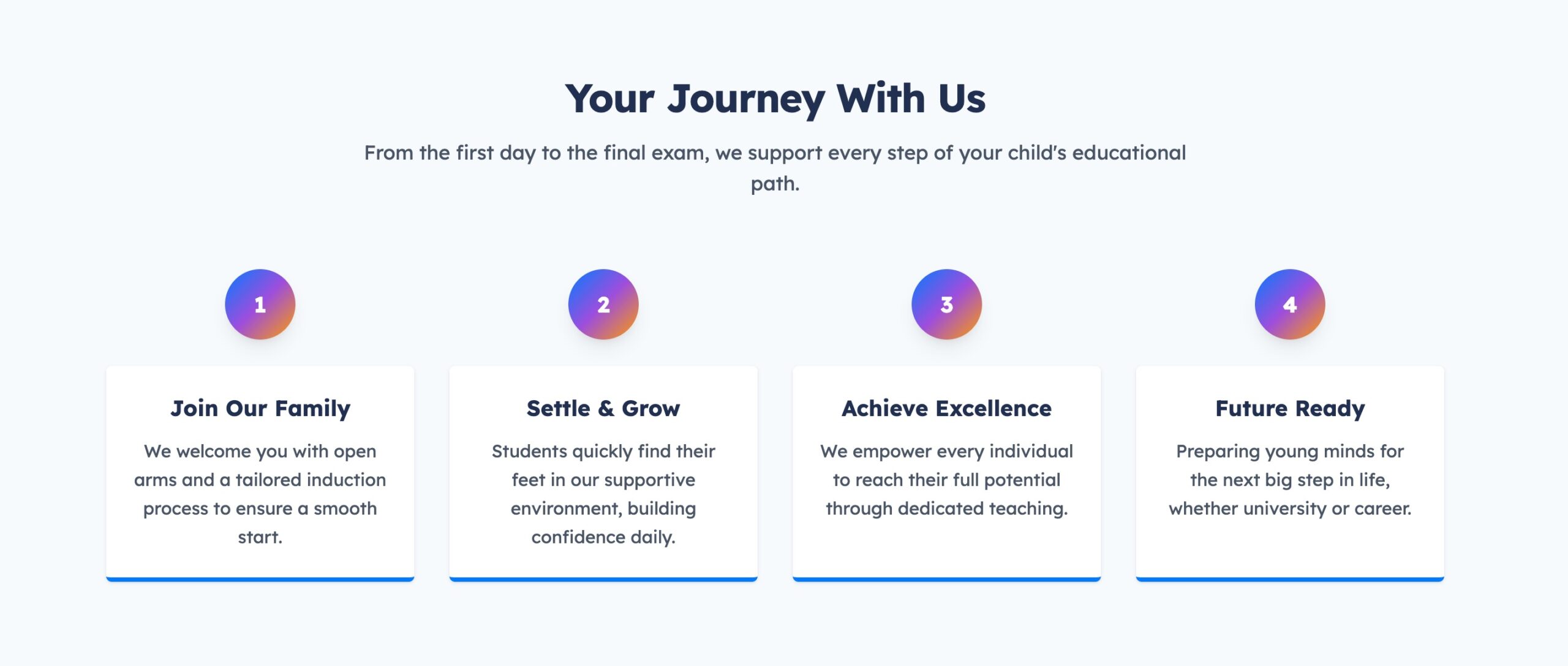
This kind of structure:
- shows progression through the school
- gives a sense of daily life
- helps parents understand what their child will experience
- highlights extracurricular activities and enrichment opportunities for students, such as clubs, sports, and subject-specific events
Dynamic content, such as blog posts and upcoming events, is crucial for keeping the website fresh and engaging for both current and prospective students.
This is where visual storytelling starts to matter.
Turning Admissions Into Something Usable
Admissions pages are often the most important pages on a school website.
And often the least usable.
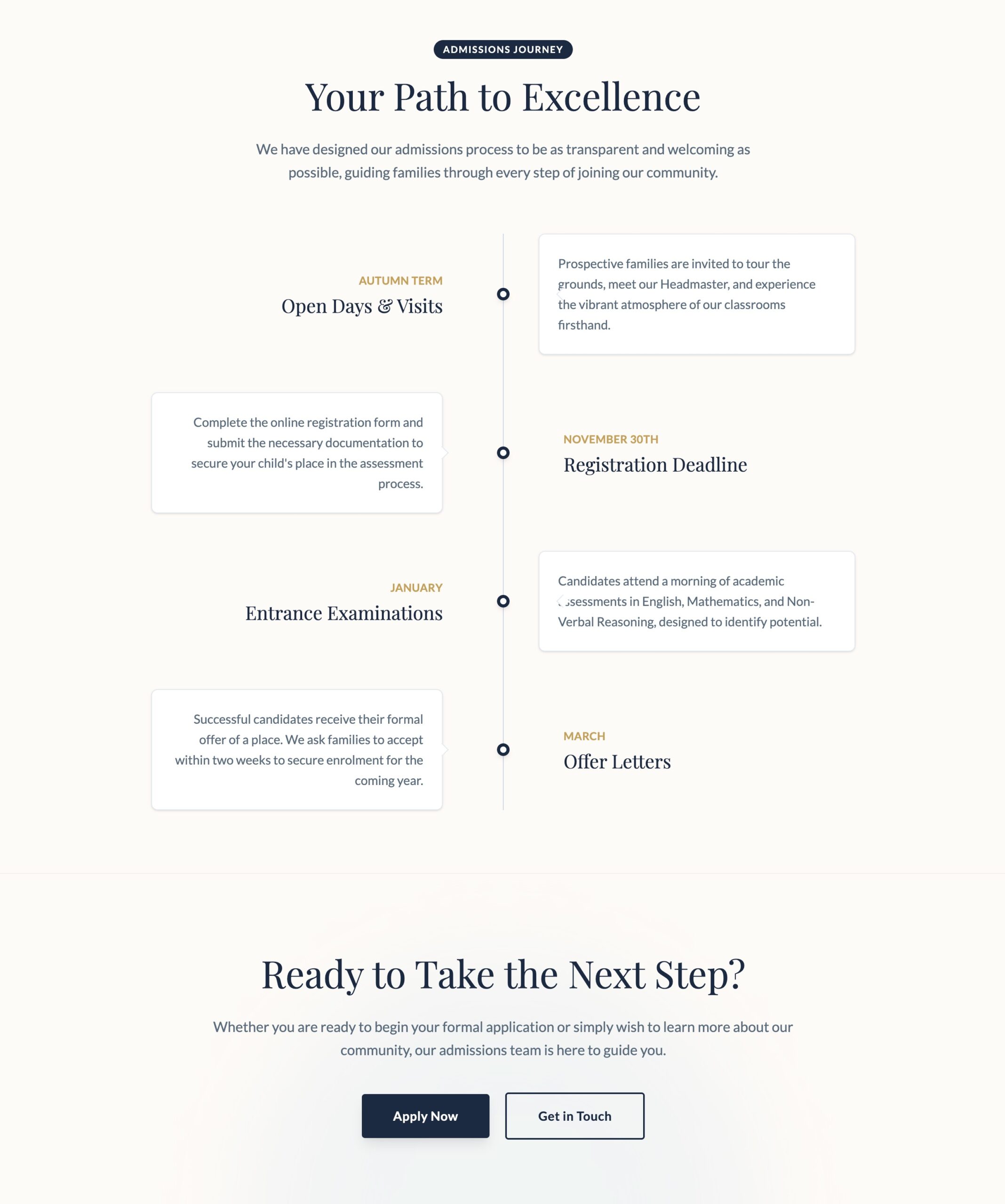
A timeline like this:
- makes key dates clear
- simplifies the admissions process
- uses clear messaging throughout the admissions section to help parents understand each step and what is required
- shows parents what to expect
Instead of digging through content, they can scan and act.
And that makes a huge difference.
Making Actions Clear (Instead of Hoping People Find Them)
A lot of school website pages miss this completely.
There is no clear next step.
Simple actions like:
- Apply now
- Get in touch
- Book a visit
Incorporating interactive features such as buttons and forms can further increase engagement and support admissions.
Placed at the right point:
- reduce hesitation
- increase engagement
- support admissions
Without this, even interested parents pause.
Making Everyday Information Easier to Use
Not everything is about admissions.
A lot of school website pages are about everyday school life.
Uniform. Preparation. Expectations.
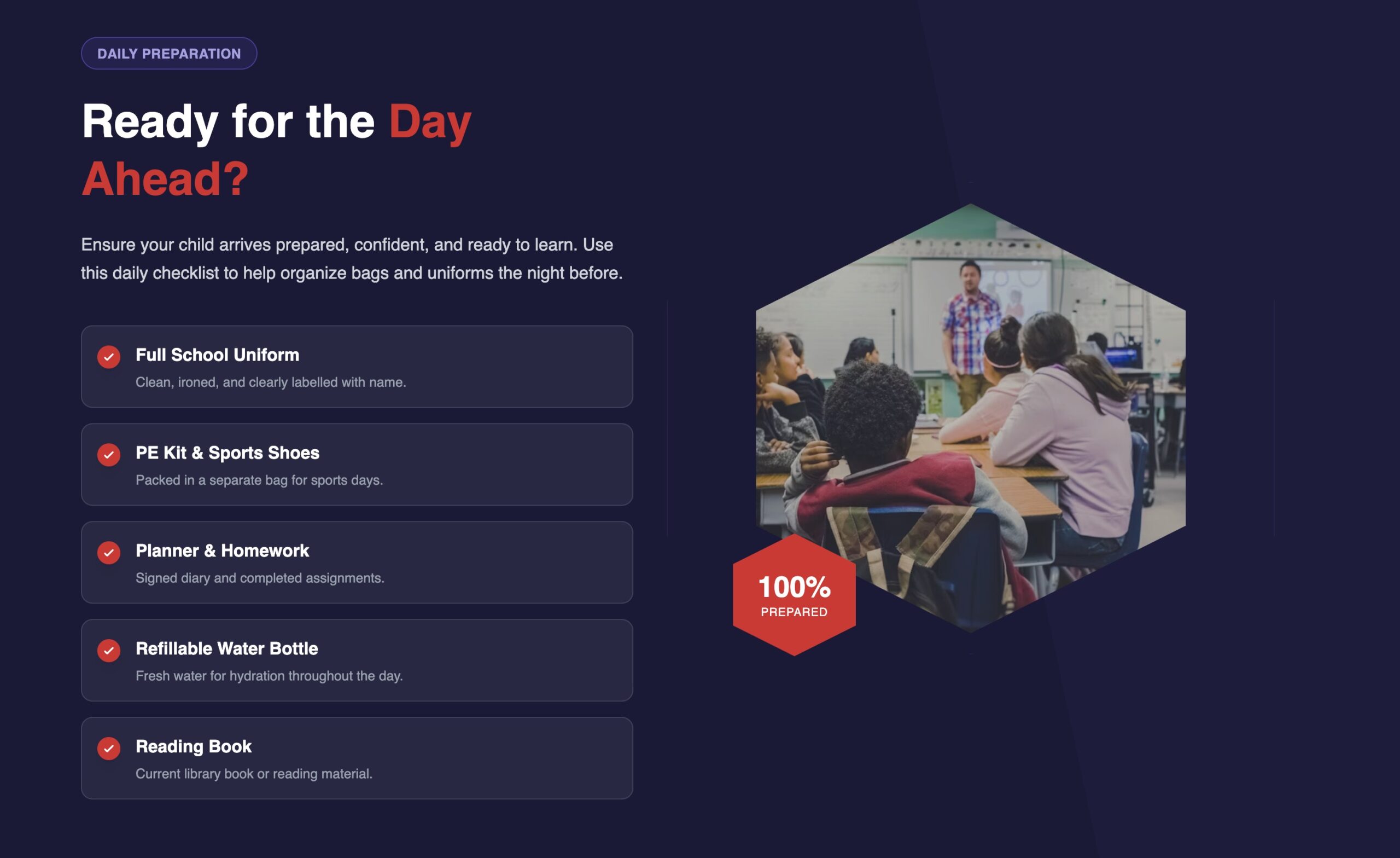
This type of structure:
- makes information easier to scan
- reduces questions
- supports parents quickly
- ensures staff can easily update pages to keep information current and accessible
Including accessibility features, such as high-contrast text and keyboard-friendly navigation, ensures all users, including those with disabilities, can access information easily.
It’s simple, but really effective.
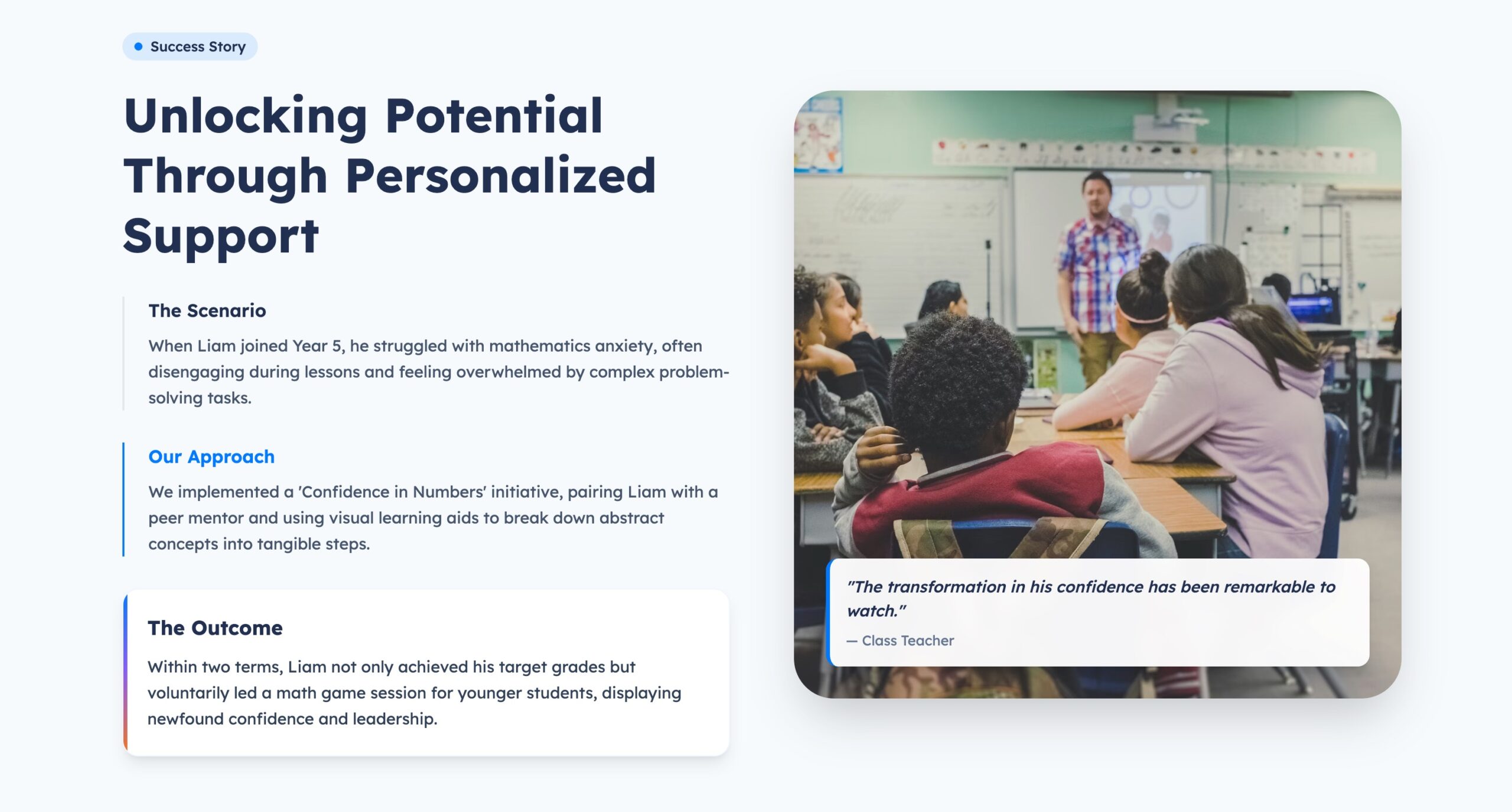
Bringing Real Stories Into the Page
Most schools have great stories.
They just don’t surface them well.
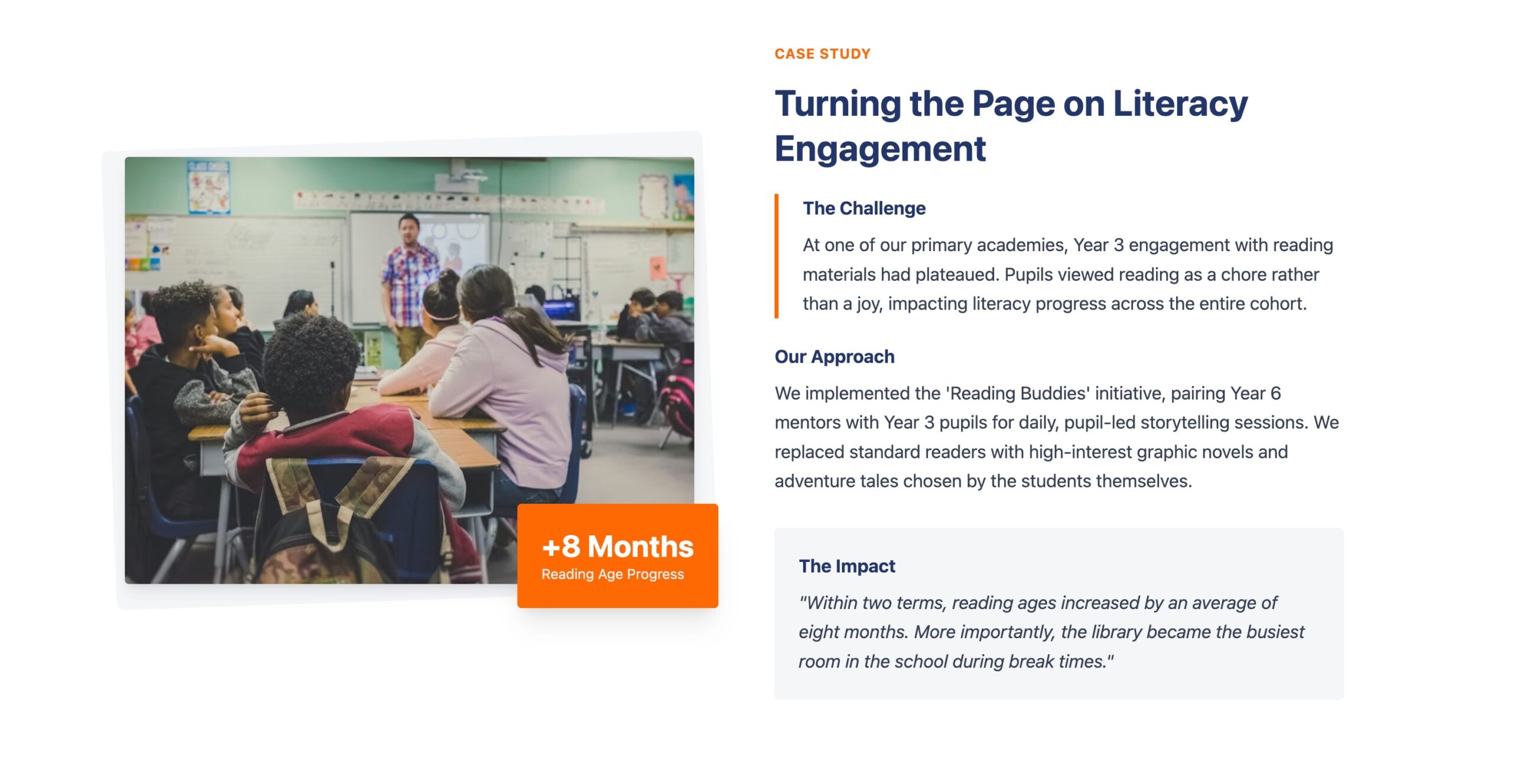
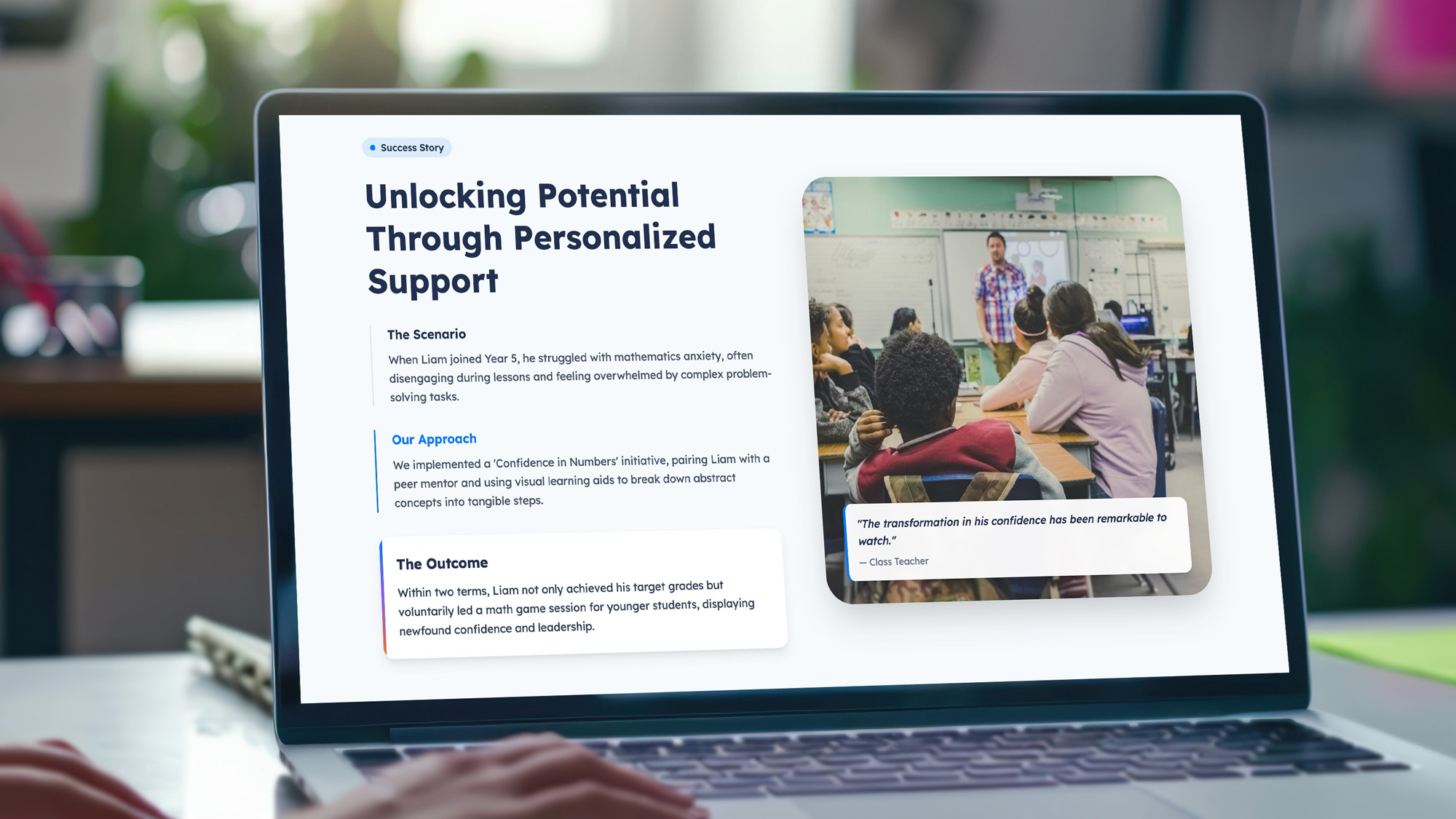
This kind of section:
- shows real impact
- builds emotional connection by sharing stories from the school community, which fosters engagement and strengthens relationships between parents, students, and staff
- helps parents relate
Highlighting community involvement and values through these stories is especially important for:
- SEND
- pastoral care
- student outcomes
Effective parental engagement, supported by sharing real stories from the school community, can significantly enhance student achievement and well-being.
Helping Parents Navigate Within Pages
Another issue we see all the time:
Parents get lost halfway down a page.
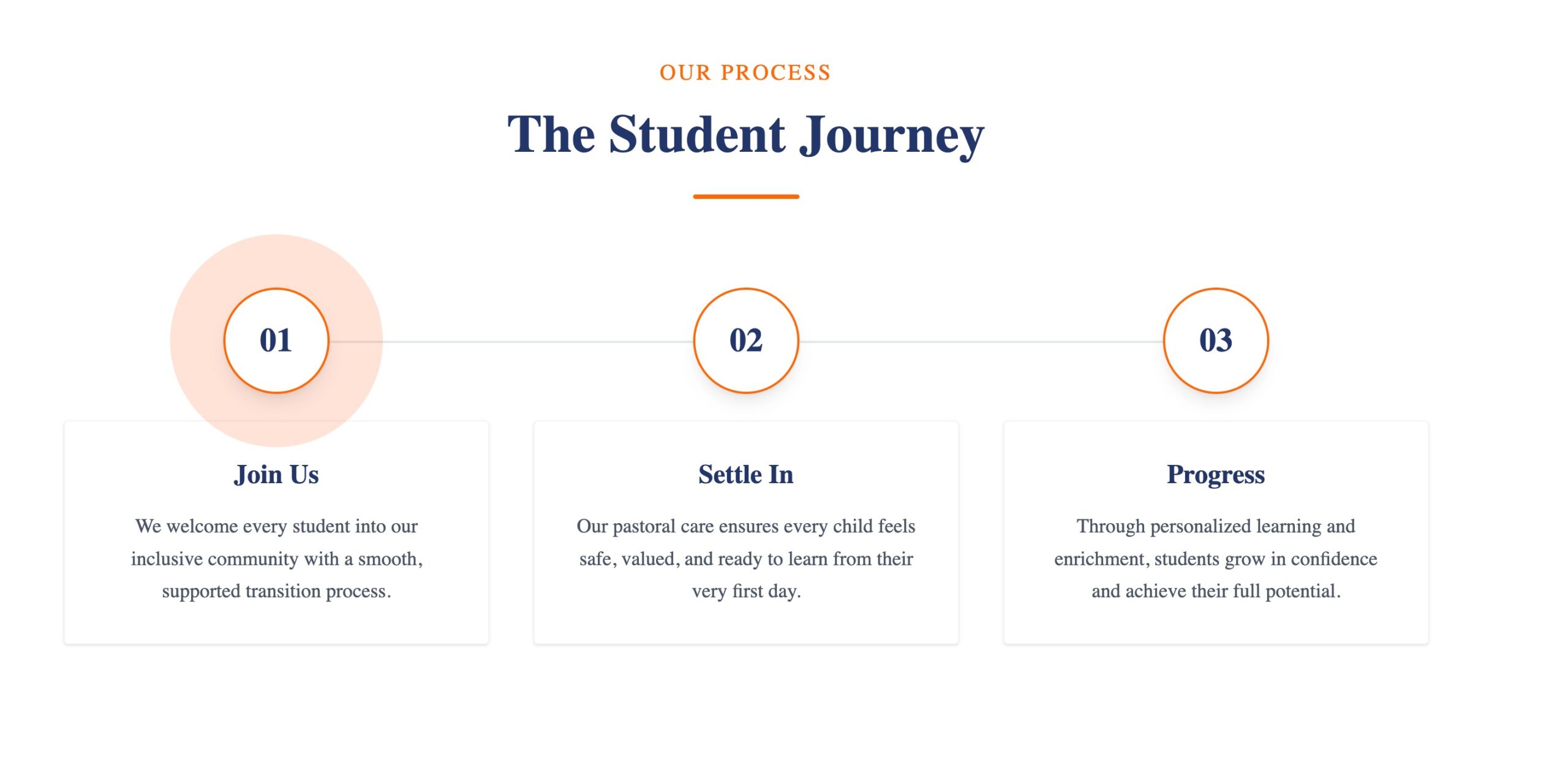
This helps by:
- giving fast access to key areas
- reducing frustration
- improving navigation by providing intuitive features that help users find information quickly
Especially important on longer pages.
Schools also benefit from the ability to create and manage their own pages, giving them greater flexibility and control over their website content.
Structuring Complex Information Properly
Some pages just contain a lot of information.
The problem isn’t the content — it’s how it’s organised.
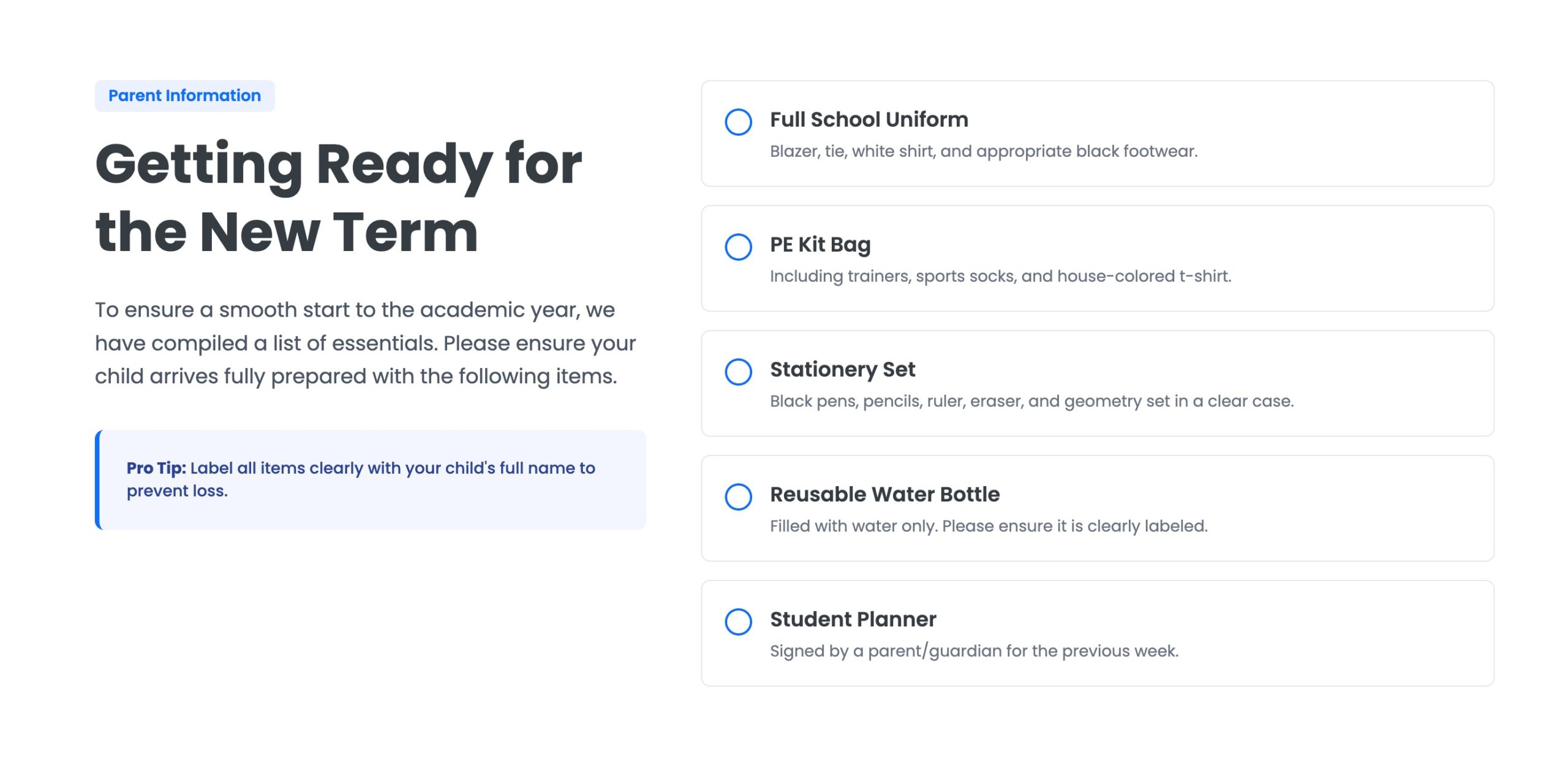
Using tabs or structured layouts, as part of modern web design principles, helps reduce overwhelm, group information clearly, and make pages easier to use. Incorporating white space in these layouts enhances visual appeal, creates a clean, modern look, and allows key elements to stand out, making complex information more digestible.
This is really important for curriculum and policy-heavy pages.
Why This Matters More Than Ever
Expectations have changed.
Parents now expect:
- mobile-friendly experiences
- clear navigation
- quick access to information
- fast-loading pages across all screen sizes
- fully responsive design for both mobile and desktop devices
Responsive design is crucial for both mobile and desktop devices, ensuring usability and visual appeal across all screen sizes. Multi-academy trusts also benefit from responsive website design, as their sites must adapt to various devices for all users, including staff and students.
Mobile-first design is now mandatory, as most parents check school updates on their phones. In fact, over 70% of parents access school sites via mobile phones, making thumb-friendly menus and fast-loading pages essential. As parents, students, and staff increasingly use mobile and tablet devices to access school websites, it is essential that these sites are fully responsive to allow easy browsing and information retrieval on any device.
Responsive design ensures that school websites automatically reshape and resize to fit any screen size, maintaining usability and engagement regardless of the device used. A responsive school website design is crucial for enhancing user experience, allowing for seamless navigation and accessibility across various devices, including desktop devices with features like sticky sidebars and navigation elements.
If your school website pages don’t work on a mobile phone, they don’t work.
And This Isn’t Just About Design
This is where it gets important.
This isn’t about making things look nicer.
It’s about:
- improving communication
- supporting parents
- reducing admin time
- increasing engagement
- fostering a sense of belonging and engagement within the school community
A great school website is not just visually appealing. It serves as a vital hub for parents, students, and staff to access important information, enhancing communication and inclusivity across the school community.
It works.
Compliance Still Matters (And This Helps It)
Let’s not forget:
School websites must still meet requirements.
That includes:
- Ofsted expectations
- GDPR compliance
- statutory policies
- curriculum information
- clear contact details
A well-structured site actually makes this easier.
Because:
- information is easier to manage
- cages are easier to update
- content is easier to access
- essential services such as hosting, security, and support help maintain a compliant and reliable school website
Bringing It Back to Your Core Pages
If you take just three areas:
- Headteacher welcome
- Curriculum
- Admissions
…and structure them properly, especially within a bespoke school website created through a thoughtful redesign process or as a new site, you can help your school stand out among the best school websites. The ability to create and customise pages is key to achieving a site that truly reflects your school’s unique identity and values.
You go from:
“Here is our information”
To:
“Here is why this is the right school — and what to do next”
That’s the difference between:
- a school website and
- a great school website
Final Thought
Most school website pages don’t fail because something is missing.
They fail because they don’t guide.
Once you start thinking in terms of:
- journeys
- structure
- decisions
… everything changes.
And small changes to how pages are built can make a much bigger difference than starting a whole new website.
To keep your own school website effective and engaging, it’s essential to continually update and improve it, ensuring it remains modern and relevant. Things are rapidly evolving, so staying current with trends, such as incorporating high-quality, authentic visuals (including drone footage), AI chatbots, and a parent-first navigation approach, will help your site stand out in 2026 and beyond.

Related Posts
Ian Richardson
June 24, 2026
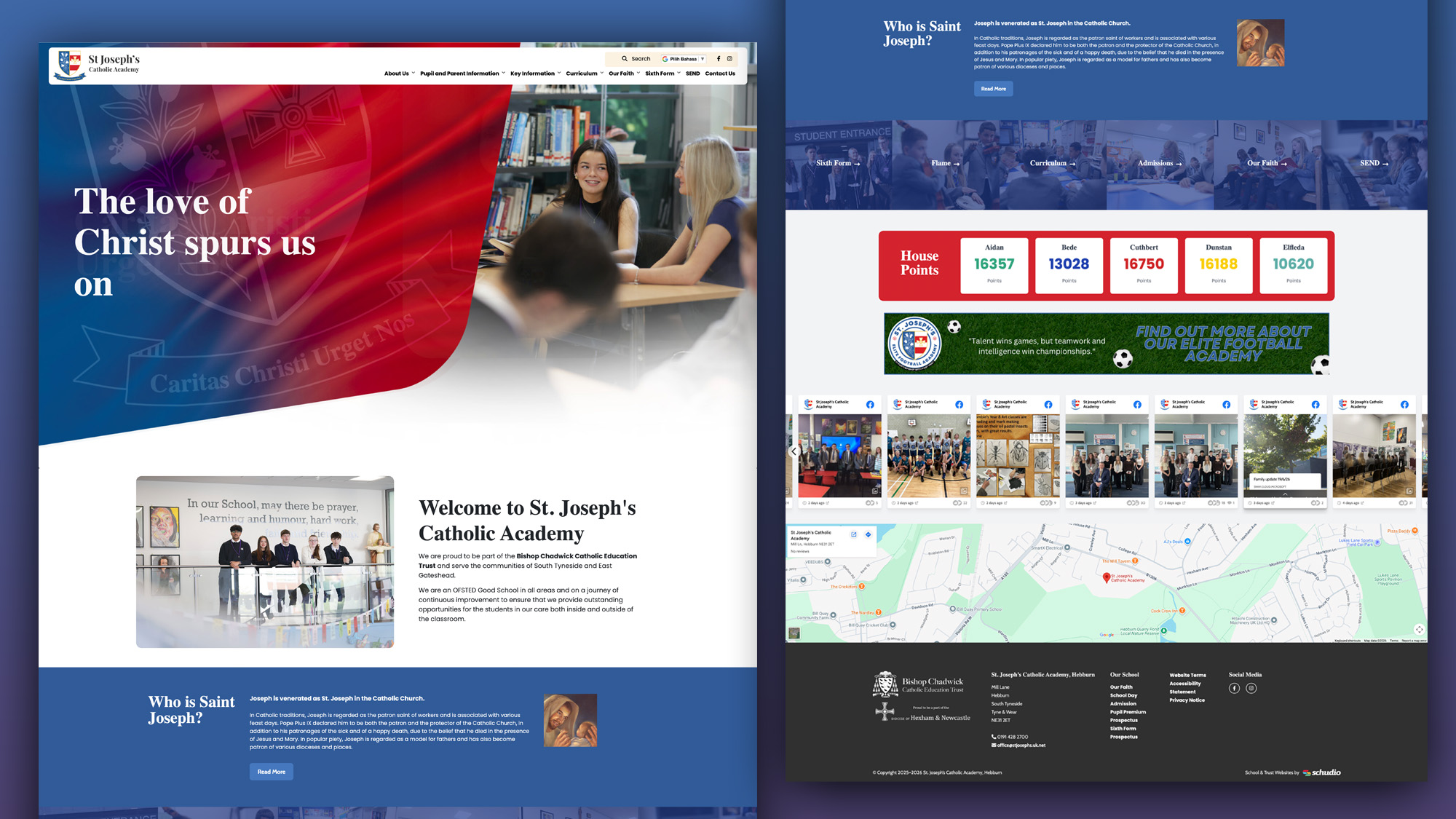
A school website says a lot before a parent reads a full page. Parents make ..
Luke Smith
June 24, 2026
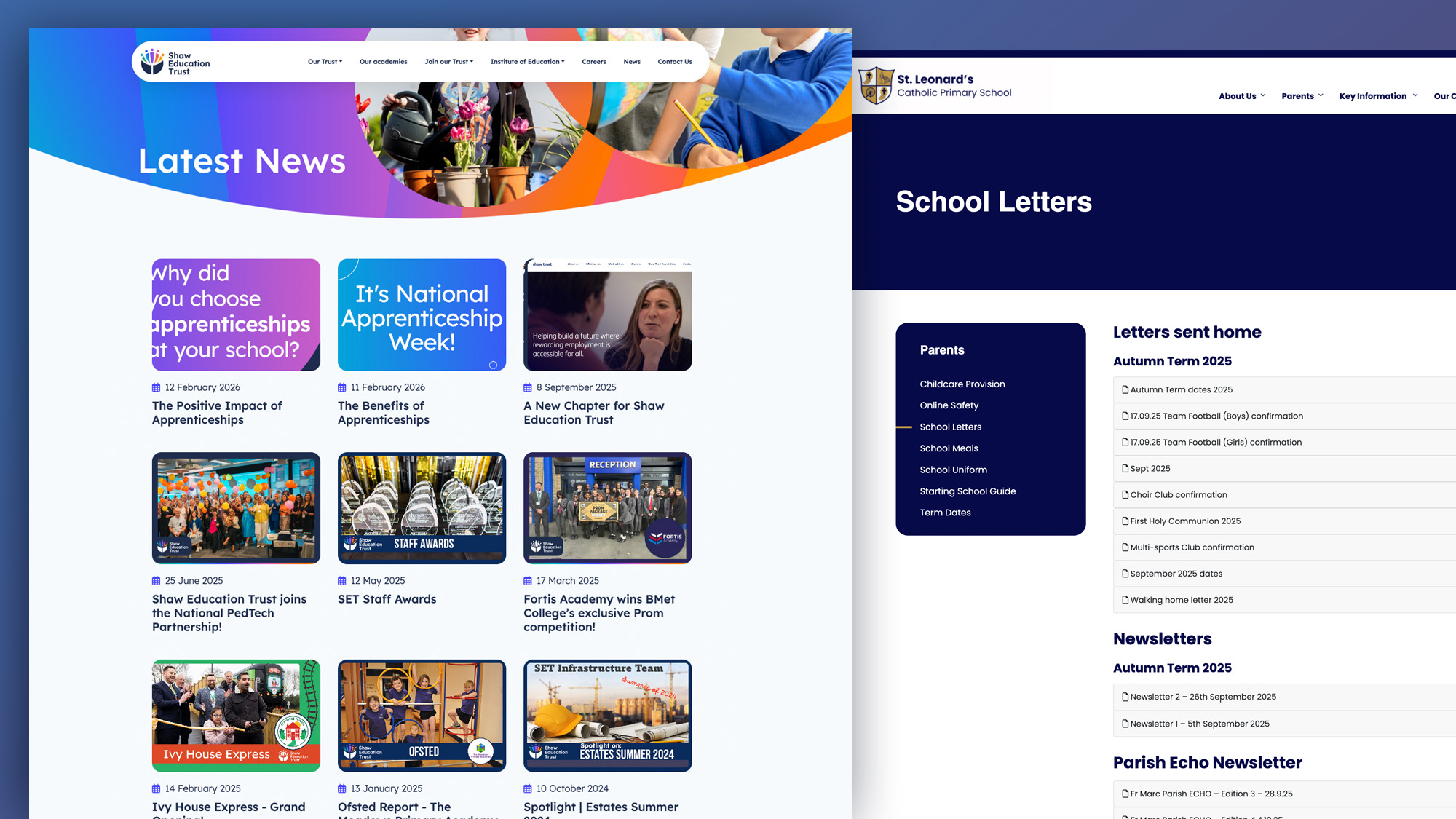
School website news is one of the easiest ways to show parents, pupils and prospective ..
Luke Smith
June 17, 2026
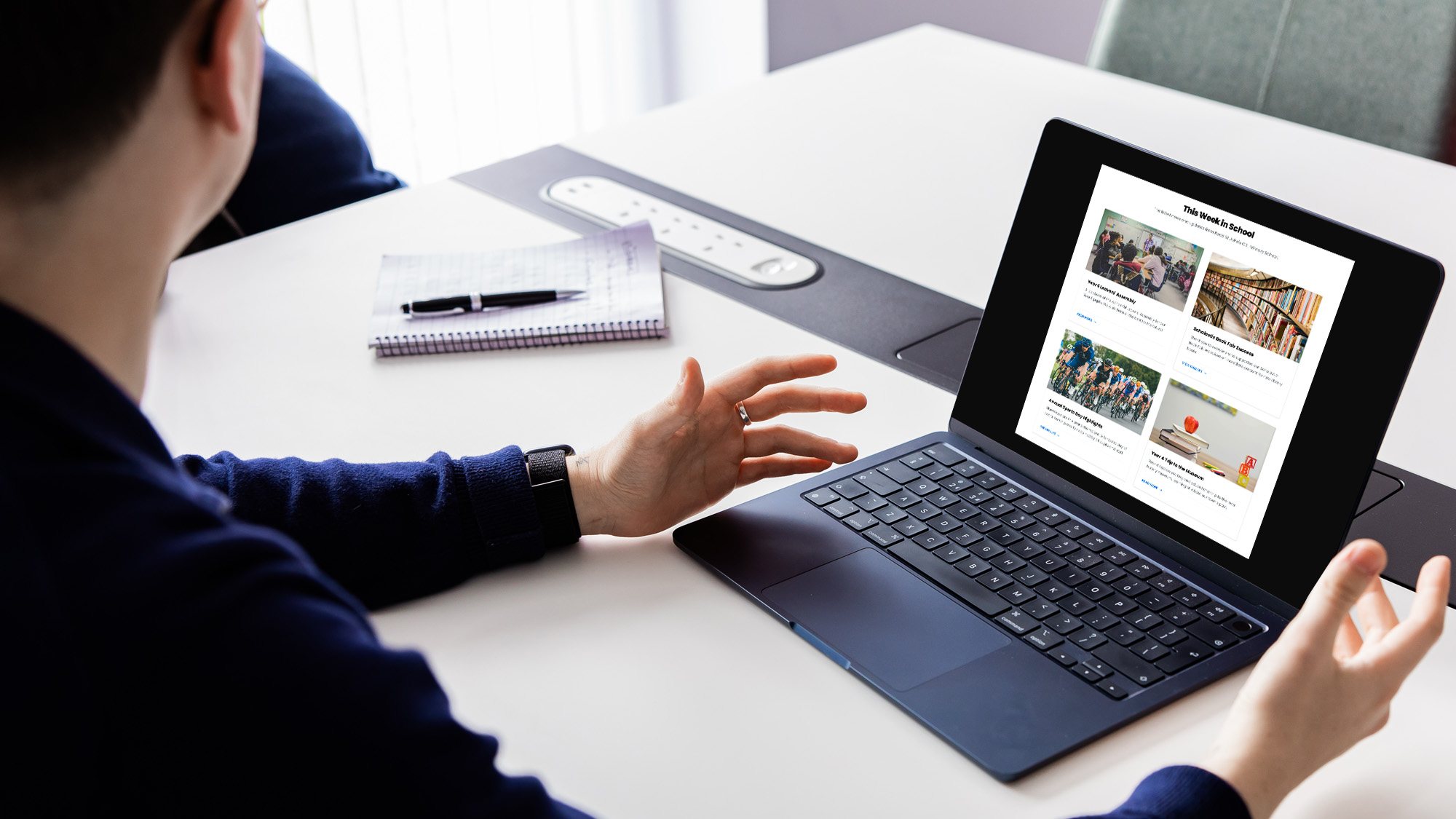
A school website newsletter is one of the simplest ways to keep parents informed, make ..
Luke Smith
June 8, 2026
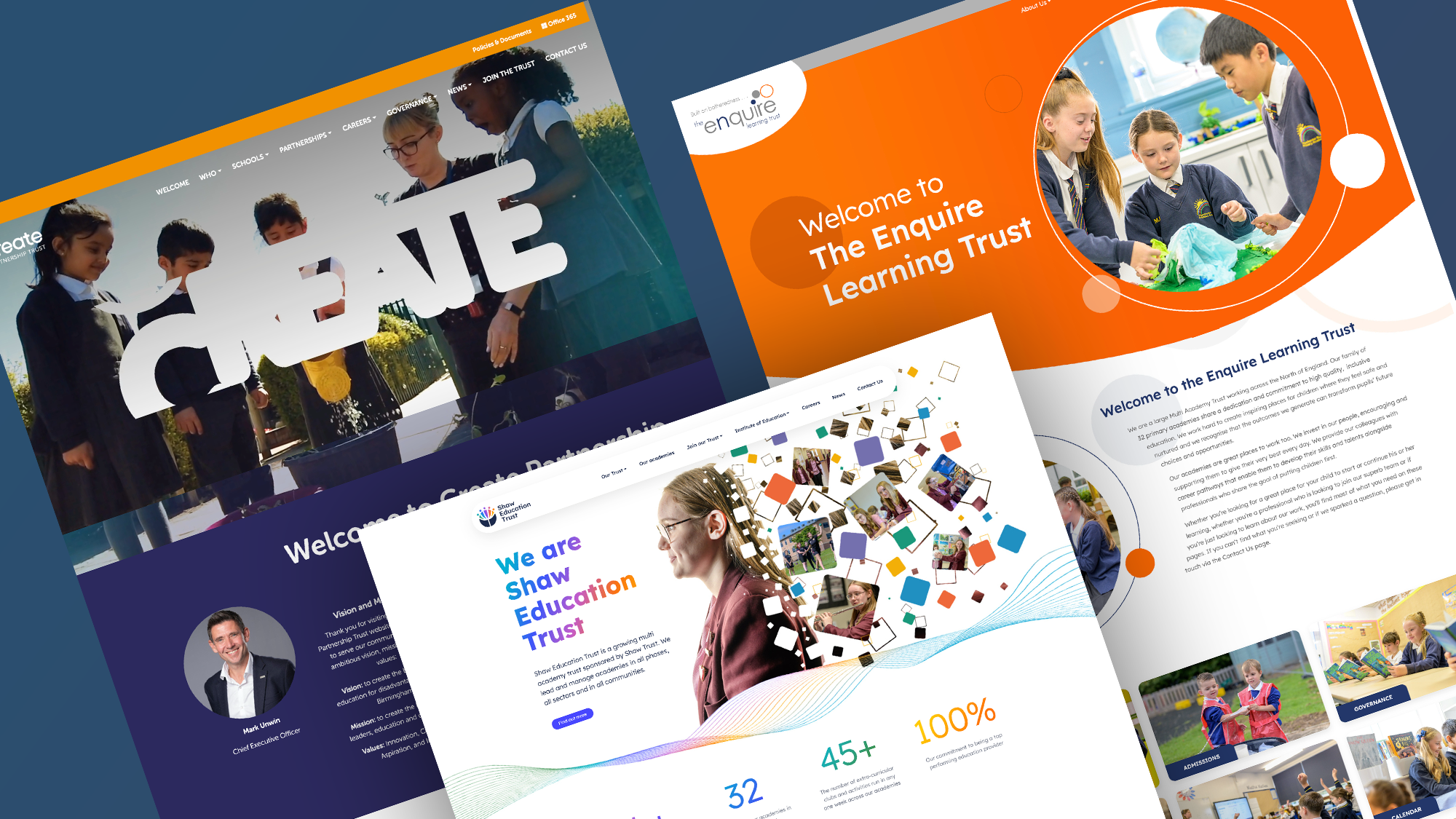
Good school communication makes a real difference. It helps parents know what is happening. It ..

Luke Smith
May 13, 2026
School website pupil photos have always played an important role. They help prospective parents see ..
Ian Richardson
May 12, 2026
Your website is one of the most valuable student recruitment tools your school has. For ..